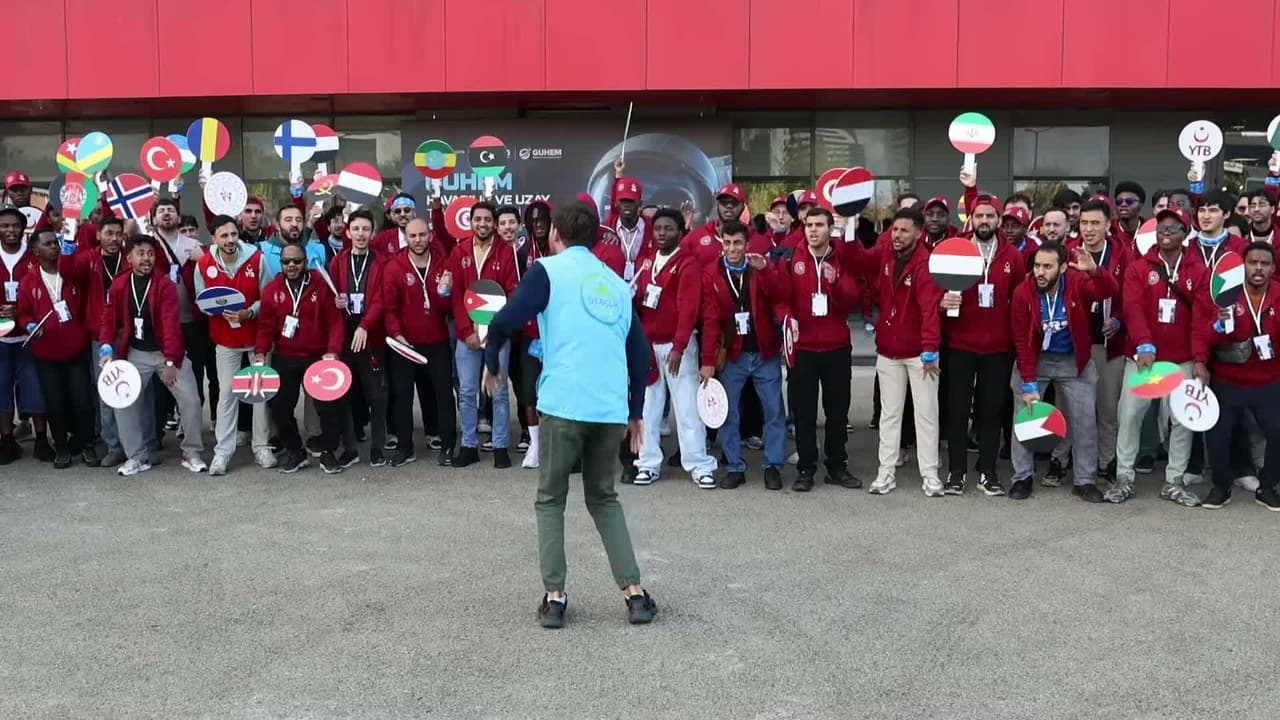
The closing meeting of a two-year project conducted jointly by Marmara University, the Municipality of Oslo and Hamburg-Eppendorf University was held at Sepetçiler Mansion. A total of 150 migrant young people took part in the project.
In his speech, Deputy Minister of National Education Cihad Demirli thanked everyone who contributed to the project, from its preparation and field implementation to the evaluation of the training and the dissemination process.
Demirli said that people facing a difficult situation such as migration may be more vulnerable to addiction. He noted that addiction directly affects not only individuals but also the future of society.
Demirli said that young people who feel safe, maintain a connection with school, strengthen their friendships and develop hope for the future can cope more easily with the difficulties they face. He added that addiction affects a person’s willpower, self-perception, family ties, social environment and vision of the future at the same time.
Emphasizing that one of the fundamental elements of education is to strengthen young people’s minds, hearts and willpower, Demirli said that reinforced values and improved reasoning skills can help keep young people away from risks. He said that initiatives supporting people in understanding themselves, managing their emotions, building healthy relationships and making informed choices create a protective foundation against the risks of addiction.
Project stakeholders assess its outcomes
Mehmet Güllüoğlu, secretary-general of the International Federation of Green Crescents and deputy chair of the Turkish Green Crescent Society, said that Green Crescent conducts work addressing real-life problems. He stated that the two-year project had been beneficial both for the stakeholders and for those who benefited from it.
Güllüoğlu said migration is a difficult process for both migrants and host communities, and drew attention to the global rise in addictions. Stressing the need to strengthen a culture of working together against addiction, he said, “We need one another’s energy and support.”
Assoc. Prof. Hakan Gülerce of Marmara University’s Institute of Population and Social Research, Hamburg-Eppendorf University Research Assistant Sascha Milin and Oslo Municipality representative Borge Erdal explained the project’s objectives, methodology and the experience gained during its implementation.
Dr. Rukiye Gülerce, a faculty member at Istanbul Medeniyet University’s Faculty of Law, shared with participants how the project was developed, the activities carried out and the outcomes achieved. Five migrant young people who benefited from the project also shared their experiences and perspectives on addiction.
BAVUL platform introduced
Following the meeting, the gamified digital learning platform BAVUL was introduced. The platform was developed to protect young people from addiction and strengthen their psychological resilience.
The platform, prepared in Turkish, English, Arabic, German and Norwegian, reached 1,500 young people.