An application has been submitted to add the Men Sanctuary at Pisidian Antioch in Isparta’s Yalvaç district to the UNESCO World Heritage Tentative List. The site stands out particularly for the crescent-shaped votive stelae surrounding the temple.
Pisidian Antioch, one of Anatolia’s important cities during the Roman Empire, is known as one of the centers visited by Saint Paul between AD 46 and 57. In addition to the Temple of Augustus, theater, monumental fountain, Roman bath, stadium and churches, the city’s important archaeological structures also include the Men Sanctuary.
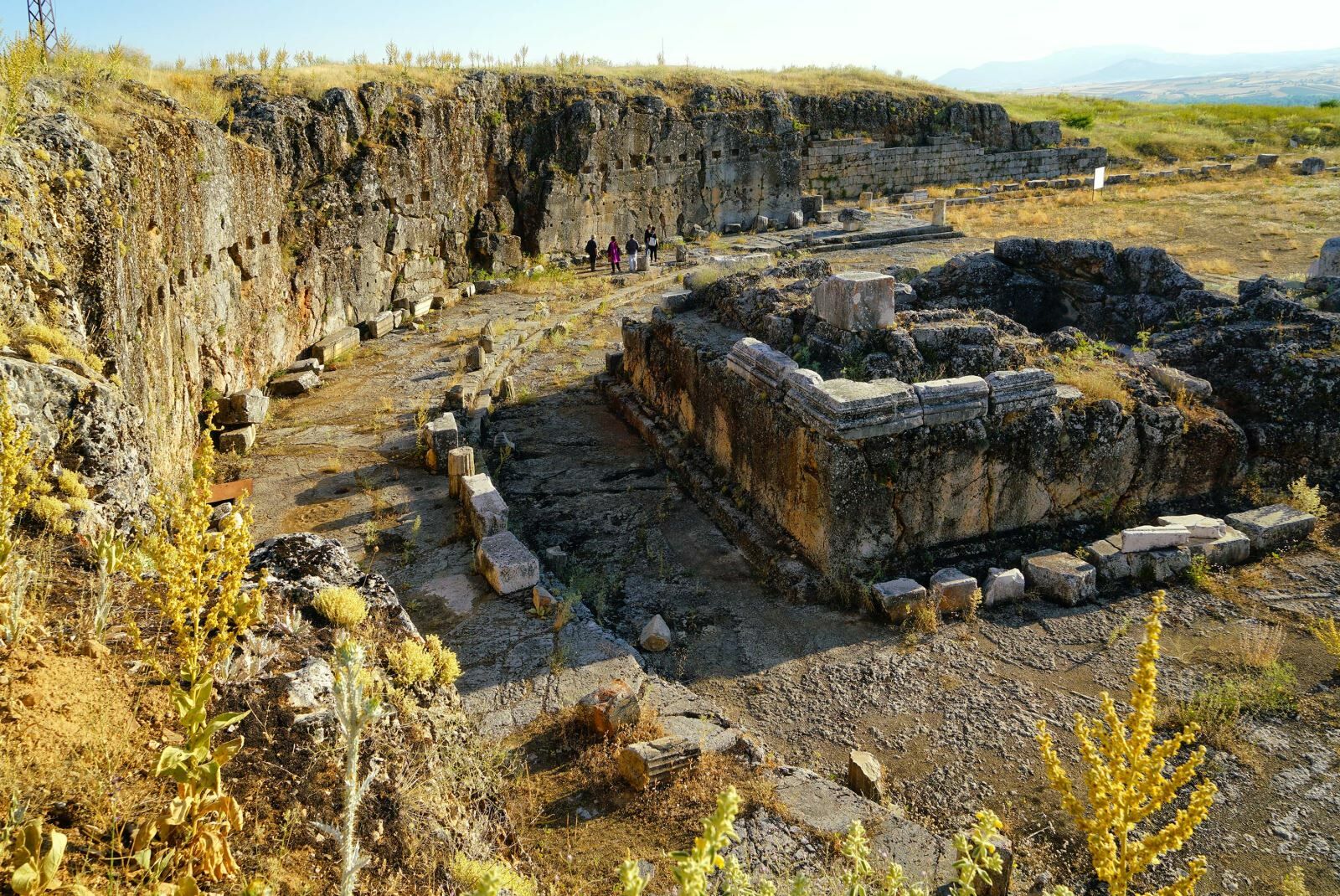
Approximately 750 structures served the sanctuary
Mehmet Özhanlı, head of the excavations and a professor in the Department of Archaeology at Süleyman Demirel University, said that some of the earliest written information about the sanctuary’s history was provided by the Amasya-born geographer Strabo.
Özhanlı said Strabo described a temple state in the region with extensive lands, workers and economic power. Özhanlı stated that the Men Sanctuary was important not only religiously but also economically and socially, adding that the ancient economy of Yalvaç was largely shaped around this center.
Explaining that the sanctuary consisted of more than just the temple, Özhanlı said the area contained a stadium, a small temple dedicated to an underworld goddess and approximately 750 structures used to accommodate pilgrims and serve the sanctuary. Özhanlı described the Men Sanctuary as “the Vatican of antiquity.”
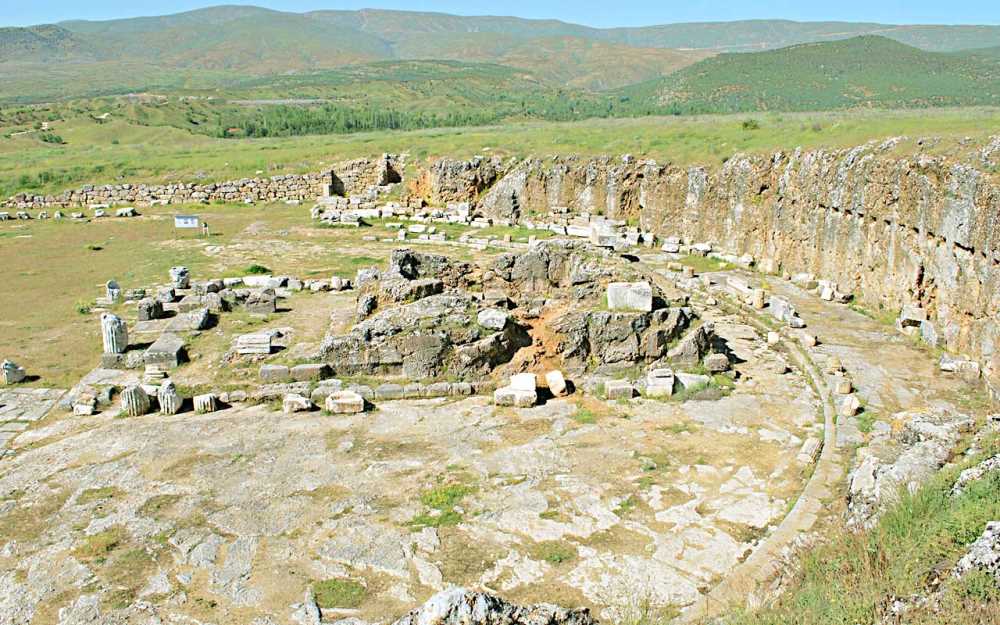
Crescent-shaped votive stelae hold special significance
Özhanlı said the temple was surrounded by a sacred wall approximately 70 meters long and 5 meters high, whose facade was covered with crescent-shaped votive stelae dedicated to the god Men.
“Each crescent represents the wishes, offerings and beliefs of the people who came here. No other example is known in the world in which a temple’s surroundings were enclosed in this way with votive stelae,” Özhanlı said.
Inscriptions shed light on the beliefs of antiquity
Greek inscriptions uncovered during the excavations provide information about the beliefs of the period. The inscriptions show that visitors to the sanctuary sought health, healing, forgiveness and various wishes from the god Men.
Özhanlı said most of the inscriptions concerned the forgiveness of sins that people believed they had committed, the healing of illnesses and personal wishes. “Almost everyone who came here expressed an expectation from the god Men through an inscription,” he said.