Located on the shores of Lake Van with views of Mount Süphan, Ayanis Castle brings together traces of Urartian civilization and natural beauty. Rising about 250 meters, the castle is one of Van's prominent archaeological sites.
Excavations at Ayanis, considered the last settlement of the Urartian Kingdom, are helping uncover new structures and artifacts. As the excavation work progresses, some sections of the castle have gradually been opened to visitors.
Important structures of Urartian heritage
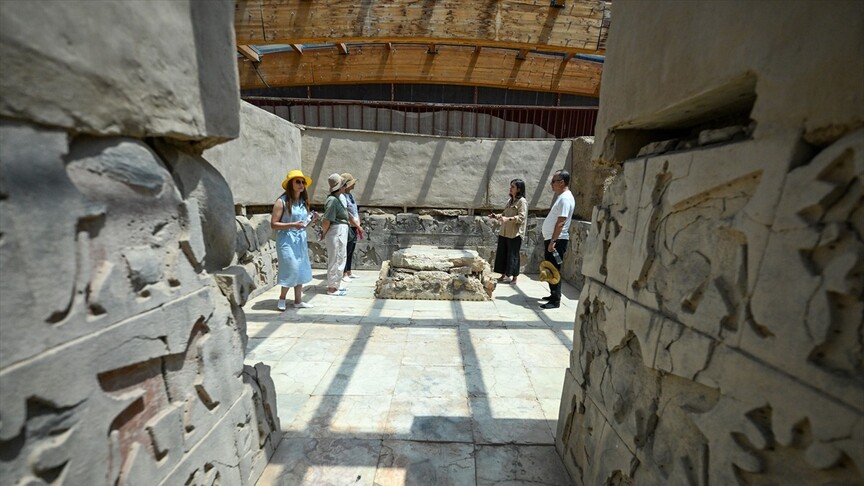
The castle contains numerous royal structures and historical remains. The most prominent is the temple dedicated to Haldi, the chief god of the Urartians.
The Temple of Haldi, which combines stone and mud-brick architecture, is regarded as one of the best-preserved examples of religious architecture from the Urartian period. The temple stands out for its finely crafted stonework.
The Urartian Kingdom developed around Lake Van between the 9th and 6th centuries BC and used Tushpa, located in the area of present-day Van, as its capital. The kingdom's influence extended beyond eastern Anatolia to parts of Armenia, a section of Iran and northern Iraq.
The Urartians are known for their castles and defensive structures, as well as their waterworks, stone architecture and cuneiform inscriptions. Ayanis Castle is considered the last of the major settlements left behind by this civilization.
Excavations boost tourism interest
Mehmet Işıklı, a faculty member in Atatürk University's Department of Archaeology and head of the excavation team, said interest in Ayanis Castle had increased with the start of the excavation season. Işıklı said the castle had strong tourism potential thanks to its location on the shores of Lake Van, its natural surroundings and its historical remains.
Işıklı said the castle's significance was not limited to its archaeological remains and that it offered visitors an opportunity to learn about the final periods of Urartian civilization. The castle has recently hosted tourist groups from France, Spain, the United States, Japan, the United Kingdom and South Africa.
Cevdet Özgökçe, who serves in Turkey's association of travel agencies, said the increase in interest from foreign tourists had strengthened the castle's position on the regional tourism map. Özgökçe said excavations had continued since 1989 and that work was ongoing to open the entire site to visitors.
Özgökçe said Ayanis Castle's extensive grounds and historical and natural values could turn it into a new tourism route, which could also increase the time visitors spend in Van.
Interest from local and foreign visitors
Tour guide Nurten Erkul said excavation work in recent years had made the castle one of the destinations attracting local and foreign tourists. Erkul said she believed Ayanis Castle, which combines historical value with natural beauty, would become an important tourism center in the near future.
Tour guide Özkan Deniz also said interest in Urartian heritage had increased in recent years and described Ayanis Castle as one of the most important stops associated with this civilization. Deniz said efforts were continuing to include the castle more frequently in the programs of travel agencies and guides from Turkey and abroad.
Ayanis Castle combines the Urartian heritage uncovered by excavations with views of Lake Van and Mount Süphan. The goal is to open the entire site to visitors as the work progresses.