Konaković criticized the use of state institutions, political authorities and military personnel at the funeral ceremony held for convicted war criminal Ratko Mladić in Serbia. He said members of the Serbian army had also been assigned to the ceremony where Mladić’s body was buried.
Konaković argued that this was not a gathering organized spontaneously by individuals but an institutional act by the Serbian state. He said responsibility should be addressed at the highest level, directly with Serbian President Aleksandar Vučić.
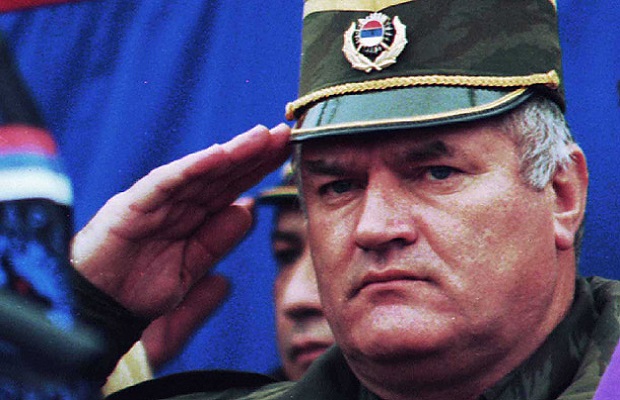
He said the salute fired during the ceremony harmed relations between Bosnia and Herzegovina and Serbia, European values, the principles of international justice, the dignity of victims and survivors of genocide and war crimes, and peace and stability in the region.
Konaković said the people of Bosnia and Herzegovina had not forgotten what happened in the 1990s. He noted that the events of that period had resulted in deaths, destruction and some of the gravest crimes committed in Europe since the Second World War.
Konaković said they were concerned that a similar scenario could happen again and wanted to act without allowing such a situation to recur in his country.
Konaković called on the leaders of the United States, the European Union and the United Kingdom, as well as the countries that are members of the Organization of Islamic Cooperation, to impose sanctions on those responsible for Mladić’s burial in Serbia with a state and military ceremony. He urged international actors to act before it was too late.
Ratko Mladić’s background
Ratko Mladić was born in 1942 in the village of Božanovići, near Kalinovik in eastern Bosnia and Herzegovina. He received military training in Belgrade and served in the Yugoslav People’s Army.
In May 1992, Mladić was appointed chief of staff of the Army of Republika Srpska, established in Bosnia and Herzegovina, and remained in the position until 1996. The International Criminal Tribunal for the former Yugoslavia issued its first indictment against him on July 24, 1995.
After the war in Bosnia and Herzegovina, Mladić fled to Serbia and remained in hiding for approximately 16 years. During the period when Serbian authorities said they could not find him, allegations emerged that he was being protected by individuals in some state institutions.
Television footage was broadcast showing Mladić meeting people in crowded places, enjoying himself and posing for photographs while he was wanted. Mladić was arrested on May 26, 2011, in the village of Lazarevo near the Serbian city of Zrenjanin and transferred to The Hague on May 31, 2011.
Mladić’s trial began on May 16, 2012, and he denied the charges against him. He was regarded as the principal person responsible for and the instigator of the Srebrenica genocide, in which 8,372 Bosniak civilians were killed in July 1995.
Mladić, who had serious health problems while held in a prison in The Hague, died on August 27. His body was buried on September 7 in Belgrade, the capital of Serbia, in an official ceremony attended by numerous Serbian officials.



















