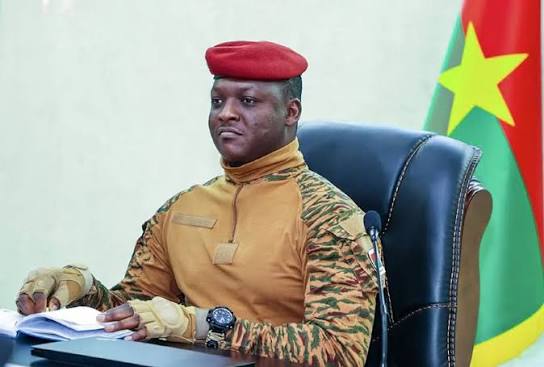
Burkina Faso President Ibrahim Traoré announced that the country would not order new armored vehicles from abroad after fulfilling existing orders and receiving vehicles already in transit, and that work would be carried out to produce these vehicles domestically. Traoré said there should be no fear of failure under this objective and that they would continue trying.
The announcement does not mean that Burkina Faso has ended all foreign defense procurement. The current framework aims to halt new armored vehicle purchases after previous orders are completed and to develop domestic production capacity.
Goal of developing a domestic defense industry
The Traoré administration has increasingly emphasized reducing dependence on foreign countries in defense, security and industry. Under Traoré, who took charge of the military government in Burkina Faso in 2022, increasing military capacity and expanding domestic capabilities in defense have remained on the agenda amid security operations against armed groups.
One of the earlier steps in this policy was the groundbreaking ceremony for the TEXFORCES-BF complex in Bobo-Dioulasso on April 27, 2024. The facility is planned to produce military, paramilitary and civilian clothing, while the project is part of Burkina Faso's effort to move its defense industry beyond a structure that only purchases equipment from abroad.
Supplies previously sourced from different countries
In recent years, Burkina Faso has met its military vehicle and equipment needs through various foreign suppliers. Chinese-made armored and military vehicles were added to the country's inventory at the beginning of 2024, while approximately 100 armored combat vehicles and personnel carriers manufactured by China's Norinco were delivered at the end of the same year.
Burkina Faso is known to have maintained defense equipment ties with China, Türkiye and other countries, but it is unclear whether the new approach is aimed only at Western suppliers. The announcement is therefore not being interpreted as a cancellation of past purchases or an end to all foreign defense procurement.
Technical challenges of the production goal
Domestic armored vehicle production requires advanced technical capabilities in areas such as engines, armor, electronics, optical systems, weapons integration and quality testing. No timeline has been announced for the production site, the number of vehicles planned, the technology to be used or the financing model.
If the goal is achieved, Burkina Faso could gain greater flexibility in maintenance and repair, facilitate the supply of spare parts and adapt vehicles to its operational needs. However, these outcomes will depend on technical competence, sustainable financing and the establishment of capacity large enough for use in security operations.