- BIST10011,131-3.02%
- USD50.47+0.05%
- EUR55.46+0.20%
- GOLD3,525.90-4.33%
- INTEREST36.00%-1.00
- BITCOIN58,969-4.74%
- November 20, 202617°
- BIST10011,131-3.02%
- USD50.47+0.05%
- EUR55.46+0.20%
- GOLD3,525.90-4.33%
- INTEREST36.00%-1.00
- BITCOIN58,969-4.74%
- November 20, 202617°
COP31 publishes second draft text including Türkiye’s electrification target
The second draft decision text for the COP31 negotiations was shortened from 144 paragraphs to 80. The text includes Türkiye’s target of raising the share of electricity in global final energy consumption to 35% by 2035.


The second draft decision text on the negotiations was published at the UN Climate Change Conference COP31, which is taking place in Antalya under Türkiye’s hosting. While the first draft contained 144 paragraphs, the second was reduced to 80. The text refers to the target announced by Türkiye’s COP31 Presidency of raising the share of electricity in global final energy consumption to 35% by 2035.
The draft recognizes that electrification provides significant benefits in terms of emissions reductions, energy security, energy efficiency, economic development and access to energy. It emphasizes that this target complements efforts announced at COP28 to triple renewable energy capacity and double the rate of improvement in energy efficiency by 2030.
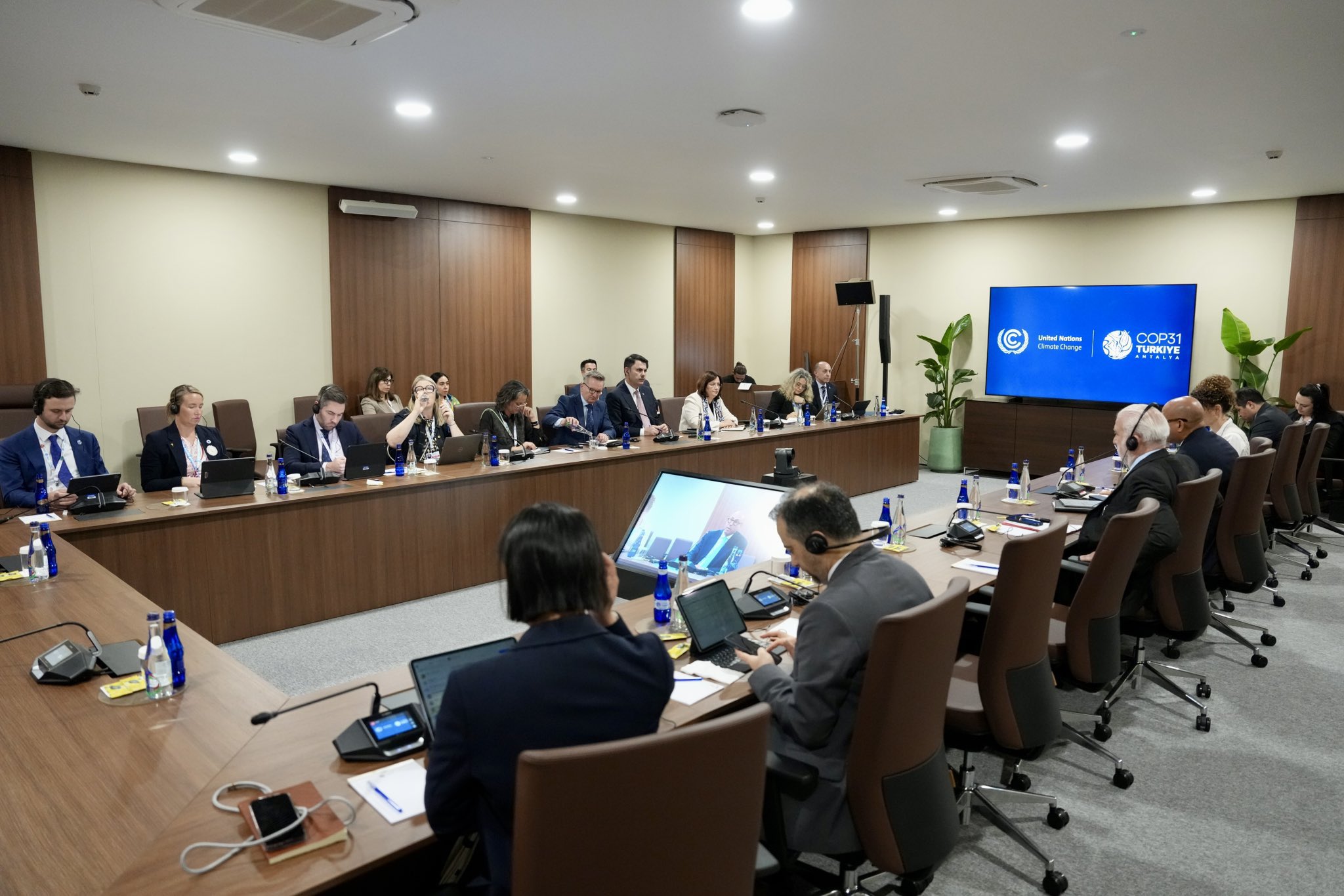
Kurum: We will not leave the table without a solution
COP31 President and Minister of Environment, Urbanization and Climate Change Murat Kurum said, “The world expects an actionable path from Antalya. That is precisely why we must make COP31 a success.” Kurum said, “We will pursue solutions, not the problem. We will bring the parties together around a common outcome. We will not leave the table without a solution.”
Kurum said that when COP31 concludes, what should remain are “countries gaining access to finance, transformed industrial facilities, strengthened energy infrastructure and implemented projects,” adding that Türkiye would act “with the responsibility of being a country that makes solutions possible.” During the day, Kurum held a trilateral meeting with UNFCCC Executive Secretary Simon Stiell and COP31 Negotiation President Chris Bowen, Australia’s minister for climate change and energy.
What does the draft contain?
The text expresses “deep concern” about projections that the global temperature increase will exceed 1.5 degrees. While projections before the Paris Agreement foresaw a temperature increase of more than 4 degrees, the text notes that the increase could reach 2.6 degrees under current climate plans. It reaffirms the need for “deep, rapid and sustained” emissions reductions.
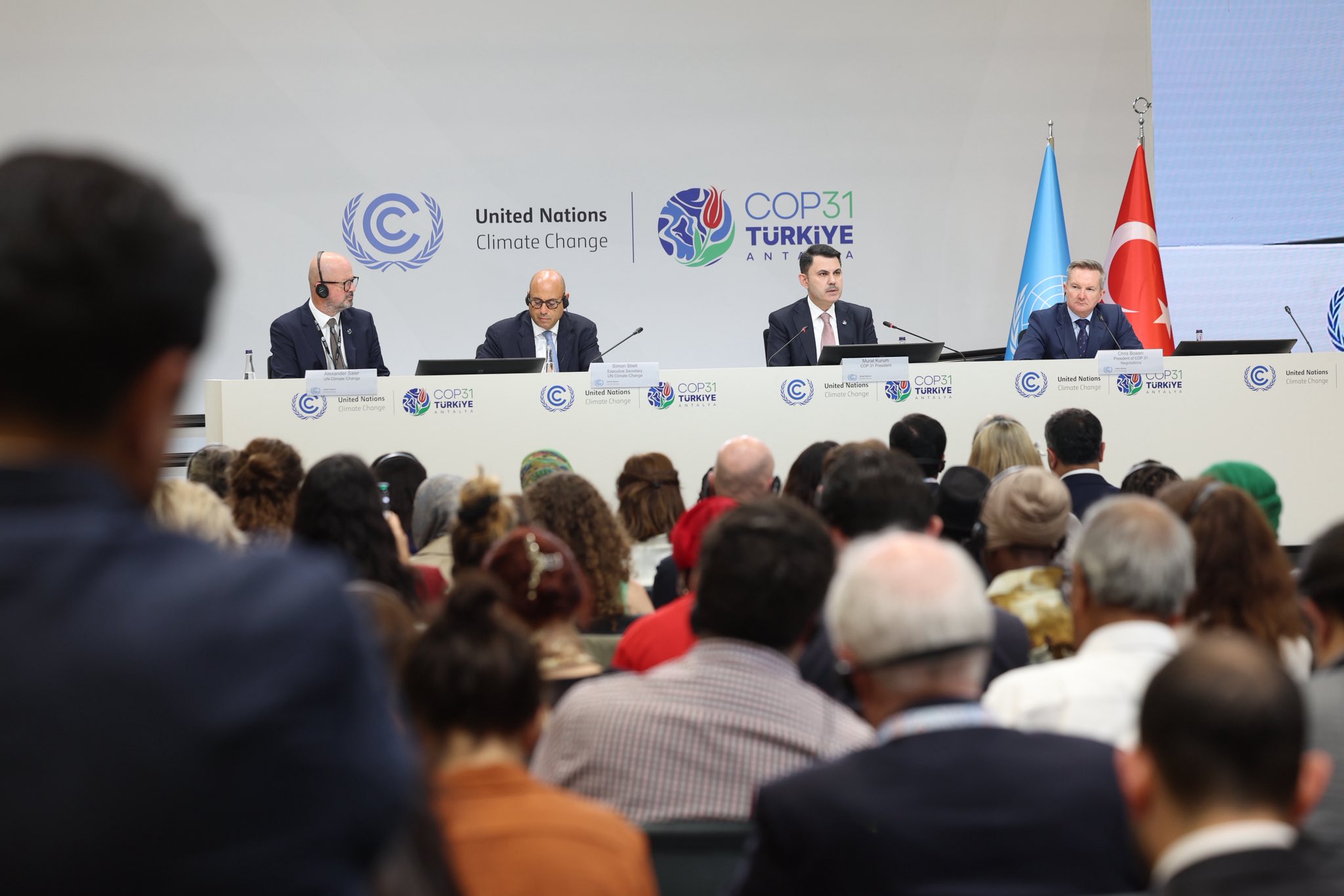
The draft thanks the 167 countries that had submitted their nationally determined contributions as of November 18. It states that developing countries’ needs through 2030 could reach $5.1 trillion-$6.8 trillion, while adaptation finance needs could reach $305 billion annually by 2035, emphasizing that the gap between financing and needs is “concerning.” Final negotiations will take place on November 20, the last day of COP31.
Photos: Murat Kurum, COP31 Türkiye.
Stay Updated with The Turkiye Times
Subscribe to be informed about special news, developments and announcements. We will keep you informed.
By signing up, you agree to our Privacy Policy














