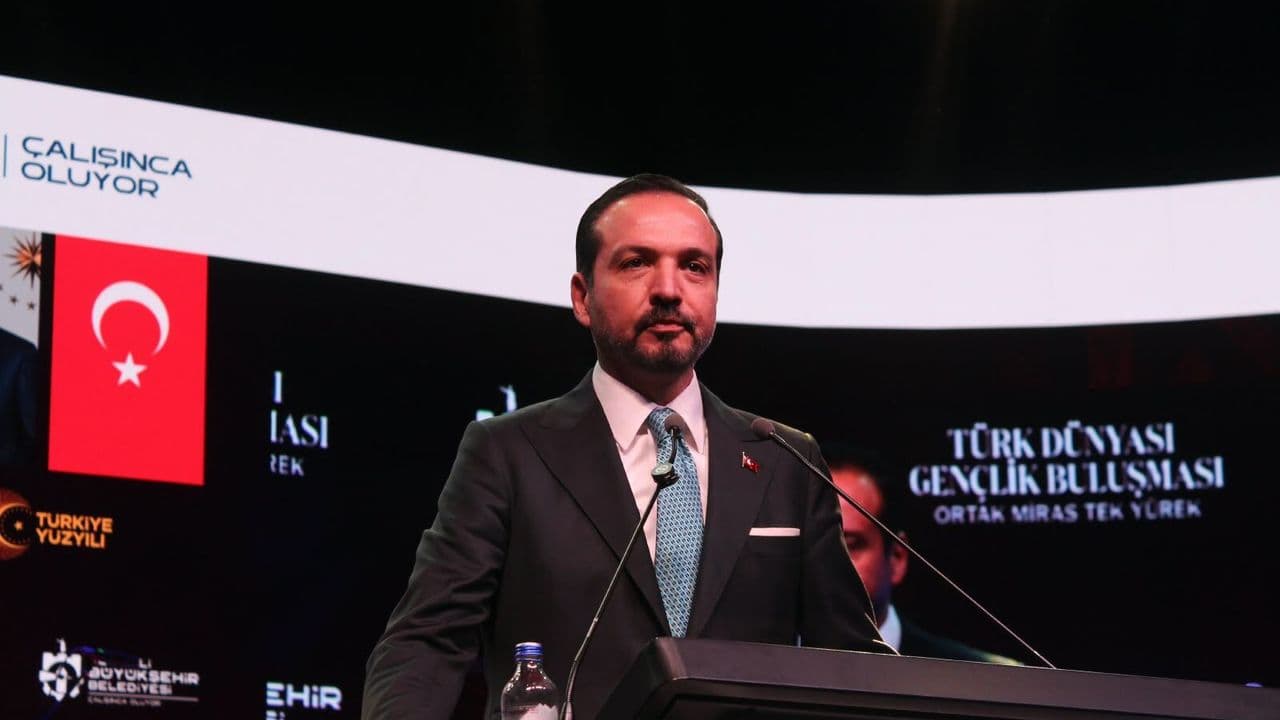
Associate Professor Erhan Akkaş, a faculty member at Ankara Social Sciences University's Department of Economics, assessed the impact of the changing nature of modern warfare on global energy and food supply chains in an article for AA Analysis.
Akkaş emphasized that while the fate of wars was once determined by territory gained on the battlefield, the center of gravity of competition has now shifted to ports, straits, energy lines, and trade corridors.
Straits and ports: the new front line
Akkaş noted that the US attacks on Iran and Russia's targeting of Ukraine's Chornomorsk Port have triggered simultaneous crises at two strategic points of global trade, and that these developments have transcended regional boundaries to produce global consequences.
Pointing out that the Strait of Hormuz is a strategic corridor through which approximately 35 percent of global crude oil exports, 20 percent of LNG exports, and 30 percent of fertilizer trade pass, Akkaş noted that a prolonged disruption there would increase energy and fertilizer costs, negatively affect agricultural production, and drive up global food prices.
Akkaş reported that with the escalation of US-Iran tensions, tanker traffic through Hormuz has fallen to its lowest level in two months, and many ships have turned off their automatic identification systems for security reasons.
Black Sea grain shipments disrupted
Akkaş stated that Russia's missile and drone attacks on grain terminals in the Odessa region carry the potential for a new crisis in global food markets, and reported that after the attacks, the monthly shipment volume through Odessa ports fell from approximately 6 million tons to 4 million tons.
Recalling that Ukraine-based Kernel company announced it had suspended operations at the port after the attacks, with approximately 45,000 tons of wheat and 9,000 tons of sunflower oil damaged, and loading equipment and storage facilities hit, Akkaş pointed out that Ukraine accounts for 6 percent of global wheat exports and 11 percent of corn exports.
Risk of a combined supply shock
Akkaş warned that the crises in the two strategic regions could combine to create a two-way supply and cost shock in global supply chains. He noted that disruptions in Hormuz are driving up oil, natural gas, and fertilizer costs, while disruptions to grain shipments in the Black Sea are causing sudden spikes in food commodity prices.
Akkaş stated that these simultaneous shocks are triggering input inflation from energy costs and a contraction in food supply at the same time, reinforcing structural cost inflation on a global scale and causing sharp fluctuations in world food price indices. He added that in the coming period, states' national security capacity will be measured by their ability to protect energy and food supply chains against asymmetric shocks.
Akkaş assessed that a prolonged simultaneous disruption in the Strait of Hormuz and Ukrainian ports could lead to a global food crisis more extensive and devastating than the 2022 Ukraine food crisis.