Lebanon’s Minister of Public Works and Transport Fayez Rasamny said the country aims to connect its ports to regional transport networks and play a more active role in trade routes linking the Eastern Mediterranean, the Gulf, Iraq, Syria and Türkiye.
Rasamny said work was under way to increase Beirut Port’s annual capacity from approximately 1.2 million containers to 3 million. Tripoli Port’s capacity is planned to rise from approximately 300,000 containers to more than 1 million.
Port capacities to be increased
The Lebanese minister said the natural water depth at the ports of Beirut and Tripoli was between 15 and 16 meters. He said developments in maritime transport around the Strait of Hormuz and the Bab el-Mandeb had increased the importance of Lebanese ports and potential investments in them.
Rasamny said it was not enough for the ports to serve only domestic production and the local market, adding that the main economic opportunity lay in transit transport and transshipment activities. He said port capacities needed to be increased and connections established with regional transport networks to realize this potential.
Work under way on railway connection
The Lebanese minister said the plan to resume railway operations was not intended merely to connect Lebanon and Syria. He said the project aimed to link Lebanese ports through Syria’s railway network to regional routes extending to the Gulf countries, Iraq and Türkiye.
Rasamny said connecting Tripoli Port to the Al-Arida area on the Syrian border and from there to Syria’s railway network would facilitate freight transport. He said Lebanon’s existing roads could not handle the substantial increases expected in freight traffic, adding that railways were one option for addressing the problem.
Lebanon and Syria to work together
Rasamny said his meeting with Syria’s Minister of Public Works and Transport Yarub Badr during his visit to Damascus on August 25 had laid the foundation for developing a work plan and roadmap.
Lebanese and Syrian teams are expected to examine the railway route in the coming weeks, including the line between Tripoli and Al-Arida. After technical teams assess the current condition of the line and the project’s technical aspects on site, the two sides are expected to meet again to set the objectives for the next phase.
Rasamny said the project was very large and that the Syrian side had a draft outlining the cost required to develop its railway network. He announced that the Lebanese Ministry of Public Works and Transport’s work to rehabilitate the railway line between Tripoli and Abudiyeh was expected to be completed in approximately two months.
Türkiye seen as a key link in the regional network
Rasamny said the expected economic benefits could not be achieved if the project remained limited to the Lebanon-Syria connection. He said linking Lebanese and Syrian ports to networks extending to the Gulf, Iraq and Türkiye would encourage investors to take an interest in railway connections.
Rasamny said Türkiye’s proximity to Europe, the Gulf and Syria, along with its developed railway network, made it an important link in regional transport networks that could be established in the future. He said they were counting on Ankara’s support in this process.
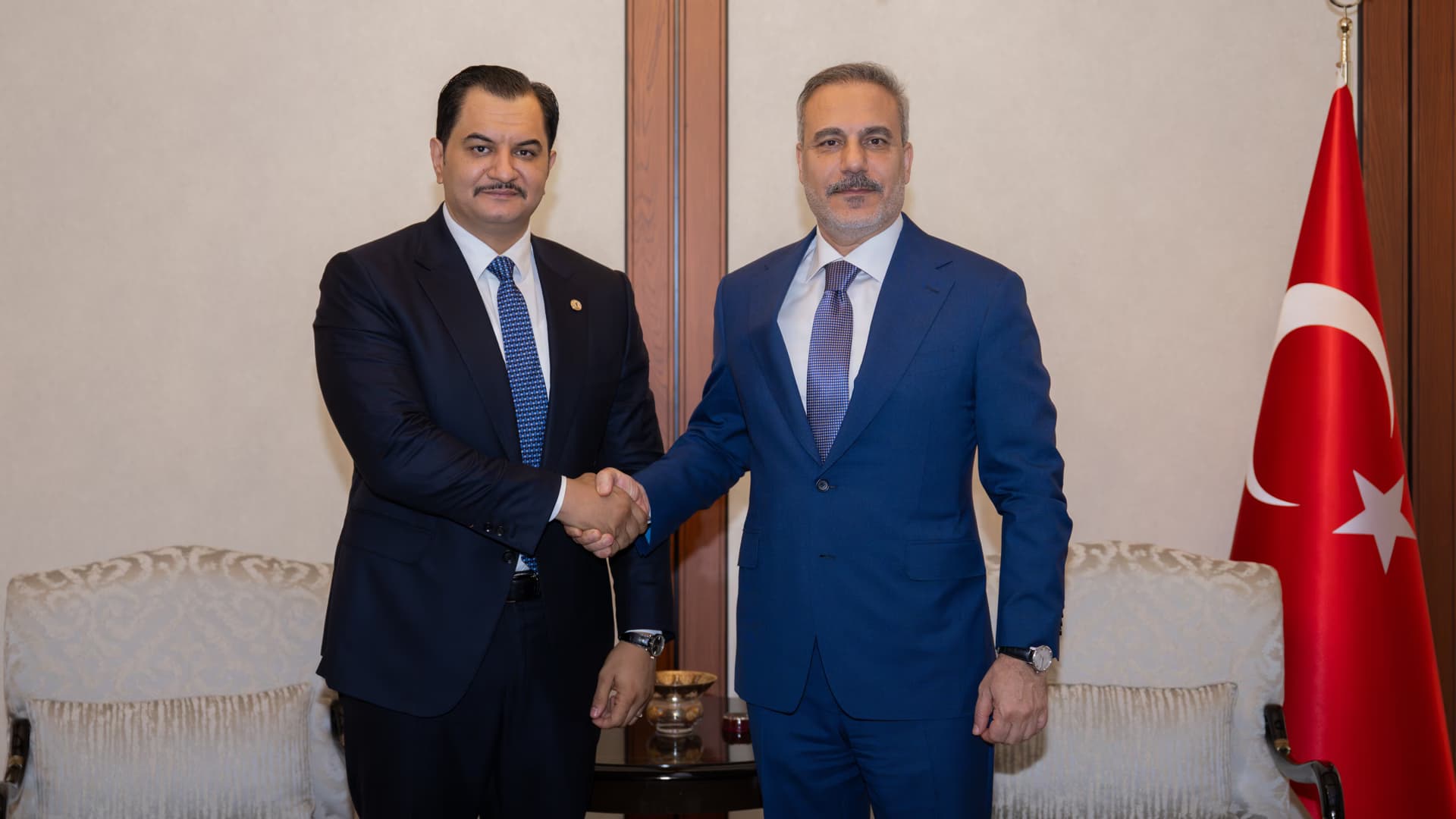
Rasamny also announced that he had been invited to Ankara for an official visit. He said work was continuing to prepare the agenda for the visit and that, in addition to the transport project, other projects and issues would be discussed soon.