- BIST10012,151-0.94%
- USD49.220.00%
- EUR55.21+0.28%
- GOLD4,195.90-0.48%
- INTEREST37.00%-1.00
- BITCOIN82,825-1.01%
- October 13, 202619°
- BIST10012,151-0.94%
- USD49.220.00%
- EUR55.21+0.28%
- GOLD4,195.90-0.48%
- INTEREST37.00%-1.00
- BITCOIN82,825-1.01%
- October 13, 202619°
Luis de la Fuente leads Spain to Euro 2024 and World Cup 2026 glory
Within two years, Luis de la Fuente guided Spain to European and then world champion titles, securing his place in football history.


The Rise of Luis de la Fuente
Luis de la Fuente reached football's summit not via stardom, but through youth development and steady, behind-the-scenes effort. When he took charge of Spain's national team, he lacked high-profile club achievements. Yet within two years, he had guided Spain to European and then world glory, writing his name into history.
Playing Career and Quiet Beginnings
Born in Haro, Spain in 1961, Luis de la Fuente Castillo was never a standout star in his playing career. He played as a left-back for teams such as Athletic Bilbao and Sevilla. He was part of the Bilbao side that won back-to-back league titles in 1983 and 1984, along with the Copa del Rey in 1984. But de la Fuente was more of a reliable team player than a headline-grabbing star, and after retiring with Alavés in 1994, he turned to coaching.
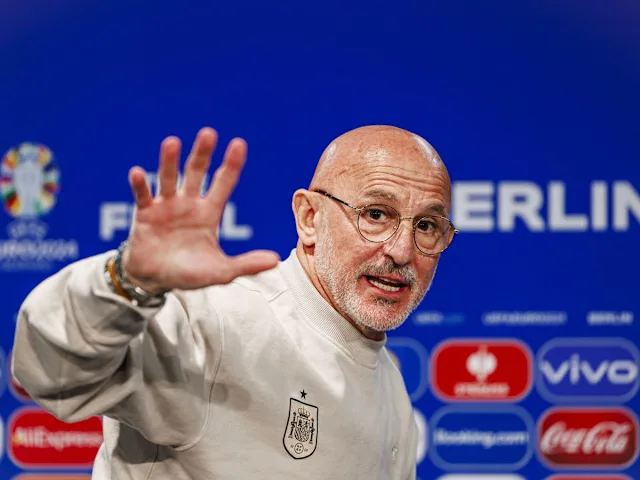
First Steps in Coaching
De la Fuente began his coaching career with modest clubs like Portu Galetti and Urrera. He later worked in Athletic Bilbao's youth categories. In 2011, he took over at Alavés but was sacked after only a few months. At that point, he feared drifting away from football altogether, but a newspaper advertisement changed his fate.
Spain's Football Federation Opens the Door
When de la Fuente saw an advertisement from the Spanish Football Federation seeking youth coaches, he applied without hesitation. After an interview with former Spain manager Iñaki Sáez, he began a temporary spell with the Under-19 national team. In May 2013, he became the permanent coach of the U-19 side. The appointment made little noise in the media at the time, but it marked the start of de la Fuente's near-decade-long career within the federation.
Success from the Youth Ranks
De la Fuente won the U-19 European Championship in 2015. He then clinched the 2019 European Championship with the Under-21 side. At the Tokyo 2020 Olympics, he guided Spain to a silver medal. During this period, he worked with players like Unai Simón, Mikel Merino, Fabián Ruiz, Dani Olmo, and Mikel Oyarzabal, who later formed the backbone of the senior national team. Knowing these players from a young age became one of the most important factors in his later success.
After Luis Enrique: Skeptics and the National Team Job
When Spain lost to Morocco on penalties at the 2022 World Cup, Luis Enrique stepped down. While many expected a big-name replacement, the federation appointed de la Fuente. The decision was initially met with widespread skepticism, but de la Fuente emphasized that his close knowledge of the young players gave him a major advantage. He defied the critics with the words, "If there is anyone who knows the present and future of Spanish football better than me, it is me."
Reshaping Spain's Identity
De la Fuente did not completely abandon Spain's traditional passing game, but he introduced a more direct attacking approach. The team utilized the speed and crossing of wide players along with a more effective presence in the box, maintaining possession while moving the ball forward more quickly. This balance first paid off with victory in the 2023 UEFA Nations League.
Euro 2024: The First Major Test
Spain entered Euro 2024 without being seen as favorites, yet they dominated the tournament with seven wins from seven matches to lift the trophy. This triumph proved the solidity of de la Fuente's project and crowned the work that began in the youth ranks years earlier.
World Cup 2026: The Road to Glory
Far from resting on their laurels after Euro 2024, Spain arrived at the 2026 World Cup even stronger. They suffered a shock 0-0 draw with Cape Verde in their opener but quickly recovered. Along the way, they knocked out Kylian Mbappé's France, the Belgium of Kevin De Bruyne and Romelu Lukaku, and Cristiano Ronaldo's Portugal, conceding only one goal en route to the final. In the decider, "La Roja" defeated Argentina 1-0, completing the tournament having allowed just one goal in eight matches. That defensive discipline and attacking variety were a testament to de la Fuente's tactical genius.
The Legacy of the Quiet Revolutionary
Luis de la Fuente showed that success can be achieved not with superstars but through a system and belief in young players. The coach who has written his name among Spain's greatest managers is already being spoken of as a legend.
Stay Updated with The Turkiye Times
Subscribe to be informed about special news, developments and announcements. We will keep you informed.
By signing up, you agree to our Privacy Policy