Moscow has responded to the new initiative put forward by Türkiye to reduce the risks posed by the Russia-Ukraine war to commercial vessels and maritime trade in the Black Sea.
Russian Foreign Ministry Spokesperson Maria Zakharova assessed Türkiye’s proposal to establish a moratorium on military activities in the Black Sea in a statement on August 14.
Zakharova said Russia attaches importance to peace initiatives from foreign partners, including Türkiye, but that Moscow had not received an official Turkish proposal through diplomatic channels setting out the initiative’s terms in detail.
Russia also indicated that it opposed a limited truce model that it believed would provide one of the parties with a temporary advantage in the Black Sea.
Türkiye seeks protection for commercial vessels
Foreign Minister Hakan Fidan had called on Russia and Ukraine to establish a new mechanism after attacks in the Black Sea increased recently.
Fidan had said that at the beginning of the war, attacks had focused mainly on military ports and warships, but that the conflict had gradually begun to threaten commercial maritime transport as well.
Türkiye’s proposal calls for the creation of a moratorium mechanism that would enable Russia and Ukraine to mutually halt attacks on vessels in the Black Sea.
Fidan had said that the Ukrainian side had also made a similar proposal and that Ankara had conveyed the matter to the Russian side.
One of Türkiye’s main aims is to prevent the Black Sea from becoming an increasingly dangerous region for commercial vessels.
Moscow says it has not received an official proposal
Russia maintains that, despite Ankara’s statements, it has not received a proposal with defined terms through official diplomatic channels.
While Zakharova emphasized that Moscow was taking Türkiye’s peace initiatives concerning the Black Sea into account, she said that under current conditions it would not be appropriate to return to a model similar to the Black Sea Grain Initiative of 2022-2023.
The Russian administration maintains that in previous arrangements, Ukraine did not take equivalent steps in response to measures taken by Russia.
For this reason, Russia is not inclined to support a new arrangement limiting military activities in the Black Sea without guarantees of reciprocity.
Lavrov also assessed Türkiye’s initiative
Russian Foreign Minister Sergey Lavrov also addressed Türkiye’s initiative to protect maritime trade in the Black Sea from attacks.
Lavrov confirmed that Ankara had called for an agreement between the parties to ensure that maritime trade would not become a target of attacks.
However, Lavrov, who maintains that Russia was not the party that began the attacks in the Black Sea, drew attention to Ukraine’s attacks on Russian ports and maritime transport.
Moscow thus acknowledged Türkiye’s concerns about protecting commercial vessels while signaling that the solution would not involve Russia unilaterally limiting its military activities.
Attacks in the Black Sea threaten trade
Türkiye’s initiative comes as the security situation in the Black Sea has deteriorated sharply in recent weeks.
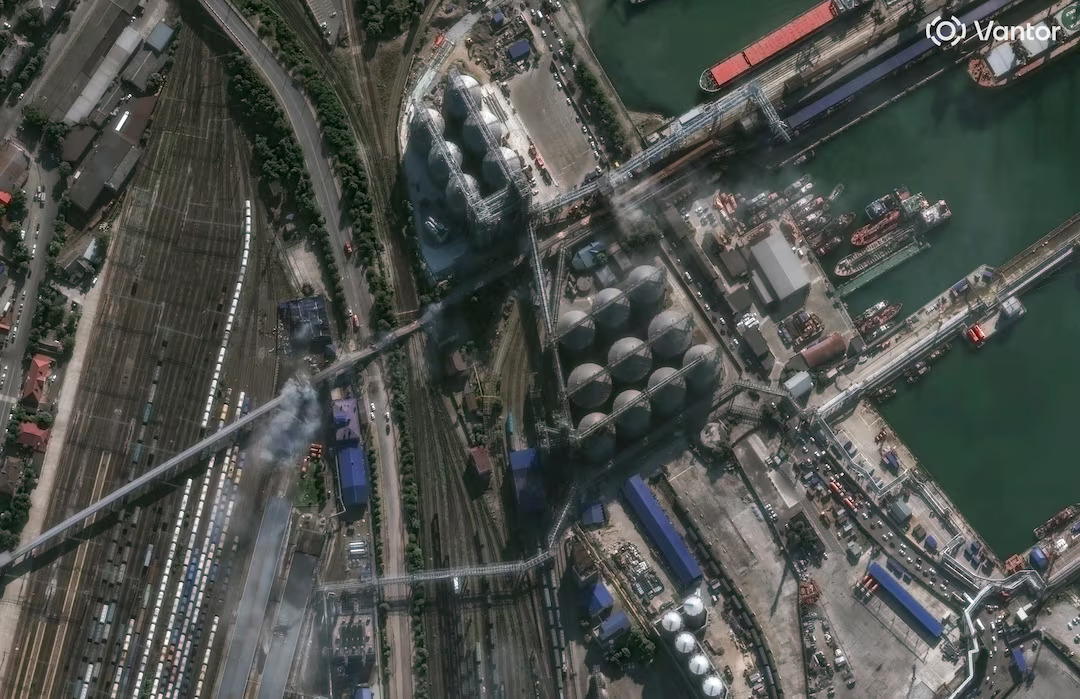
Attacks between Russia and Ukraine are now affecting not only military targets but also ports, energy infrastructure and commercial vessels.
The Black Sea is critically important for the oil and grain exports of Russia, Ukraine and Kazakhstan, as well as for global food trade.
Attacks on Ukrainian ports have also caused a significant decline in the country’s grain exports. According to Reuters data, Ukraine’s grain exports fell by 75 percent in the first two weeks of August compared with the same period last year.
Türkiye’s imports of Russian oil have also been affected
The security crisis in the Black Sea has also begun to affect Türkiye economically.
According to data published by Reuters on August 14, Türkiye reduced its oil purchases from Russian Black Sea ports in July, and imports are expected to decline further in August.
Attacks carried out by Ukraine with unmanned aerial vehicles have disrupted Russia’s oil export terminals in the Black Sea, affecting shipments to Türkiye as well.
This development shows that Ankara’s call for the security of commercial maritime transport in the Black Sea is important not only diplomatically but also economically.
Will Ankara’s initiative continue?
Since the beginning of the Russia-Ukraine war, Türkiye has played an important role in mediation efforts as one of the few NATO countries able to maintain diplomatic relations with both countries.
Ankara previously brought Russian and Ukrainian delegations together in Istanbul and played a critical role, alongside the United Nations, in establishing the Black Sea Grain Initiative.
The new Black Sea initiative has a more limited initial objective: keeping commercial vessels and civilian maritime transport out of the conflict before a ceasefire is achieved across the entire war.
However, Moscow’s statement on August 14 indicates that reaching such an agreement between the parties will not be easy.
It will be closely watched whether Türkiye continues contacts with both Moscow and Kyiv in the coming period and works on a new mechanism to halt attacks on commercial vessels in the Black Sea.