- BIST10012,151-0.94%
- USD49.220.00%
- EUR55.21+0.28%
- GOLD4,195.90-0.48%
- INTEREST37.00%-1.00
- BITCOIN82,825-1.01%
- October 13, 202619°
- BIST10012,151-0.94%
- USD49.220.00%
- EUR55.21+0.28%
- GOLD4,195.90-0.48%
- INTEREST37.00%-1.00
- BITCOIN82,825-1.01%
- October 13, 202619°
The 10th anniversary of FETÖ’s July 15 coup attempt traces the night hour by hour
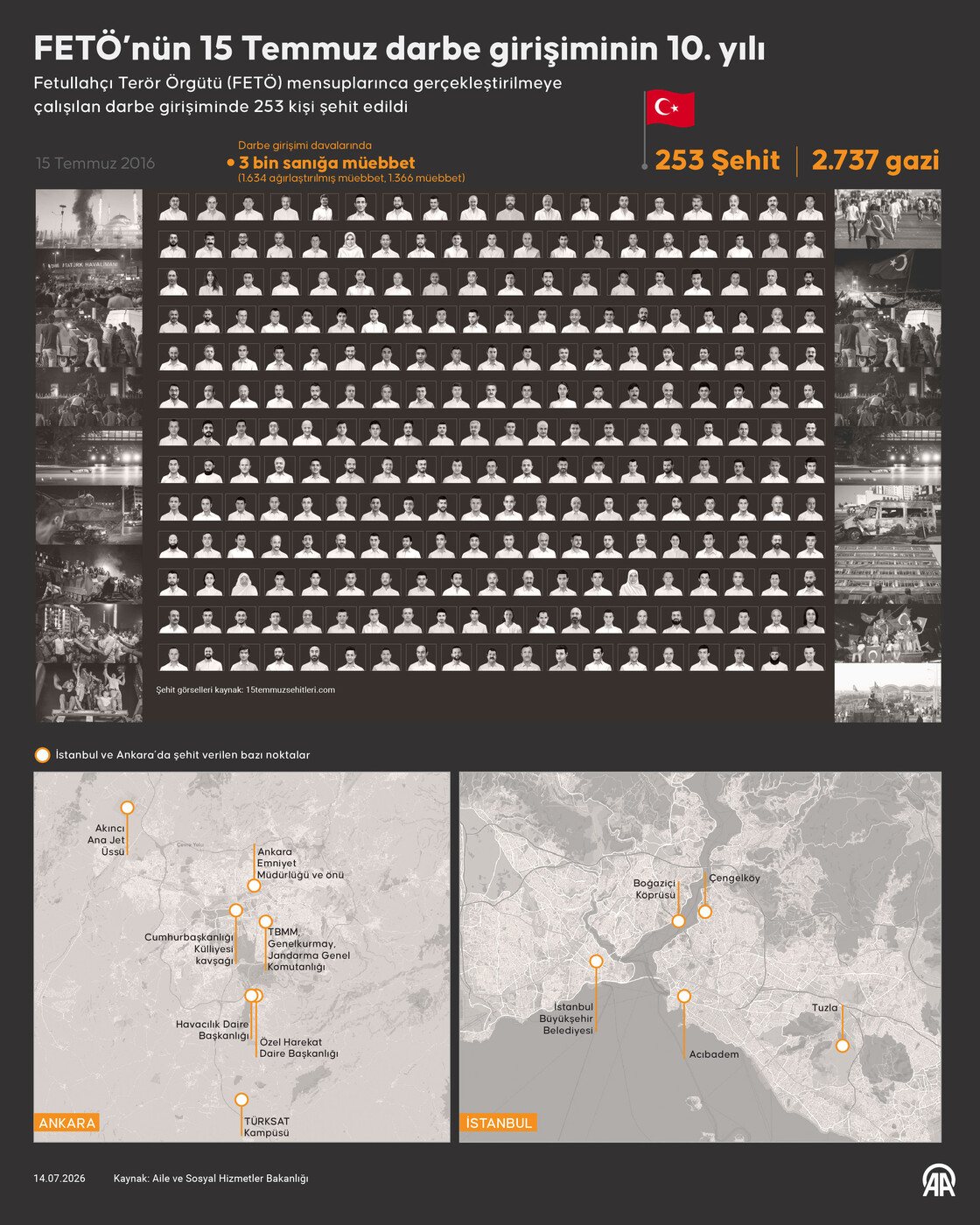
Ten years have passed since the coup attempt launched by the Fetullah Terrorist Organization (FETÖ) on July 15, 2016, in which 253 people were martyred.
Ten years have passed since FETÖ’s July 15, 2016 coup attempt, when the organization tried to seize control of Türkiye in a single night. Here is the process leading up to that night and what happened hour by hour.
After infiltrating state institutions for many years, FETÖ had previously tried to force the government to take a step back through plots such as summoning then-Undersecretary of the National Intelligence Organization Hakan Fidan and senior officials of the agency to give statements, the December 17–25 investigations and the interception of MİT trucks, but it had failed.
After the AK Party returned to power with 49 percent of the vote in the Nov. 1, 2015 general elections, the organization realized that the government would remove FETÖ-affiliated soldiers through the decisions of the Supreme Military Council (YAŞ). Following detention proceedings launched by the İzmir Chief Public Prosecutor’s Office against organization members in the military, including generals, the structure decided to take action.
Fetullah Gülen, the organization’s ringleader, appeared on camera on March 19, 2016, wearing a khaki-colored robe and openly called on soldiers affiliated with the organization to stage a coup.
After receiving the order, organization members began preparations for a coup across the country. As part of the planning, FETÖ’s civilian administrators traveled to the US from December 2015 onward and held a series of meetings with Gülen.
The organization also held meetings as part of preparations inside Türkiye. Finally, on July 6, 7, 8 and 9, it gathered at a villa in Ankara’s Konutkent district under the leadership of Adil Öksüz, FETÖ’s so-called imam for the Turkish Armed Forces. In addition to Öksüz, the meeting was attended by so-called civilian imams Hakan Çiçek, Nurettin Oruç, Harun Biniş and Kemal Batmaz, who were captured at Akıncı Air Base, used as the coup’s so-called “command center”; former brigadier generals Mehmet Partigöç and Gökhan Şahin Sönmezateş, so-called members of the Peace at Home Council; Brig. Gen. Ömer Faruk Harmancık; colonels Murat Koçyiğit and Bilal Akyüz; Col. Mustafa Barış Avıalan; Lt. Col. Turgay Sökmen; former Brig. Gen. Halil İbrahim Yıldız; and former Col. Hakan Bıyık.
After the meetings, FETÖ members Öksüz and Batmaz traveled to the US again on July 11 and presented the coup plan to the organization’s ringleader, Gülen. After receiving approval, the organization members returned to Türkiye on July 13 and began waiting for 3 a.m. on July 16, set as the start of the coup.
A major’s tip exposed the coup plan
Hours before the planned attack, a pilot major serving at the Army Aviation Command went to the MİT Presidency and conveyed information that “FETÖ members were planning to detain Hakan Fidan.”
Fidan passed the intelligence on to then-Deputy Chief of the General Staff Gen. Yaşar Güler and then sent an aide to the General Staff headquarters to convey the details.
Gen. Güler, who met with the MİT official, informed then-Chief of the General Staff Gen. Hulusi Akar about the substance of the matter. Akar then instructed the Turkish Armed Forces Operations Center to have all airborne elements return to their bases and close the airspace to flights.
Akar also assigned then-IV Corps Commander Lt. Gen. Metin Gürak from the Etimesgut Armored Units School and Training Division Command to prevent armored vehicles from leaving the base. He directed then-Land Forces Commander Gen. Salih Zeki Çolak to the Army Aviation Command to counter helicopter flights.
At the same time, Staff Lt. Col. Bünyamin Tuner, Gen. Güler’s former chief of staff, informed Brig. Gen. Mehmet Partigöç, the former head of the General Staff Personnel Planning and Management Department and one of the figures who would direct the coup, that MİT Undersecretary Fidan had met with Akar. Information about the meeting between Akar and Fidan and Çolak’s arrival at the Army Aviation Command began to spread among the coup plotters.
The coup plotters moved up the time after being exposed
After the information was leaked, the attempt planned to begin at 3 a.m. on July 16 was brought forward to 8:30 p.m. on July 15, with the approval of Adil Öksüz and the other civilian imams who would direct the coup from Akıncı Air Base.
Immediately after the order, 33 selected and fully equipped maroon berets from the Special Forces Command gathered at Akıncı Air Base and set out toward the General Staff headquarters.
Former General Staff Strategy Department head Maj. Gen. Mehmet Dişli, Chief of General Staff Chief Adviser Col. Orhan Yıkılkan, Brig. Gen. Mehmet Partigöç and Chief of Staff Col. Ramazan Gözel gathered to direct the attempt at the General Staff headquarters.
At 9 p.m., Mehmet Dişli informed Gen. Akar of the coup. Realizing that he could not persuade Akar, Dişli ordered the team waiting outside the office to intervene. Gözel, Yıkılkan, former aide-de-camp Lt. Col. Levent Türkkan, former deputy aide-de-camp Capt. Serdar Tekin and former senior master sergeant Abdullah Erdoğan detained Gen. Akar.
The night’s first martyr: noncommissioned officer Bülent Aydın
On the orders of the coup plotters at the headquarters, former Brig. Gen. Murat Aygün, commander of the 58th Artillery Brigade stationed in Polatlı, ordered vehicles, including missile launcher systems, to leave the barracks to seize critical points in Ankara.
The first communiqué, titled “Preparation Alert and Unit Movement,” was sent through the General Staff Message and Document Distribution System (MEDAS). The so-called martial law assignment list bearing the signatures of Partigöç and Turhan was also delivered to units through MEDAS.
The coup plotters then issued a second order through the same system, titled “Armored Combat Vehicle Movement,” to occupy critical roads and intersections in cities and public institutions. At 9:53 p.m., they ordered soldiers outside the barracks to return to their units. The coup plotters moved into action and seized the Disaster Coordination Center (AKOM) in Kağıthane, known as “Istanbul’s watchful eye.”
Bülent Aydın, the protection noncommissioned officer of Land Forces Commander Çolak, was martyred by the coup plotters at the General Staff headquarters and became the first martyr of July 15.
The first investigation into the coup attempt opened that night
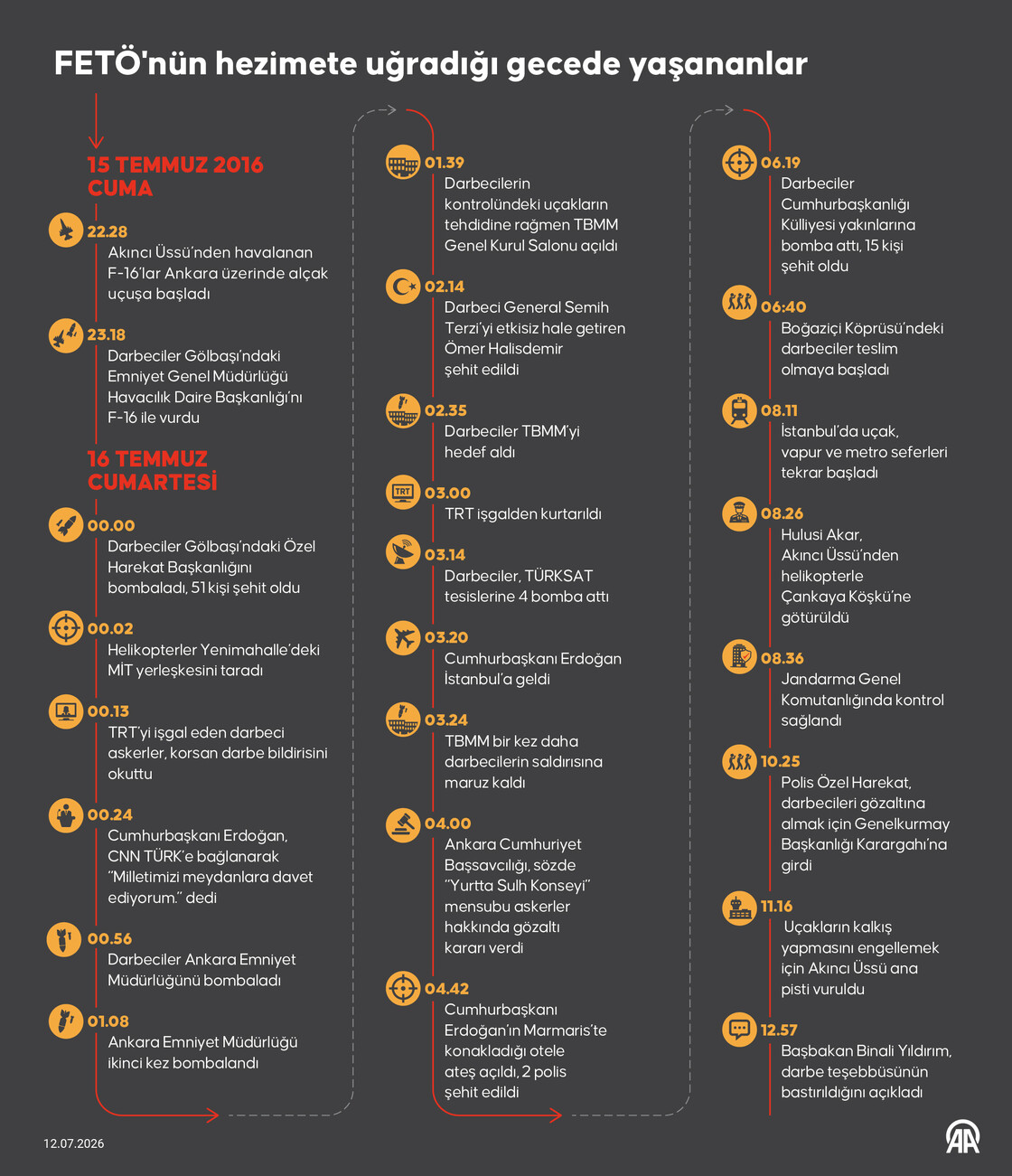
F-16s taking off from Akıncı Air Base began low-level flights over Ankara. Military activity was broadcast by news channels at 10:28 p.m., while the closure of crossings on Istanbul’s Bosphorus and Fatih Sultan Mehmet bridges by soldiers was announced as breaking news.
Then-Prime Minister Binali Yıldırım joined NTV by phone at 11:02 p.m. and said: “The government representing the nation is in office. Those who launched this attempt, those who committed this madness and those involved in this unlawful act will pay the heaviest price.”
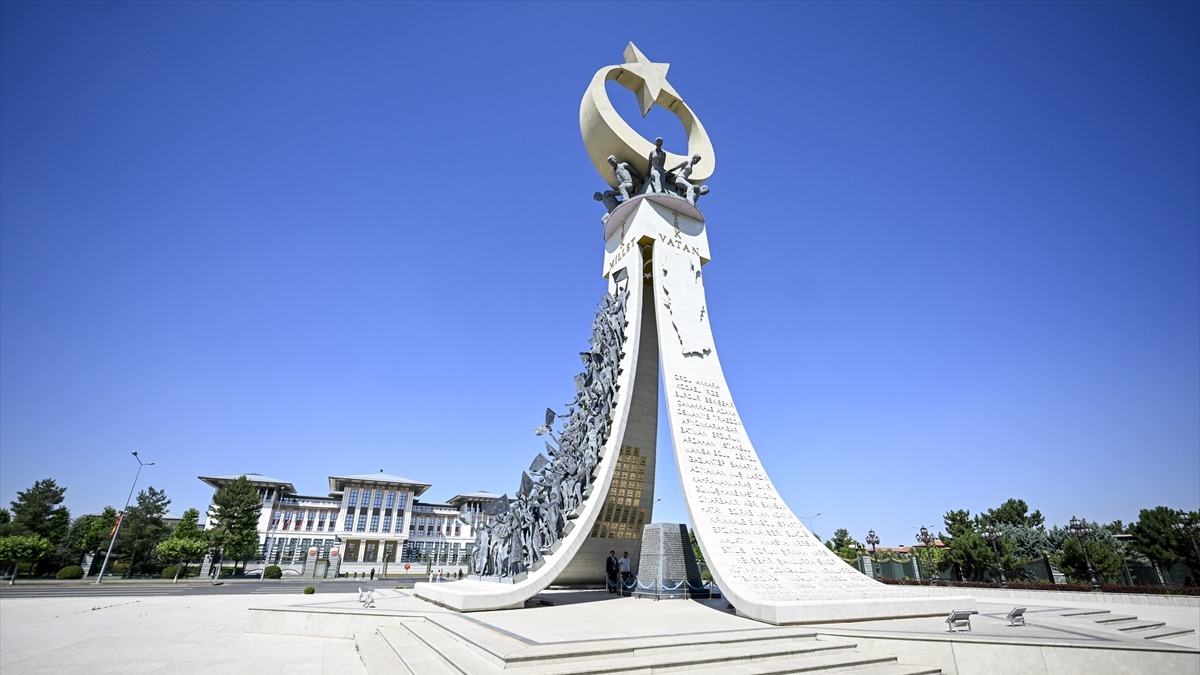
The Ankara Chief Public Prosecutor’s Office launched an investigation into the coup attempt at 11:05 p.m. Meanwhile, coup-plotting pilots attacked the General Directorate of Security Aviation Department in Gölbaşı and then the Special Operations Department; helicopters under the coup plotters’ control fired on the MİT compound in Yenimahalle. Former Lt. Col. Ümit Gençer seized TRT and had the coup communiqué read on air.
Erdoğan’s call to take to the streets changed the course of events
President Recep Tayyip Erdoğan joined CNN Türk live at 12:24 a.m. and delivered a historic speech that changed the course of the coup attempt, calling on “our nation to take to the squares.”
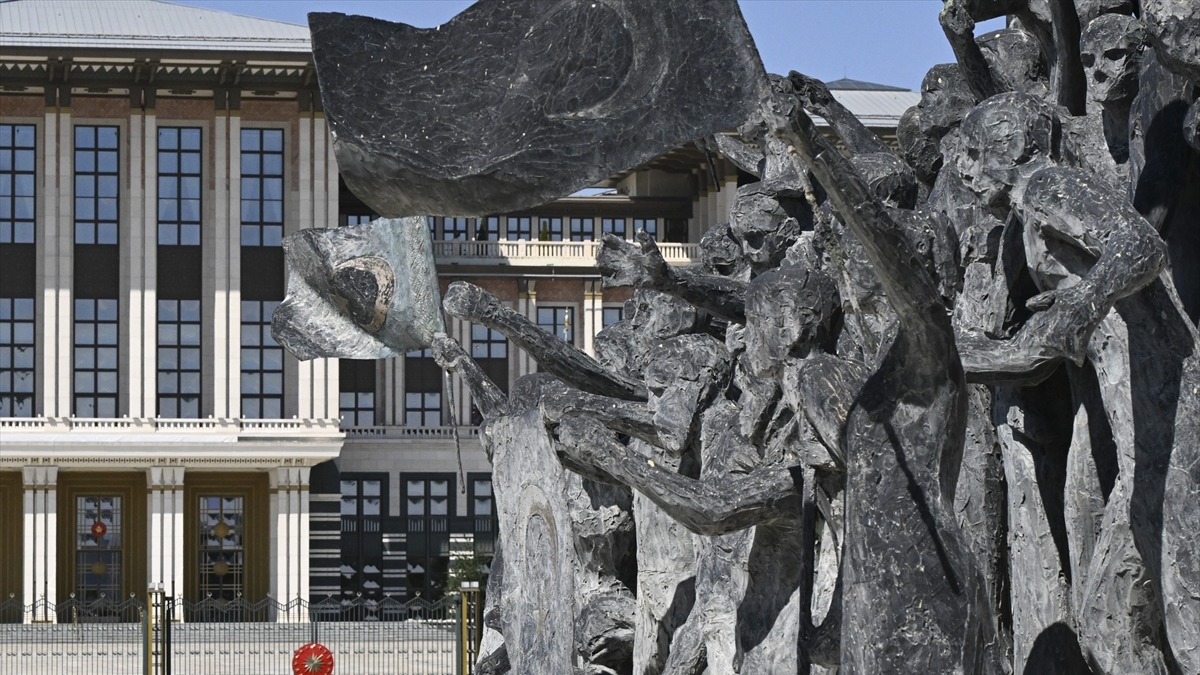
Helicopters opened fire on civilians protesting the coup plotters in front of the Gendarmerie General Command headquarters; nine people were martyred and dozens were wounded in the attack.
At 12:56 a.m., coup-plotting pilots Mehmet Yurdakul and İlhami Aygül bombed the Ankara Police Department with a fighter jet. About 10 minutes later, coup pilot Mustafa Özkan also attacked the same area.
Ömer Halisdemir neutralized the coup-plotting general
The aircraft of coup-plotting Brig. Gen. Semih Terzi, who had taken off from Diyarbakır with a battalion of maroon berets, landed at Etimesgut Airport at 1:13 a.m. Then-Special Forces Commander Lt. Gen. Zekai Aksakallı reached aide-de-camp Ömer Halisdemir by phone and asked him to neutralize Terzi.
Terzi arrived at the Etimesgut Special Air Regiment Command with the soldiers under his command and went by helicopter to the headquarters in Gölbaşı at 2:14 a.m. to take over command of the Special Forces Command. After advancing to the headquarters’ entrance, Terzi was shot and neutralized by Halisdemir, a hero of July 15. Halisdemir was later martyred by fire opened by Terzi and some of the soldiers who had come from Diyarbakır.
The Grand National Assembly was bombed for the first time in its history
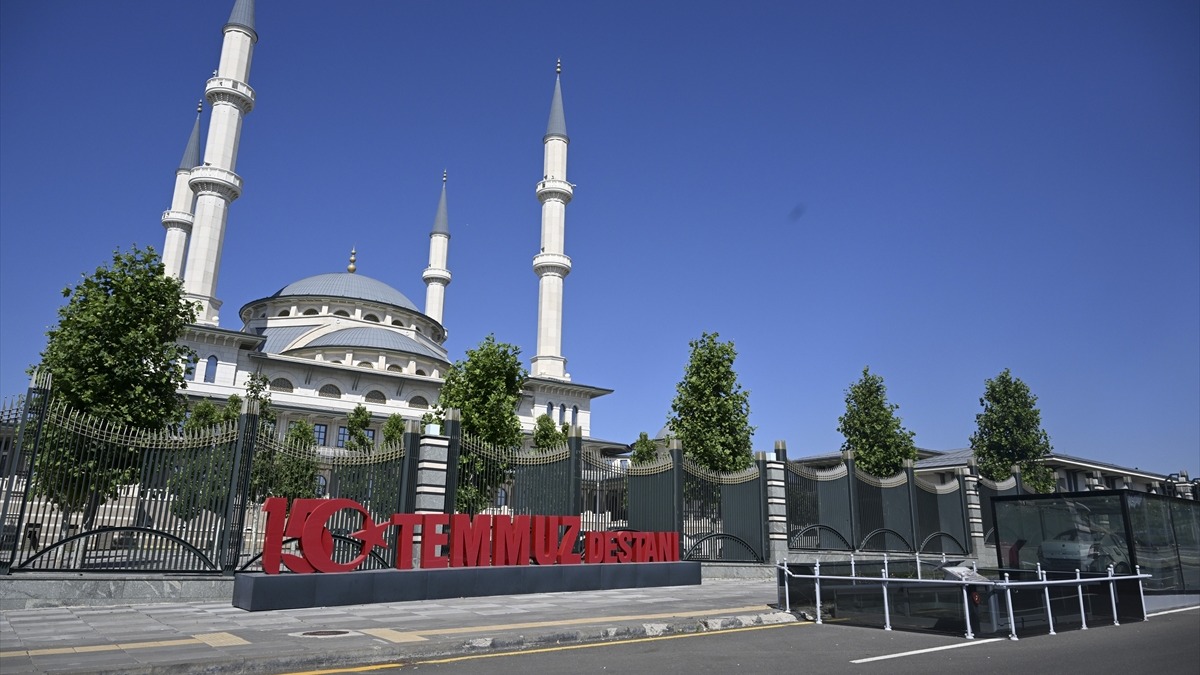
Thirty-six civilians protesting the coup attempt were martyred in front of the General Staff headquarters. The coup plotters, trying every means to break the resistance, targeted Parliament. A bomb dropped on the Grand National Assembly from an F-16 flown by former pilots Hasan Hüsnü Balıkçı and Uğur Uzunoğlu wounded 32 people.
As TRT returned to normal broadcasting after civilians liberated it from occupation at 3 a.m., the coup plotters there surrendered to police. Coup pilot Hüseyin Türk dropped four bombs on the TÜRKSAT facilities between 3:14 and 3:19 a.m. in an attempt to interrupt television broadcasts.
Following President Erdoğan’s call, civilians began filling city squares and critical public institutions in opposition to the coup. Coup plotters who occupied the control tower at Istanbul Atatürk Airport were neutralized by police special operations teams. Shortly afterward, the ATA aircraft carrying President Erdoğan landed on the runway, and thousands of civilians welcomed Erdoğan at the airport.
After these developments in Istanbul, the Grand National Assembly was targeted again. At 3:24 and 3:25 a.m., former pilot Capt. Hüseyin Türk bombed Parliament for a second time with an F-16. As civilians continued resisting in the streets and patriotic soldiers resisted in the barracks, the Ankara Chief Public Prosecutor’s Office issued detention orders at 4 a.m. for “judicial personnel linked to FETÖ,” “so-called members of the Peace at Home Council” and “those who participated in the coup attempt.”
The coup attempt was suppressed in approximately 21 hours
At 6:19 a.m., former pilot First Lt. Müslim Macit dropped two bombs on the Presidential Complex intersection; 15 civilians were martyred and seven people were wounded in the attack.
Turgut Aslan, head of the TEM Department who had been detained at the Gendarmerie General Command, and his protection officer Hasan Gülhan were taken outside the building with their hands and eyes bound and shot in the head by coup-plotting Col. Erkan Öktem. Aslan was seriously wounded, while Gülhan was martyred.
Prime Minister Yıldırım authorized Lt. Gen. Ziya Kemal Kadıoğlu to shoot down aircraft controlled by the coup plotters. Seeing that the attempt was failing, the coup plotters on Istanbul’s Bosphorus Bridge surrendered.
At 8:26 a.m., Chief of the General Staff Akar, who had been detained by the coup plotters, was brought by helicopter from Akıncı Air Base to Çankaya Mansion. On the instructions of President Erdoğan and National Defense Minister Fikri Işık, the main runway at Akıncı Air Base was struck to prevent aircraft from taking off.
At 12:57 p.m., Prime Minister Yıldırım announced at a news conference held at Çankaya Mansion with Minister Işık and Chief of the General Staff Akar that the coup attempt had been suppressed. The attempt was brought under control across the country in approximately 21 hours.
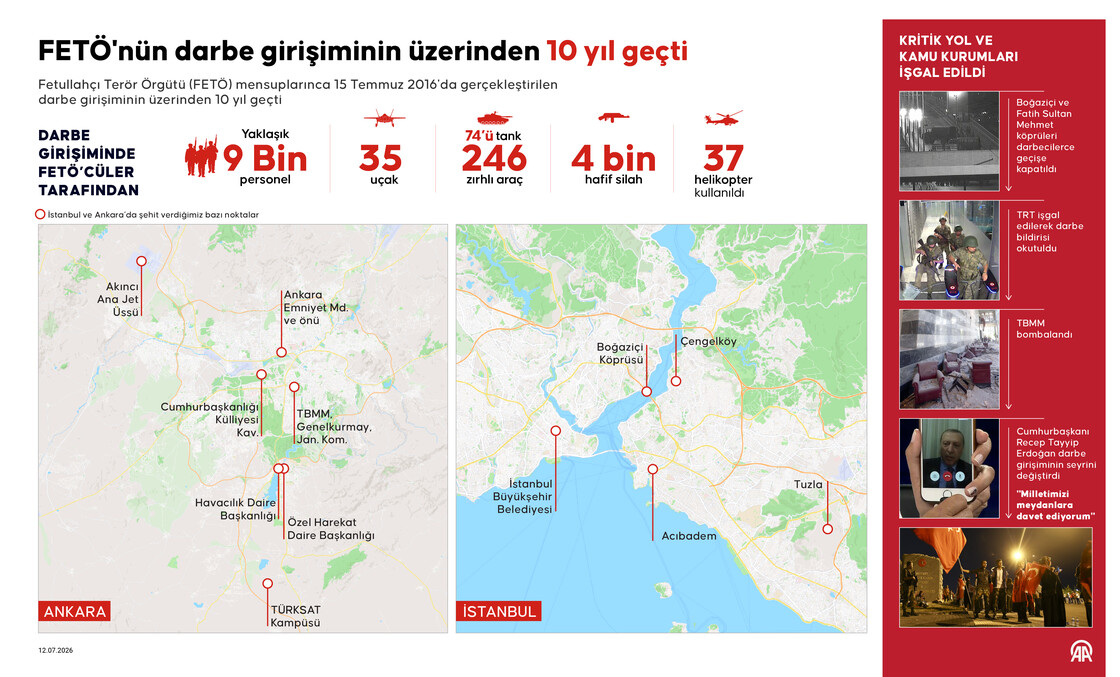
Thus, under the leadership of President Erdoğan, the July 15, 2016 coup attempt was prevented through the nation’s resistance and patriotic security forces. Records show that approximately 9,000 military personnel, 35 aircraft, 37 helicopters, 246 armored vehicles, including 74 tanks, and nearly 4,000 light weapons were used in the attempt, in which 253 military and civilian people were martyred by organization members.
Coup planner Gülen died in Pennsylvania
Gülen, the organization’s ringleader who laid its foundations in İzmir’s Kestanepazarı district in the 1960s, directed numerous plots from the Chestnut Retreat Center in the US, where he fled in 1999, as well as the treacherous coup attempt of July 15, 2016, which resulted in the deaths of 253 people.
Gülen, the ringleader of the terrorist organization that secretly organized within the state and aimed to abolish the constitutional order and infiltrate every level of the state, particularly politics, civil administration, the judiciary, finance, the military and security, under the name of a “parallel organization,” lived in the US state of Pennsylvania.
Living under tight security and secrecy on a farm consisting of eight villas on a 130-acre property in Pennsylvania, Gülen continued to issue instructions to organization members from there. Despite Türkiye’s seven extradition requests prepared against him for 27 separate crimes, US authorities took no concrete step toward Gülen’s extradition.
Gülen died on Oct. 20, 2024, at St. Luke’s Hospital’s Monroe campus. The death of the terrorist organization’s ringleader was officially confirmed by a document conveyed to Turkish authorities by the US Department of State.
Stay Updated with The Turkiye Times
Subscribe to be informed about special news, developments and announcements. We will keep you informed.
By signing up, you agree to our Privacy Policy