- BIST10012,151-0.94%
- USD49.220.00%
- EUR55.21+0.28%
- GOLD4,195.90-0.48%
- INTEREST37.00%-1.00
- BITCOIN82,706-1.16%
- October 13, 202619°
- BIST10012,151-0.94%
- USD49.220.00%
- EUR55.21+0.28%
- GOLD4,195.90-0.48%
- INTEREST37.00%-1.00
- BITCOIN82,706-1.16%
- October 13, 202619°
The Alexandria Library stands as a guardian of history, culture and art
The Alexandria Library on Egypt’s Mediterranean coast reopened in 2002 at the site of the ancient library and evolved beyond books into a center for culture, science and art. The complex, covering approximately 80,000 square meters, welcomes 1.5 million visitors annually and operates with museums, research centers, exhibition halls and scientific units.


The Alexandria Library, located on Egypt’s northern Mediterranean coast, operates as a comprehensive cultural complex that brings together history, culture, heritage, art and scientific research under one roof.
Reopened in October 2002 at the site of the ancient Library of Alexandria, the institution is not merely a place where books are collected. It serves as a scientific and academic center established to preserve cultural heritage and generate new knowledge.
Reviving the historic library
Egypt’s State Information Service says the new library was established at the site of the ancient structure to preserve the memory of one of history’s best-known libraries. Efforts to revive the project date back to the late 1980s, when the United Nations Educational, Scientific and Cultural Organization (UNESCO) called for contributions.
During a later stage of the project, then-Egyptian President Hosni Mubarak established the General Authority of the Library of Alexandria. The modern library was designed at the site of the original structure with the aim of restoring its historic role.
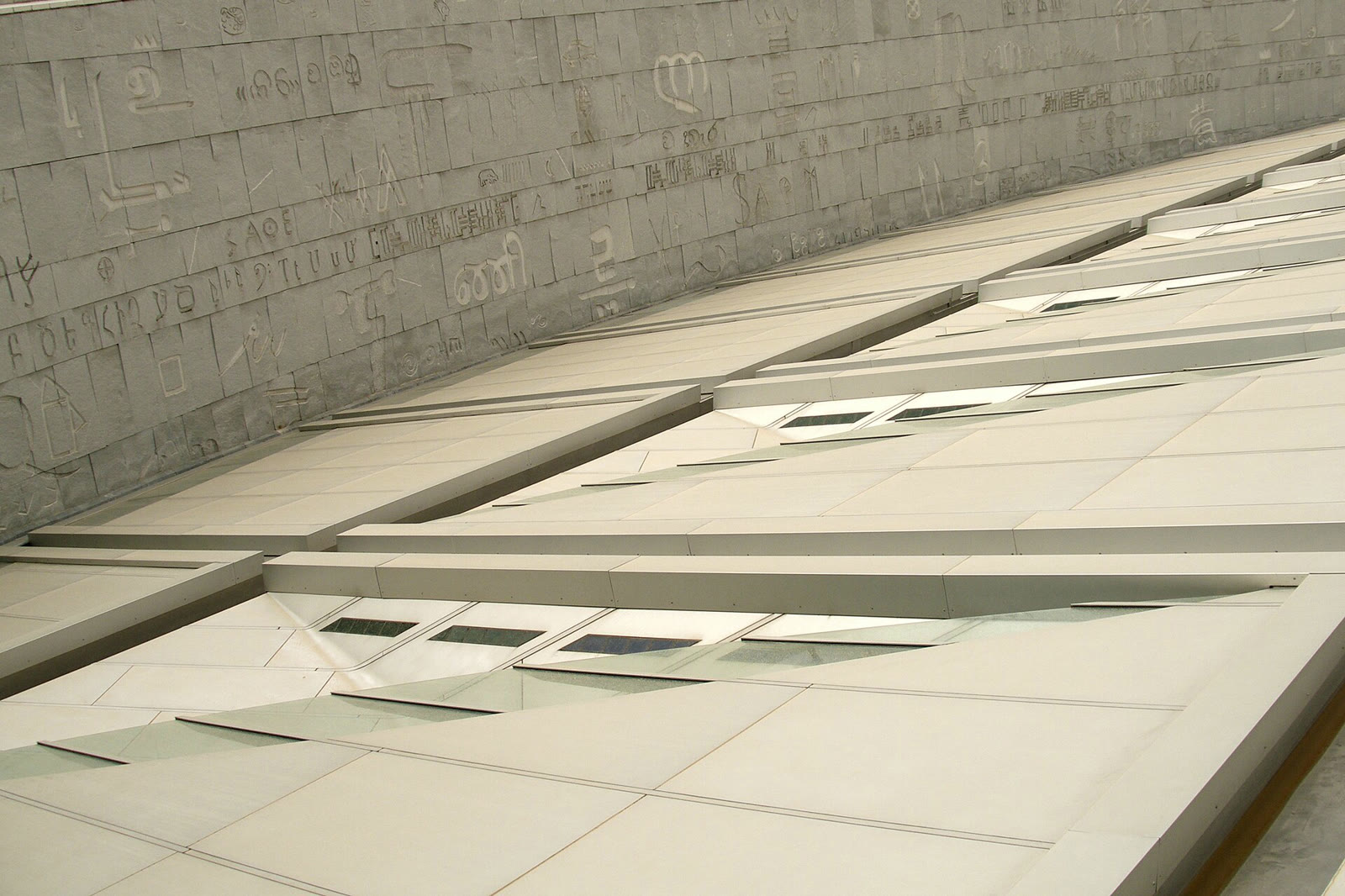
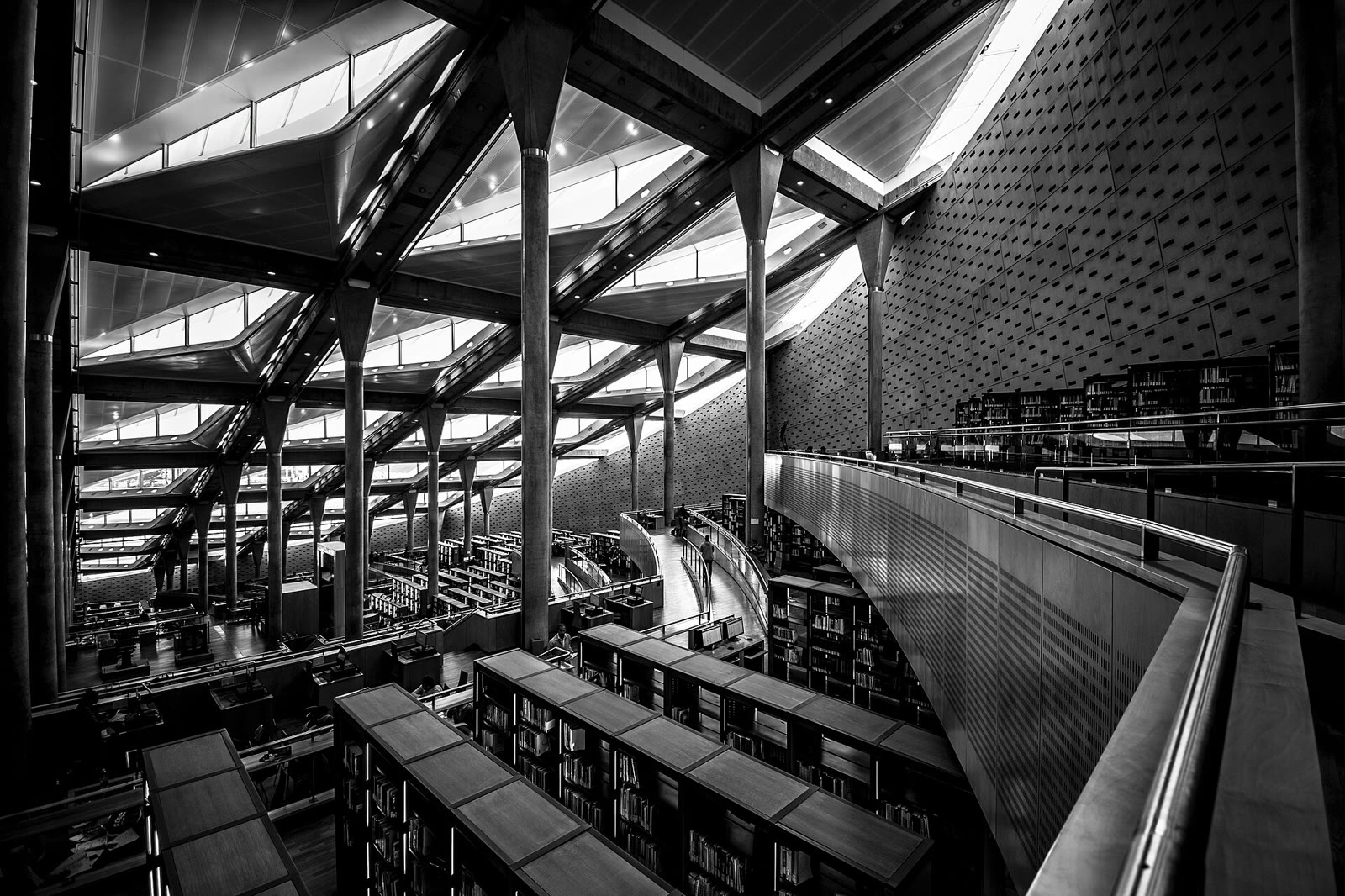
The structure was designed in the form of a sloping cylinder, with four floors underground to protect them from environmental factors and six floors above ground. Granite stones bearing characters from different alphabets around the world were used on the exterior walls; a planetarium and a science museum were also established near the library.
Museums, research centers and exhibition spaces
Spanning approximately 80,000 square meters, the Alexandria Library welcomes 1.5 million visitors each year. The complex houses four museums: archaeology, manuscripts, former Egyptian President Anwar Sadat, and the history of science.
The library also includes a planetarium affiliated with its science center, an exploration hall designed to introduce children to science, 12 academic research centers and 16 permanent exhibitions. Four temporary art exhibition halls and a conference center capable of hosting thousands of people are also part of the complex.
Preserving historical heritage through digital projects
Egyptian historian Khaled Azab said the Alexandria Library is an important institution for preserving history, culture, art and intangible heritage. Azab said the library documents fields such as song, music and visual arts through digital projects.
Azab said the library produces and disseminates knowledge through print and digital tools. Its research projects include the “Internet Archive” and “Memory of Contemporary Egypt,” which contains documents and photographs shedding light on Egypt’s history in the 19th and 20th centuries.
The research center established by the library for inscriptions and alphabets conducts studies on the history of writing around the world. The center maintains digital archives of archaeological inscriptions and also examines the history and development of Arabic script.
The Alexandria Library is also active in the arts. Its own orchestra performs at concerts in Egypt and abroad, while a visual arts collection featuring works by Arab and international artists adorns the library’s passageways and halls.
The scientific legacy of the ancient library
Egyptian chief archaeologist Magdy Shaker said the Alexandria Library was not merely a place for reading and collecting books, but also functioned as a scientific and academic institute and a comprehensive cultural university.
According to Shaker, studies related to correcting the ancient Egyptian calendar were conducted at the ancient library, which had specialized departments for fields such as medicine, geography and art, as well as a science museum. The copying of books and manuscripts transported on ships leaving the city also contributed to expanding the library’s collection.
The ancient library was established in the early 3rd century BC by order of Ptolemy I, who took control of Egypt from Alexander the Great. The institution developed during the reign of Ptolemy II, collected books from different sources and hosted scholars from various parts of the world.
Egyptian official records indicate that the library’s collection contained approximately 700,000 volumes, including the works of Homer and the library of Aristotle. Euclid, Archimedes and Eratosthenes, identified as the first person to calculate the diameter of Earth, worked there.
The library declined over time and was damaged in a fire that broke out under mysterious circumstances during Julius Caesar’s campaign in Alexandria in 48 BC. The institution is believed to have disappeared entirely around AD 400.
Shaker said the state policy of reviving the library at its original location in the 1980s aimed to restore the institution’s pioneering role in history, art and culture. Senior officials of the period and heads of state, including former French President Jacques Chirac, attended the opening ceremony of the modern library.
Stay Updated with The Turkiye Times
Subscribe to be informed about special news, developments and announcements. We will keep you informed.
By signing up, you agree to our Privacy Policy