- BIST10012,151-0.94%
- USD49.220.00%
- EUR55.21+0.28%
- GOLD4,189.90-0.63%
- INTEREST37.00%-1.00
- BITCOIN82,595-1.29%
- October 12, 202619°
- BIST10012,151-0.94%
- USD49.220.00%
- EUR55.21+0.28%
- GOLD4,189.90-0.63%
- INTEREST37.00%-1.00
- BITCOIN82,595-1.29%
- October 12, 202619°
Trade Minister Bolat Discusses 'Made in EU' Policy in Brussels
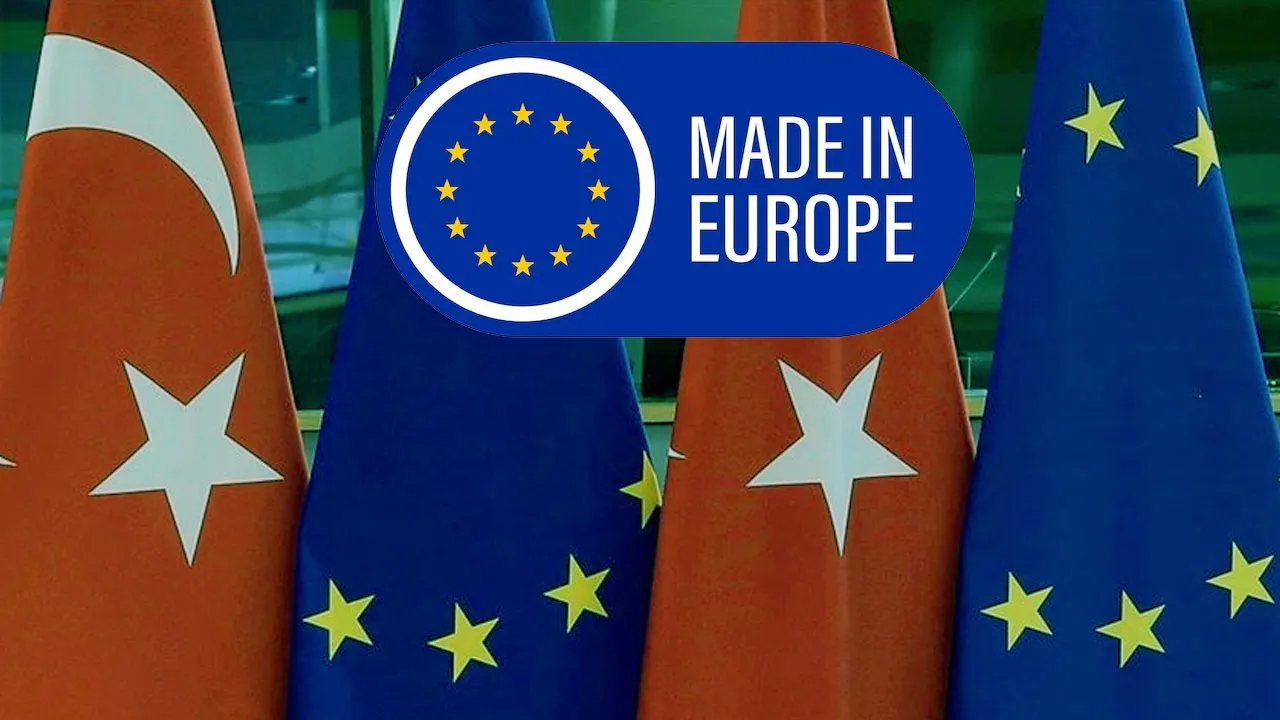
Trade Minister Ömer Bolat emphasized in meetings with European Union officials and business circles in Brussels that the EU's 'Made in EU' policy should not exclude Turkey. Full and unconditional participation within the Customs Union framework was called for, particularly in the automotive sector.


Trade Minister Ömer Bolat, during his working visit to Brussels on July 16-17, addressed the European Union's (EU) 'Made in EU' policy and the draft Industrial Acceleration Act. According to a statement from the Ministry, Bolat conveyed Turkey's views and assessments to his interlocutors.
Key Meetings at the European Parliament
Bolat met with Iuliu Winkler, Vice-Chair of the European Parliament's Committee on International Trade (INTA), and Dirk Gotink, Shadow Rapporteur for the Industrial Acceleration Act. During the meetings, it was stated that the 'Made in EU' policy should be handled on the basis of an inclusive approach reflecting the strategic nature of trade integration with the EU. Additionally, the expectation was shared that the 30-year Customs Union partnership and the established body of partnership law should be respected, and that Turkey's equivalent status with the EU should be preserved in the current draft.
Economic Diplomacy with Commission Members
In his meeting with Maros Sefcovic, European Commissioner for Trade and Economic Security, Minister Bolat discussed steel measures and progress in e-commerce. Ahead of the High-Level Trade Dialogue meeting to be held in October, agreement was reached on making progress with concrete steps. Steps to deepen cooperation in areas such as public procurement and digital trade were addressed. It was emphasized that the 'Made in EU' approach should be structured with a vision that supports deep industrial integration, especially in the automotive sector, and the Customs Union.
During the meeting with Valdis Dombrovskis, European Commissioner for Economy, the determination to strengthen secure supply chains and deepen economic ties in priority areas with a phased approach in the face of global challenges was reaffirmed. Bolat stated that the investment, industrial, and trade policies to be shaped in line with the EU's new economic vision should reflect deep trade integration with Turkey and the partnership law.
In the meeting with Marta Kos, European Commissioner for Enlargement, the strengthening of Turkey-EU trade and economic integration, increasing connectivity, improving the effective functioning of the Customs Union, and new areas of cooperation were discussed.
Automotive Sector in Focus
Bolat met with Sigrid de Vries, Director General of ACEA, the largest umbrella organization of the automotive sector in Europe and the main focus of the Industrial Acceleration Act. In the meeting, where the effects of the 'Made in EU' policy on the Turkey-EU automotive ecosystem were comprehensively assessed, the consensus was reaffirmed that Turkey should fully and unconditionally participate in this policy. Bolat also held a roundtable meeting with senior representatives of global automotive companies that are members of ACEA.
In another roundtable meeting attended by the Uludağ Automotive Industry Exporters' Association (OİB), the Automotive Industry Association (OSD), the Vehicle Supply Industrialists Association (TAYSAD), and the permanent representatives of EU member states, it was emphasized that Turkey is an inseparable part of the European automotive ecosystem.
Consultations with the Business Community and Civil Society
Minister Bolat met with Markus Beyrer, Director General of the Confederation of European Business (BusinessEurope), and emphasized the importance of preserving the strong value chains established through the Customs Union. It was stated that new steps to be taken in the areas of public procurement and digital trade would enhance Turkey-EU economic relations.
During the visit, Bolat also met with the Brussels representatives of the Turkish Exporters Assembly, the Foreign Economic Relations Board, the Union of Chambers and Commodity Exchanges of Turkey, the Turkish Industry and Business Association, the Turkish Business Confederation, and the Women Entrepreneurs Association of Turkey. A common assessment emerged that Turkey should be included in the Industrial Acceleration Act without any restrictions. It was reported that contacts would continue without slowing down until the legislative process is completed.
Stay Updated with The Turkiye Times
Subscribe to be informed about special news, developments and announcements. We will keep you informed.
By signing up, you agree to our Privacy Policy

















