- BIST10012,151-0.94%
- USD49.220.00%
- EUR55.21+0.28%
- GOLD4,192.30-0.57%
- INTEREST37.00%-1.00
- BITCOIN82,747-1.11%
- October 12, 202619°
- BIST10012,151-0.94%
- USD49.220.00%
- EUR55.21+0.28%
- GOLD4,192.30-0.57%
- INTEREST37.00%-1.00
- BITCOIN82,747-1.11%
- October 12, 202619°
Turkey's indigenous rubidium atomic clock launched into space
Turkey's indigenous rubidium atomic clock was launched into space aboard the SpaceX Transporter-17 mission. Minister of Industry and Technology Mehmet Fatih Kacır announced that the clock's first signal was successfully received.


Turkey's indigenous rubidium atomic clock was launched into space in line with the strategic goals of the National Space Program. Minister of Industry and Technology Mehmet Fatih Kacır announced that the clock was successfully placed into orbit as part of the SpaceX Transporter-17 mission and that the first signal was received from the spacecraft.
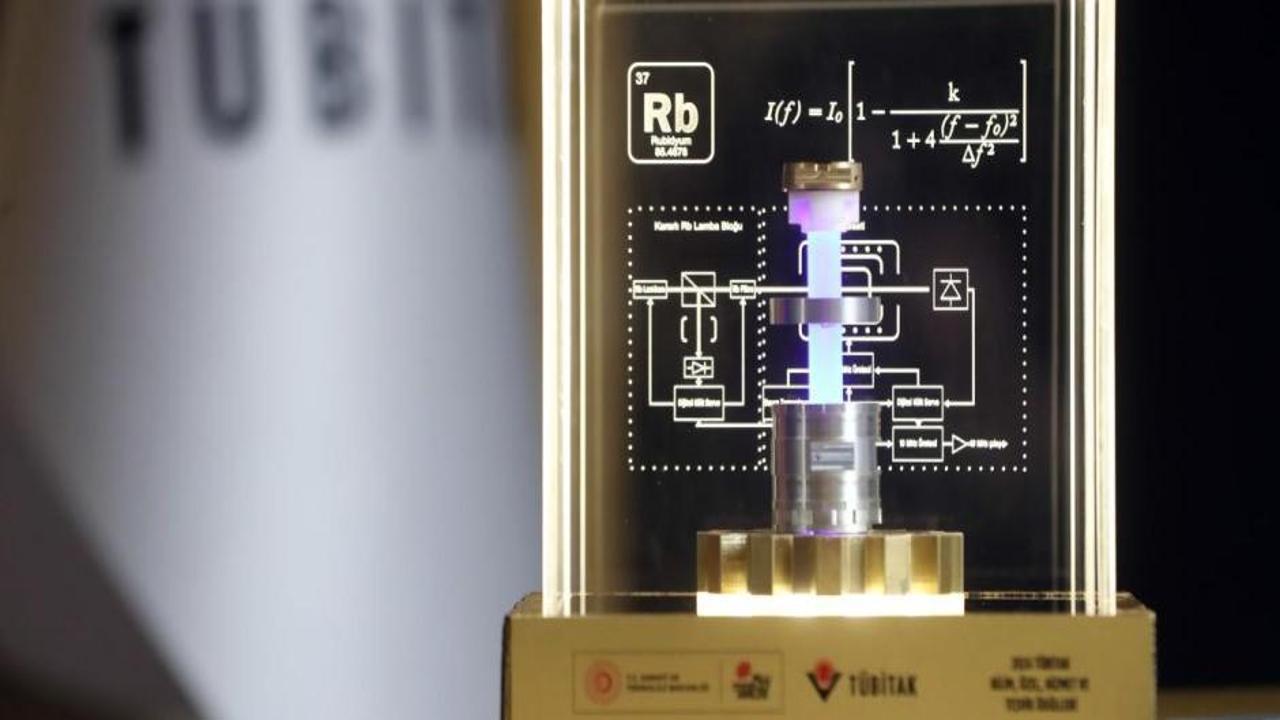
Atomic clocks measure time with extremely high precision by referencing the constant vibration frequencies between the energy levels of atoms and electrons. Minister Kacır stated that a rubidium atom vibrates 6,834,682,610 times per second between different energy levels.
Developed through domestic collaboration
The Rubidium Atomic Clock was developed domestically under the leadership of the Turkish Space Agency (TUA), with TÜBİTAK National Metrology Institute (UME) as the main contractor, in collaboration with TÜBİTAK Space and İTÜNOVA. Kacır emphasized that this clock will contribute to many critical technologies, from communications to navigation, and from scientific research to satellite systems.
"With the data to be obtained, valuable gains will be made towards high-precision atomic clock technologies that can be used in future satellite systems, communication infrastructures, navigation applications, and scientific space missions. I congratulate all my colleagues who contributed to this project, which is an important indicator of our vision to develop indigenous and national technologies in the space ecosystem."
Minister Kacır stated that with the successful completion of the SpaceX Transporter-17 mission, Turkey will join the ranks of countries with space-proven atomic clock technology. He said that this critical technology, which has been sourced from abroad until now, will be developed with national resources, providing cost and supply advantages for satellite manufacturers while reducing foreign dependency.
It was noted that the engineering, testing, and operational experience gained through the project will strengthen Turkey's capacity to develop next-generation satellite systems and space technologies.
Stay Updated with The Turkiye Times
Subscribe to be informed about special news, developments and announcements. We will keep you informed.
By signing up, you agree to our Privacy Policy