- BIST10011,131-3.02%
- USD50.47+0.05%
- EUR55.46+0.20%
- GOLD3,515.60-4.61%
- INTEREST36.00%-1.00
- BITCOIN58,766-5.07%
- November 20, 202617°
- BIST10011,131-3.02%
- USD50.47+0.05%
- EUR55.46+0.20%
- GOLD3,515.60-4.61%
- INTEREST36.00%-1.00
- BITCOIN58,766-5.07%
- November 20, 202617°
Turkish-American mathematician claims he proved Riemann hypothesis with Claude
Turkish-American mathematician Levent Alpöge, who works at Anthropic, said he found a proof of the 167-year-old unsolved hypothesis with the artificial intelligence model Claude. The proof has not yet been independently verified.


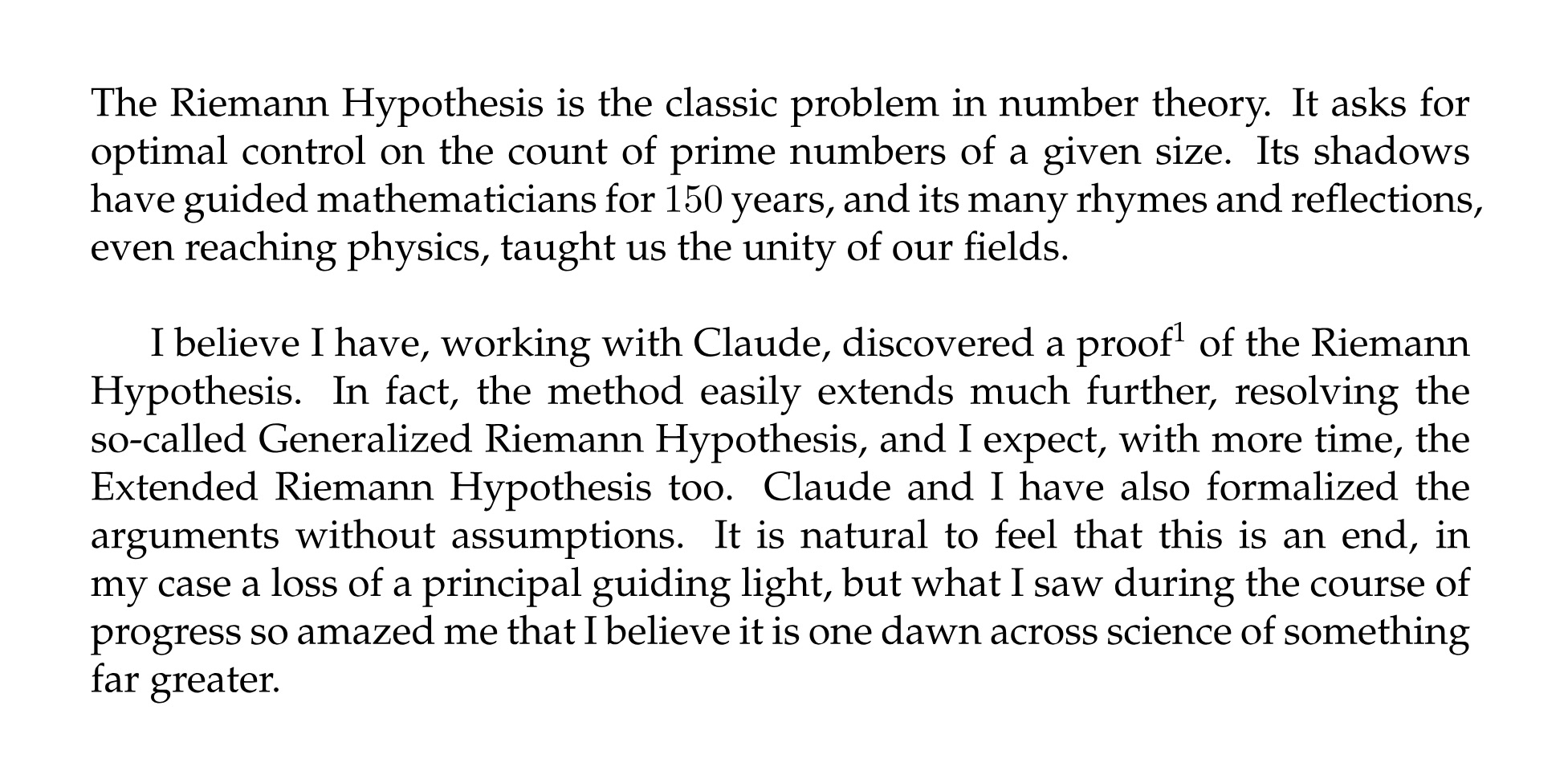
Turkish-American mathematician Levent Alpöge, who works at artificial intelligence company Anthropic, claimed he had found a proof of the Riemann hypothesis, one of mathematics’ most famous unsolved problems, with the company’s AI model Claude. In a four-page note published on his personal website Friday, Alpöge wrote, "I believe I have discovered a proof of the Riemann hypothesis by working with Claude."
Alpöge wrote that the method had gone further and also solved the Generalized Riemann Hypothesis, adding that he expected it to eventually extend to the Extended Riemann Hypothesis. He said that in the final stage, Claude had "left him far behind."
The proof has not yet been verified
The claim has not yet been verified by independent experts or published in a peer-reviewed journal. Instead of a conventional paper, Alpöge shared a 14-part archive written in the Lean programming language, which enables a computer to check every logical step. He said he would write a readable version later.
Andrew Sutherland, a mathematician at MIT, told Scientific American that he had independently compiled the Lean code, but that more work was needed to understand the proof’s mathematical details. The Clay Mathematics Institute lists the hypothesis among its seven Millennium Prize Problems and offers a $1 million award for its solution. To qualify for the prize, the solution must be published, withstand two years of scrutiny and gain general acceptance in the mathematical community.
The mystery of prime numbers
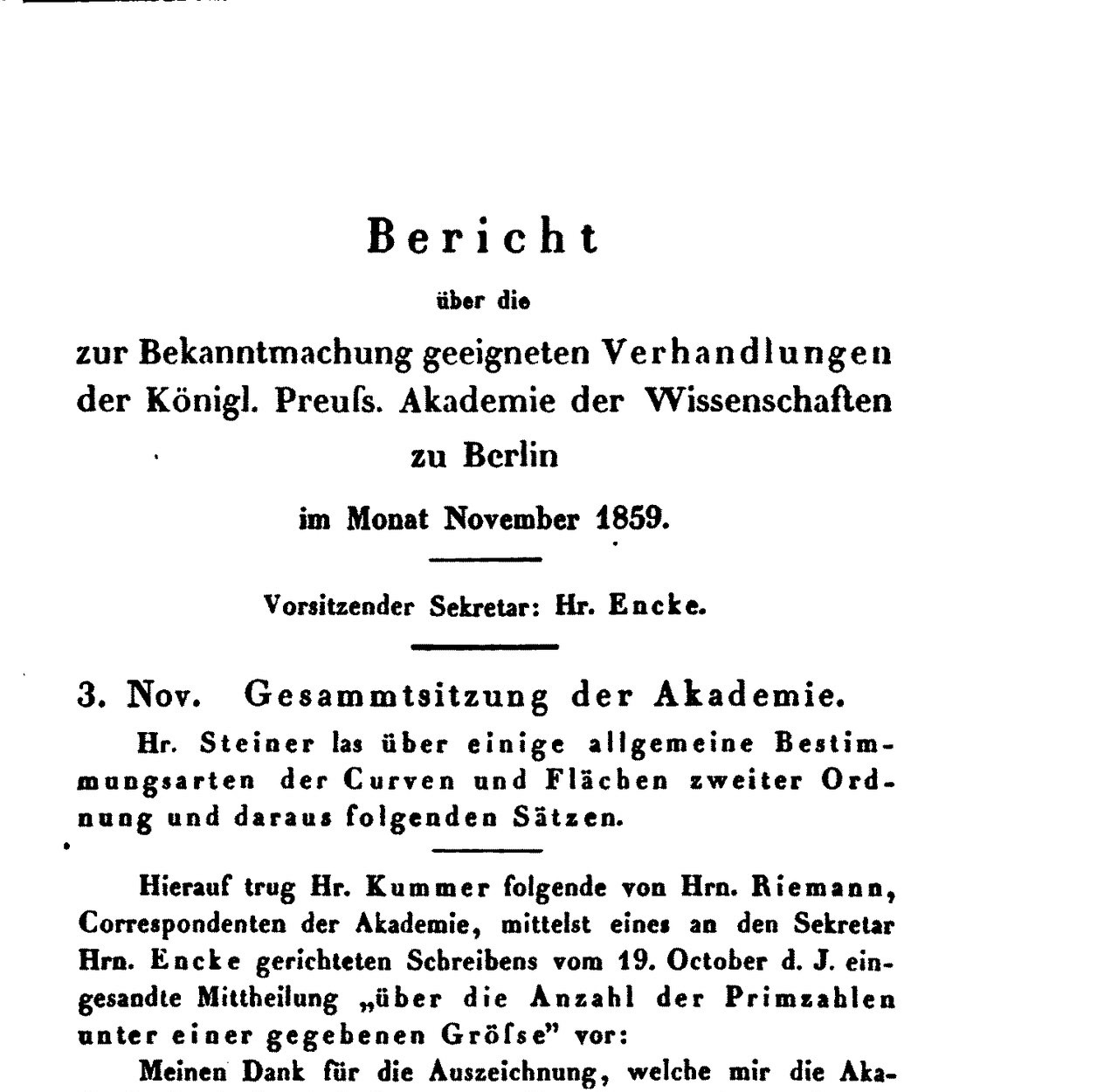
The hypothesis, proposed in 1859 by German mathematician Bernhard Riemann, states that the real part of every nontrivial zero of the Riemann zeta function is 1/2. It is considered key to understanding how prime numbers are distributed. Prime numbers also underpin encryption systems on the internet.
Born in 1992, Alpöge grew up on Long Island in New York. He graduated from Harvard, completed his doctorate at Princeton and joined Anthropic after working as a researcher at the Harvard Society of Fellows. In 2014, Alpöge told the Harvard Gazette that he looked forward to visiting relatives in Europe, particularly in Türkiye.
Have a story, event or announcement of your own?Send us your news on WhatsApp
Spotted an error in this story?Report it on WhatsApp
Share on all social platforms
Sponsored Ads
Featured Listings
Loading featured properties...
Stay Updated with The Turkiye Times
Subscribe to be informed about special news, developments and announcements. We will keep you informed.
By signing up, you agree to our Privacy Policy