- BIST10011,842-0.01%
- USD50.28+0.05%
- EUR55.60-0.24%
- GOLD3,865.40+0.32%
- INTEREST36.00%-1.00
- BITCOIN64,752-0.86%
- November 17, 202614°
- BIST10011,842-0.01%
- USD50.28+0.05%
- EUR55.60-0.24%
- GOLD3,865.40+0.32%
- INTEREST36.00%-1.00
- BITCOIN64,752-0.86%
- November 17, 202614°
Antalya AI Pledge reaches 80 endorsements and 271 commitments
Minister of Industry and Technology Mehmet Fatih Kacır announced the support secured by the pledge launched by the COP31 Presidency and the International Telecommunication Union (ITU) as of November 16. Kacır noted that approximately 90% of the world's AI supercomputer capacity is concentrated in just two countries.


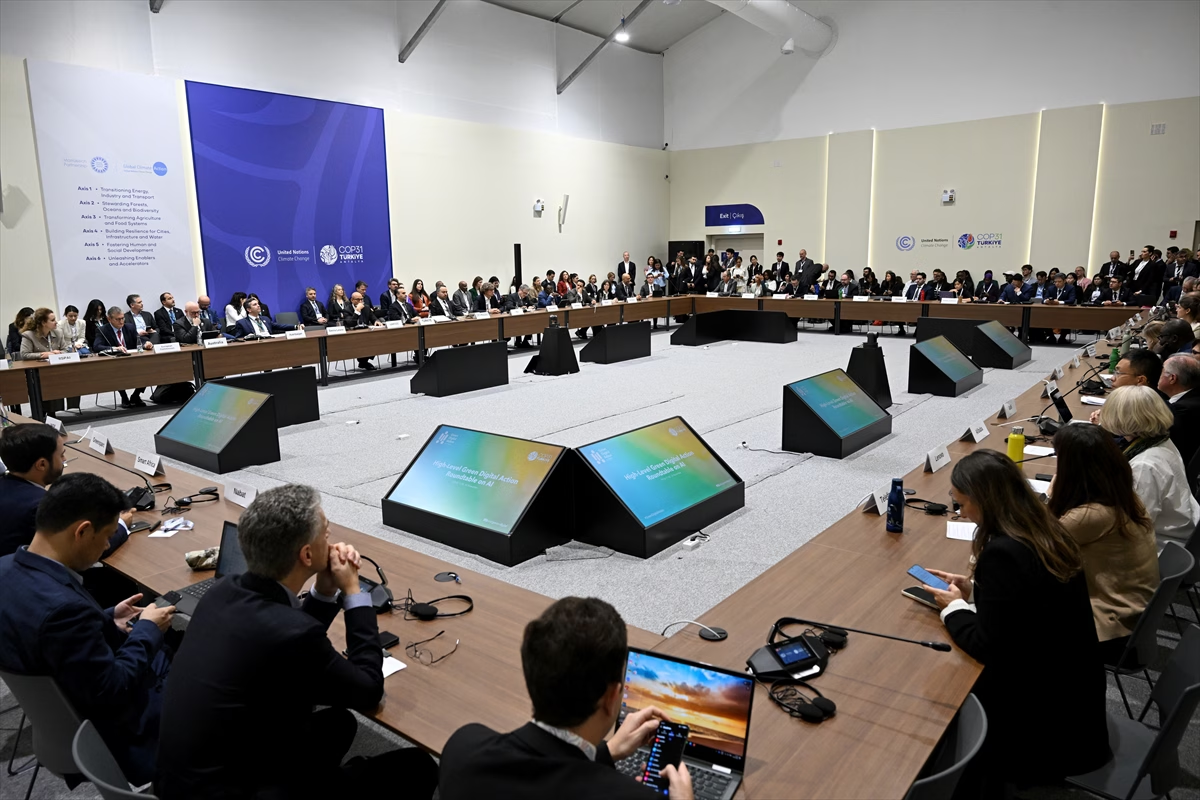
The Antalya AI Pledge, which aims to reduce the environmental impact of artificial intelligence and expand its use in combating climate change, had received 80 endorsements and 271 concrete commitments as of the morning of November 16. Minister of Industry and Technology Mehmet Fatih Kacır announced the figures at the High-Level Green Digital Action Roundtable on Artificial Intelligence, held during COP31 in cooperation with the International Telecommunication Union (ITU) and the COP31 Presidency.
Kacır said the pledge brings together two key priorities: reducing AI's environmental impact and increasing its contribution to the fight against climate change. "The pledge promotes responsible technology development, greater transparency regarding environmental impacts and stronger international cooperation to facilitate access to AI technologies, particularly for developing countries," Kacır said, adding that the text provides governments, industry organizations, investors and research institutions with a voluntary framework.
"90% of supercomputer capacity is in two countries"
Kacır recalled that electricity consumption by AI-focused data centers increased by 50% in 2025. DHA reported that Kacır said, "Approximately 90% of the world's AI supercomputer capacity is concentrated in just two countries. This risks widening the development gap between countries even further."
Emphasizing that every country should have the opportunity to develop and use AI technologies in line with its own needs and development priorities, Kacır said the future of AI could not be left solely to the natural course of technological advances.
Türkiye's 2030 targets: $10 billion and 1 gigawatt
Kacır also shared the targets of the 2030 Artificial Intelligence Action Plan announced by President Recep Tayyip Erdoğan in June. The plan aims to mobilize at least $10 billion in investment, primarily from private-sector sources, and reach at least 1 gigawatt of data-center capacity by 2030. It also aims to ensure that at least 60% of the electricity used through long-term power purchase agreements comes from low-carbon sources.
Concrete applications will be implemented in smart manufacturing, energy, agriculture and disaster management through AI development zones and industrial pilot projects. Kacır said they aim to achieve at least a 10% improvement in productivity or quality in industrial pilot projects and expand successful applications to other facilities. Inviting all partners to join the pledge, the minister said, "With its growing technological and industrial capacity, Türkiye is ready to contribute to this collective effort."
Photos: Anadolu Agency. Sources: Anadolu Agency, DHA.
Stay Updated with The Turkiye Times
Subscribe to be informed about special news, developments and announcements. We will keep you informed.
By signing up, you agree to our Privacy Policy