The United States, Azerbaijan and Armenia issued a joint statement on August 10 to mark the first anniversary of the peace summit at the White House. The statement assessed the steps taken by the two countries toward lasting peace and regional prosperity.
Trump nominated for Nobel Peace Prize
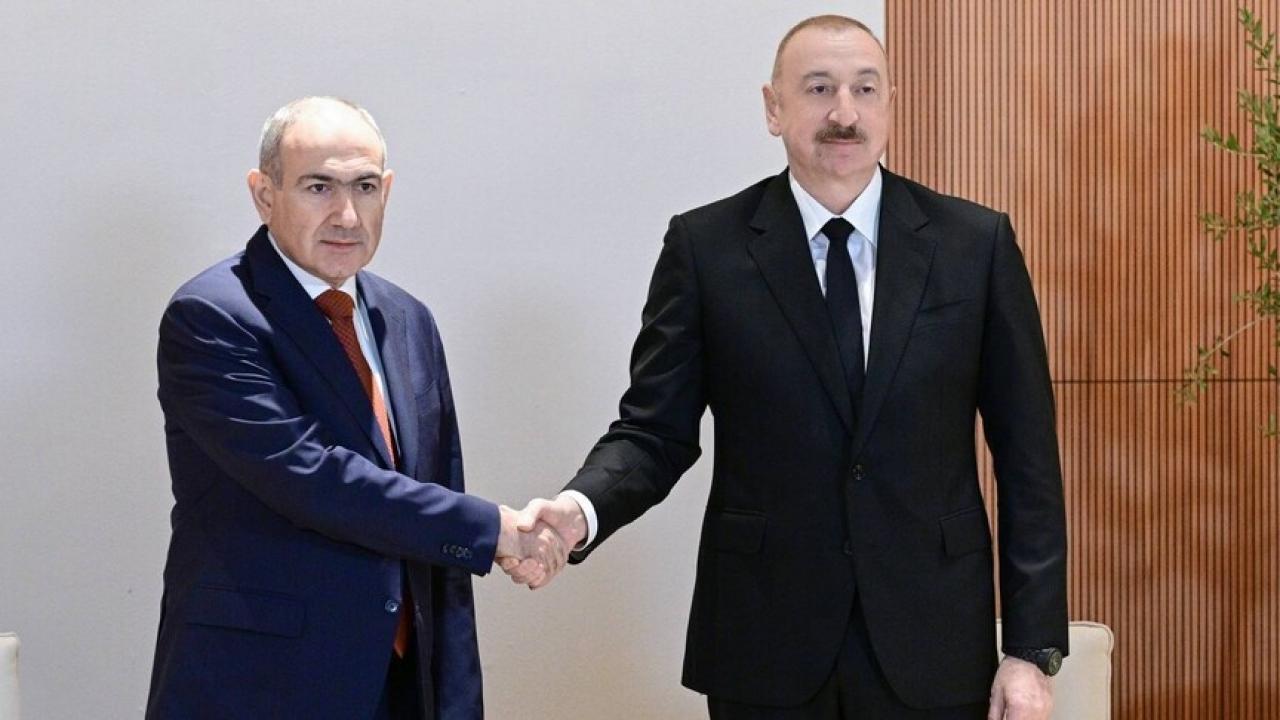
The joint statement recalled that Azerbaijan President Ilham Aliyev and Armenian Prime Minister Nikol Pashinyan signed a joint peace declaration at a summit held at the White House one year earlier with the participation of President Trump. At the same meeting, the foreign ministers of the two countries initialed a draft agreement on peace and the establishment of interstate relations between Armenia and Azerbaijan.
Aliyev and Pashinyan jointly nominated President Trump for the Nobel Peace Prize for his efforts to establish peace. The statement said the joint declaration provided a road map for strengthening peace, increasing prosperity and deepening the partnership.
Steps on borders, transport and trade
Azerbaijan and Armenia have taken concrete steps to maintain stability along the border, normalize relations, demarcate their borders and build trust. The statement said the two countries continued working on measures needed for lasting stability.
Work continued to implement TRIPP, the multimodal transit corridor called the Trump Route for International Peace and Prosperity. The United States and Armenia signed an agreement to establish TRIPP Development Company, which will manage infrastructure development, and engineering and land-surveying work began in Armenia.
Azerbaijan has largely completed road and railway construction on its territory, and these lines will connect to the TRIPP route in Armenia. The three countries also supported the establishment of an electricity transmission line along the route.
The United States allocated $201 million to the Trans-Caspian Entrepreneurship Fund to attract private-sector investment to the Trans-Caspian Trade Route in the South Caucasus and Central Asia. The United States also signed new partnerships and memorandums of understanding with Armenia and Azerbaijan in the areas of energy security, border infrastructure and security, artificial intelligence and semiconductors, and critical minerals.
Azerbaijan unilaterally lifted transit restrictions on Armenia. Over the course of one year, approximately 60,000 tons of cargo were transported to and from Armenia via Azerbaijan, and 20,000 tons of petroleum products were sent to Armenia. The two countries continued working to increase their bilateral trade volume.
Telecommunications and regional structures
The telecommunications operators of the two countries signed an agreement on internet connectivity. The agreement aims to diversify regional communications routes, improve the reliability of networks in the South Caucasus and support the development of Eurasian telecommunications infrastructure.
Structures linked to the Organization for Security and Co-operation in Europe Minsk Group were dissolved at the joint request of Armenia and Azerbaijan. The statement said the step represented recognition that the period of unresolved conflict had ended.
The statement also announced that Armenia and Azerbaijan had joined the Peace Council at the invitation of the United States. The three countries reaffirmed their support for the sovereignty, territorial integrity and jurisdiction of Armenia and Azerbaijan within their internationally recognized borders.
The parties expressed their commitment to fully implementing the August 8 joint declaration, as well as bilateral agreements and memorandums signed with Armenia and Azerbaijan. The text concluded by stating that lasting peace could not be achieved in a single day, but that the steps taken by Azerbaijan and Armenia set an example for the world.