- BIST10011,432+3.70%
- USD50.03+0.05%
- EUR56.26+0.56%
- GOLD4,134.90+1.52%
- INTEREST36.00%-1.00
- BITCOIN79,366-1.32%
- November 5, 202611°
- BIST10011,432+3.70%
- USD50.03+0.05%
- EUR56.26+0.56%
- GOLD4,134.90+1.52%
- INTEREST36.00%-1.00
- BITCOIN79,366-1.32%
- November 5, 202611°
Eisenkot leads Israel’s government race with backing from 56 lawmakers
In consultations held by Israeli President Isaac Herzog to choose who will form the government, Gadi Eisenkot is expected to receive the backing of 56 lawmakers, compared with 46 for Prime Minister Binyamin Netanyahu. Netanyahu’s traditional ally, United Torah Judaism, did not nominate anyone.


Israeli President Isaac Herzog began consultations with the parties entering the Knesset on the task of forming a government after receiving the certified results of the Oct. 27 general election from Noam Sohlberg, chairman of the Central Elections Committee. In the talks, which are expected to conclude Thursday evening, Gadi Eisenkot, leader of the Yashar! party and a former chief of staff, is expected to receive the support of 56 lawmakers in the 120-seat parliament, while Prime Minister Binyamin Netanyahu is expected to receive the backing of 46.
United Torah Judaism, Netanyahu’s longtime ally and an ultra-Orthodox party, decided on the instructions of its religious leaders not to nominate either candidate. Efforts to win over two former lawmakers from the party’s right wing, which has seven seats, failed. Party lawmaker Yitzhak Goldknopf said, “We are not affiliated with any bloc.” The party has made its support for the next government conditional on legislation guaranteeing yeshiva students’ exemption from military service.
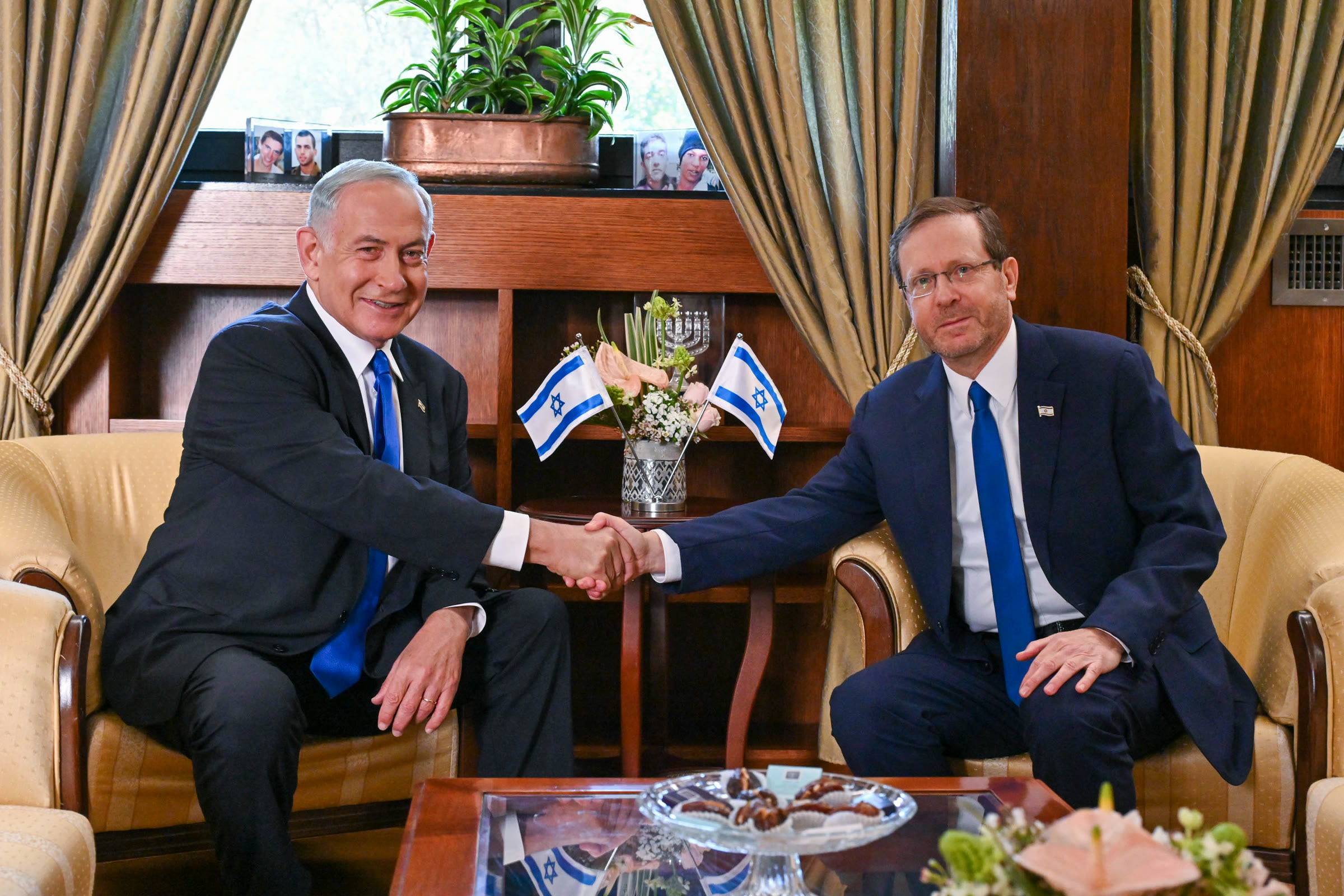
During the consultations, Herzog asked party representatives, “Do you have a military service model? Do you accept that those who do not study should enlist?” The exemption of ultra-Orthodox men from military service is one of the most contentious issues in Israel, where the army faces a serious personnel shortage after years of war.
Netanyahu was nominated by the Religious Zionist Party, Zehut and Shas. Likud and Otzma Yehudit are also expected to nominate Netanyahu. Eisenkot was supported by Avigdor Lieberman’s Yisrael Beiteinu party, the eight-member Arab party Ra’am, the Democrats and Beyahad. The Joint List, which mainly represents Arab voters, has not yet announced its choice.
In Israel, the president does not assign the task to the person who receives the most nominations, but to the person deemed most likely to form a government by securing the support of 61 lawmakers. According to the certified results, Netanyahu’s coalition partners won 53 seats, the opposition bloc won 48 and Arab parties won a record 19 seats. If neither candidate can form a government, Israel will return to the polls early next year.
The Elections Committee said it was examining Likud’s allegations that Arab parties had “stolen” the election and had found no irregularity undermining the election’s credibility or affecting its outcome. Sohlberg said efforts to cast a shadow over the results posed a “real danger” to democracy. The Shin Bet internal security service’s investigation into allegations of money transfers from Qatar, Türkiye and the Palestinian Authority is ongoing; Türkiye and Qatar had denied the allegations.
Have a story, event or announcement of your own?Send us your news on WhatsApp
Spotted an error in this story?Report it on WhatsApp
Share on all social platforms
Sponsored Ads
Featured Listings
Loading featured properties...
Stay Updated with The Turkiye Times
Subscribe to be informed about special news, developments and announcements. We will keep you informed.
By signing up, you agree to our Privacy Policy