- BIST10011,478+4.71%
- USD50.00+0.05%
- EUR55.95-0.09%
- GOLD4,046.90+2.70%
- INTEREST36.00%-1.00
- BITCOIN80,373+3.92%
- November 4, 202614°
- BIST10011,478+4.71%
- USD50.00+0.05%
- EUR55.95-0.09%
- GOLD4,046.90+2.70%
- INTEREST36.00%-1.00
- BITCOIN80,373+3.92%
- November 4, 202614°
EU asks citizens to cope alone during a crisis's first 72 hours
A new guide introduced by the European Commission in Brussels recommends that households remain self-sufficient for at least three days during emergencies, until public assistance arrives. The non-binding guide is addressed to EU Civil Protection Mechanism countries, including Türkiye, as well as EU members.
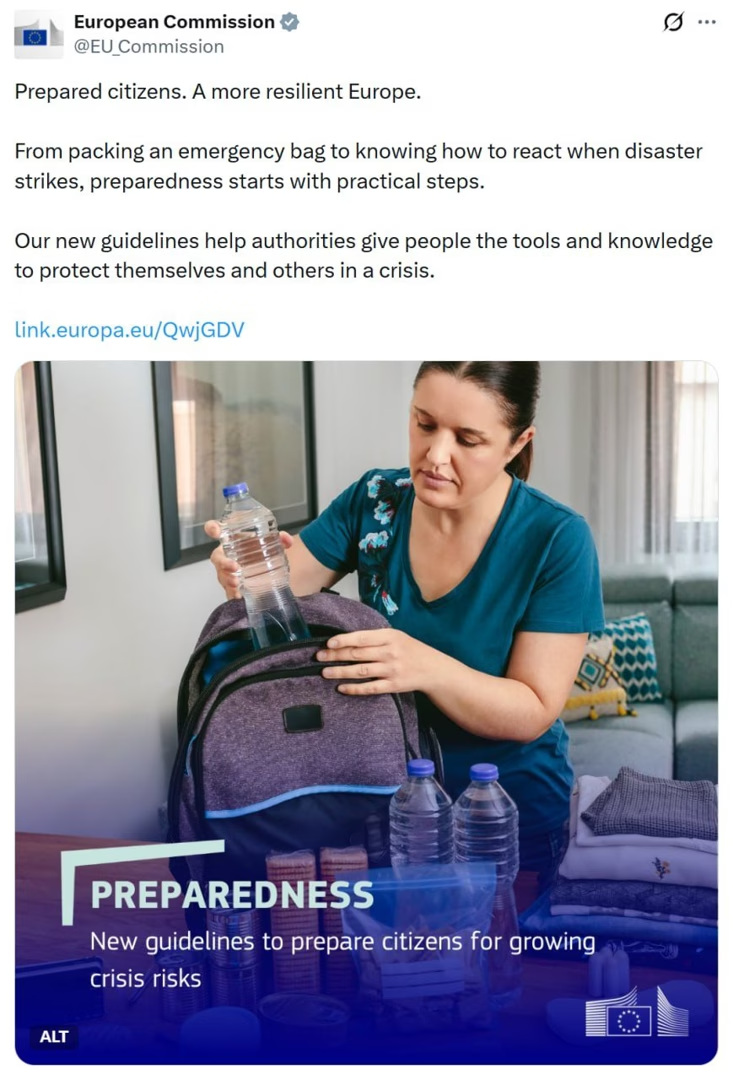
The European Commission has published a new guide to help citizens prepare for crises and emergencies. Hadja Lahbib, the EU Commissioner for Equality, Preparedness and Crisis Management, introduced the guide on Nov. 3 at the 9th European Civil Protection Forum, which began in Brussels. The Commission said it was taking concrete steps to make Europe more resilient as the continent faces complex crises more frequently.
Lahbib summarized the guide's purpose as follows: "When disaster strikes, the first hours can change everything. Every European should know what to do, how to protect their family and how to help others."
Three days until public assistance arrives
The guide focuses on enabling households to meet their basic needs independently during the first three days of an emergency, while public assistance is being mobilized. According to the Commission, households that can remain self-sufficient during the first 72 hours ease the burden on emergency services and make it easier to direct assistance to those who need it most. The document defines 72 hours not as an upper limit, but as a "minimum" threshold.
The supporting document lists supplies recommended for homes: food that can be stored at room temperature and requires no cooking, water for drinking, cooking and cleaning, alternative heating and lighting options, medicines and first-aid supplies, hygiene products, a battery-powered radio and a fully charged power bank. It also recommends keeping some cash, including coins, in case digital payment systems fail, and preparing a separate bag for rapid evacuation.
School curricula and reliable information
The guide also calls for emergency preparedness to be incorporated into preschool and primary school curricula and for educators to be informed and trained on the subject. More accessible and inclusive measures covering people with disabilities, as well as the provision of reliable information to citizens before, during and after emergencies, are among the recommended steps. The Commission also proposed organizing Oct. 23 each year as "EU Preparedness Day" starting in 2027.
Türkiye is also part of the mechanism
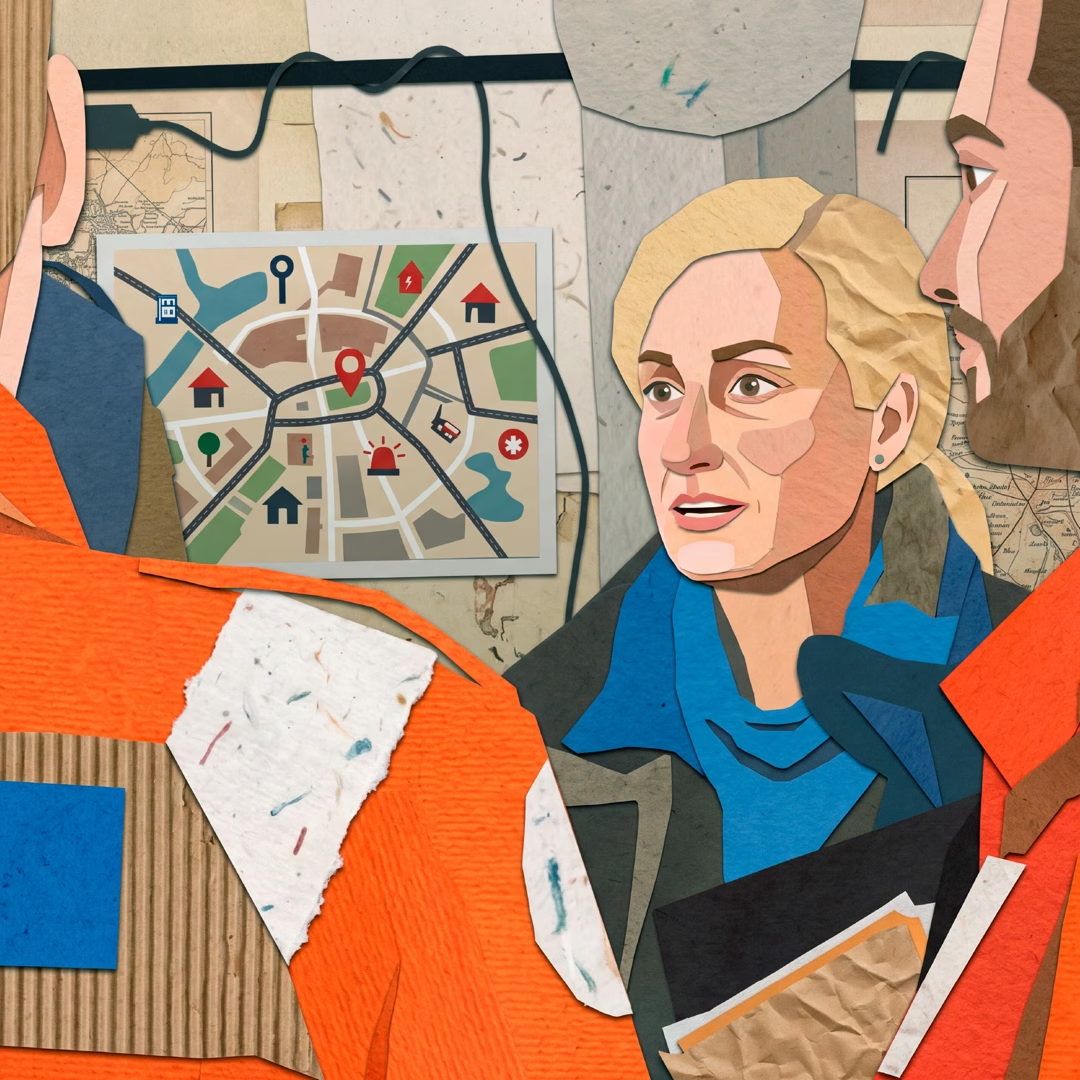
The non-binding guide is addressed to the EU Civil Protection Mechanism, which comprises the 27 EU members and 10 participating countries, including Türkiye. Countries are expected to implement the recommendations in line with their national structures. In Türkiye, AFAD also advises citizens to prepare a disaster and emergency kit that can meet their needs during the first 72 hours after a disaster.
The new step follows the Preparedness Union Strategy adopted by the EU in March 2025. Based on a report by former Finnish President Sauli Niinistö, the strategy calls for an all-of-society approach to preparedness against geopolitical tensions, cyber and hybrid threats, and climate-related disasters, and also includes the goal of 72-hour self-sufficiency.
Images: European Commission. Cover: Thijs ter Haar / Wikimedia Commons (CC BY 2.0, archive)
Stay Updated with The Turkiye Times
Subscribe to be informed about special news, developments and announcements. We will keep you informed.
By signing up, you agree to our Privacy Policy