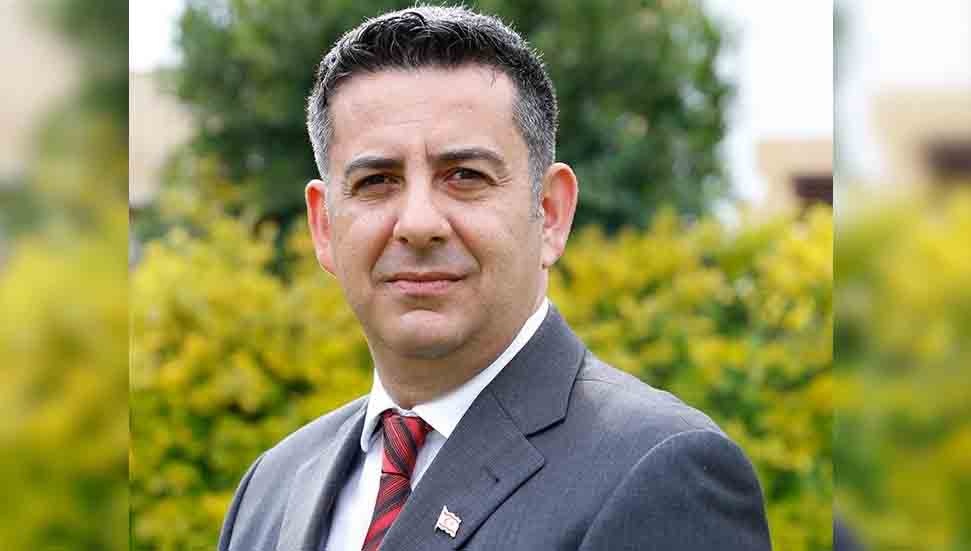
Near East University International Relations Department faculty member Prof. Dr. Hüseyin Işıksal described Israel's real estate purchases in the Greek Cypriot Administration of Southern Cyprus (GCASC) as a 'silent occupation'. In his article for the Anadolu Agency (AA) Analysis, Işıksal drew attention to Israel's strategic objectives in the Eastern Mediterranean.
Foundations of the Strategic Partnership
Prof. Dr. Işıksal stated that relations between the GCASC and Israel turned into a strategic partnership after the Exclusive Economic Zone (EEZ) Agreement signed in 2010. He noted that the energy resources discovered in the Eastern Mediterranean, the tension in Turkey-Israel relations following Israel's genocide in Gaza, and the GCASC's being made dependent on Israel in line with regional security dynamics shaped under US leadership were influential in this.
Işıksal noted that this dependency was reinforced by the handover of airports in the GCASC to Mossad's control, the weapons and defense systems the Greek Cypriot side purchased from Israel, liquefied natural gas (LNG) projects, and joint projects such as the EuroAsia Interconnector submarine electricity cable. He emphasized that the plans of Greece, Israel, and the GCASC to form a 'rapid reaction force' against the Turkish side in the Eastern Mediterranean demonstrate the extreme point this partnership has reached.
Property Purchases and 'Silent Occupation'
Işıksal stated that economic, military, and political dependency triggered Israeli citizens' real estate purchases in the GCASC, especially in coastal and strategic areas, and that it is known that tens of thousands of Jews have settled in the GCASC after October 7. He said that this move, carried out in coordination with state mechanisms, should be read together with Israel's desire to control the Eastern Mediterranean trade route, increase pressure on Turkey to encircle it, and boost its power on the island of Cyprus.
Işıksal noted that Israel aims to have a direct say in energy pipelines and port projects by increasing its property and infrastructure ownership. He also stated that through this alliance, Israel primarily seeks to prevent the recognition and visibility of the Turkish Republic of Northern Cyprus (TRNC), disregard the rights of the Turkish Cypriot people over natural resources, and then, by fully supporting a federal solution, establish absolute dominance over the reserves that would remain with a central government.
Plan to Turn Cyprus into a Logistics Base
Işıksal stated that another aim of Israel is to create strategic depth by turning the island of Cyprus into a logistics base and geopolitical backyard, and thus Israel plans to use Cyprus for shelter, supply, evacuation, and intelligence activities in its military operations in the Middle East and other regions.
Işıksal recalled that Israel's expansion into areas such as construction and marinas in some strategic regions of the TRNC has caused unease among the Turkish Cypriot people and that this process was hindered to some extent by the measures taken, and he said that this situation played a role in Israeli citizens' new destination becoming Southern Cyprus.
Reaction of the Greek Cypriot Side
Işıksal noted that the Greek Cypriot leadership remains silent in the face of Israel's 'covert occupation', while the harsh rhetoric of the free press and the main opposition party AKEL draws attention. He stated that Greek Cypriot newspapers ran headlines such as 'Israelis are using Cyprus as a backyard' and 'Cyprus like a promised land', and that AKEL questioned what the GCASC leader Nikos Christodoulides 'owes' to Israeli Prime Minister Benjamin Netanyahu with the discourse that 'sovereignty is being transferred to Israel'.
He noted that, in addition to discussions about rising housing prices due to Israelis' increasing real estate purchases and the difficulty for Greek Cypriot citizens to acquire housing, assessments that Israel is trying to position Southern Cyprus as a strategic base within the European Union (EU), as well as debates on company acquisitions and transparency in citizenship practices, have frequently appeared in the press.
Dangerous Alliance and Conclusion
Işıksal emphasized that the Greek Cypriot side's now-normalized state policy of Turkophobia and the 'the enemy of my enemy is my friend' mentality have created an 'unholy' and highly dangerous Greek Cypriot-Jewish alliance, and that this danger threatens not only the Turkish side but also the Greek Cypriot people.
Işıksal stated that the perception that 'negotiations will begin' created after United Nations (UN) Secretary-General Antonio Guterres' visit to the island has further motivated the Israeli government, and that Israel's intensive property purchases are not limited to controlling trade routes and establishing a logistics base, but also aim to be used as a strategic, diplomatic, and military pressure element to eliminate Turkey's 'Blue Homeland' doctrine and the TRNC.
Işıksal noted that Israel's property acquisition strategy, which will make its effectiveness in the Eastern Mediterranean permanent, shows that the Cyprus issue is not just between two communities but is a critical intersection point of a global and regional hegemony war. For this reason, he emphasized that the TRNC must live on forever with Turkey's guarantorship.