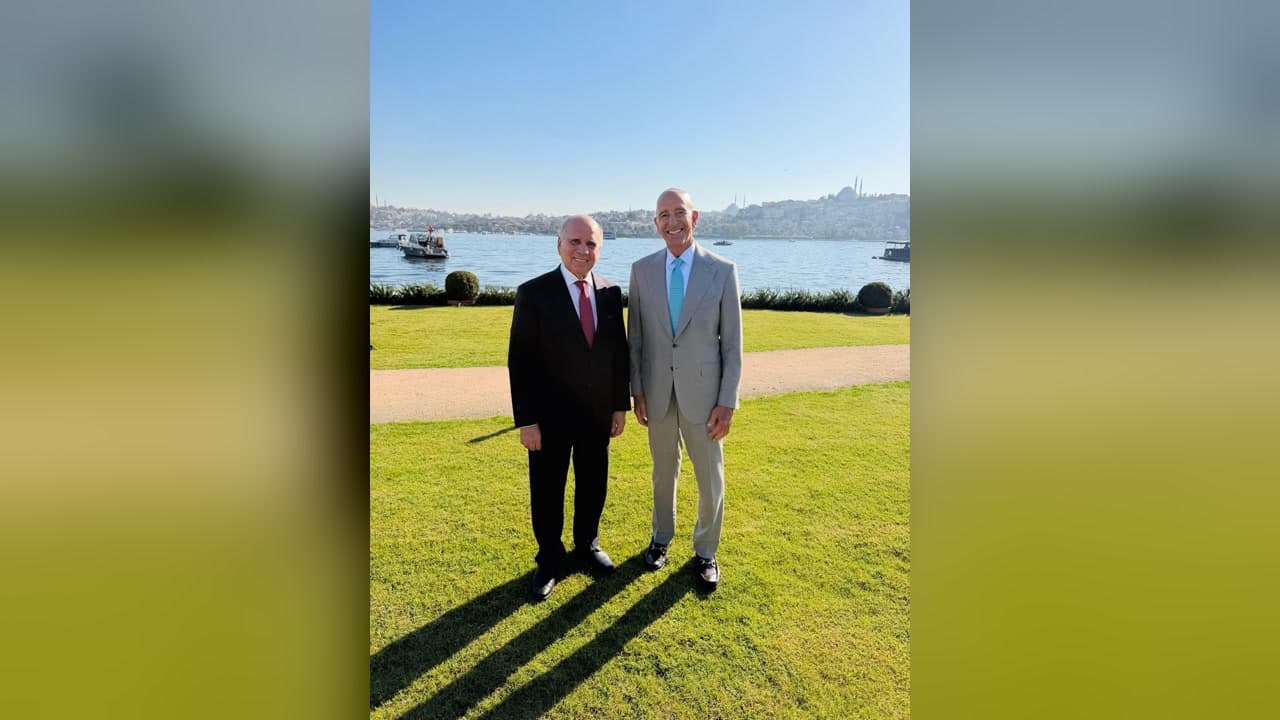
Kirkuk Governor and Iraqi Turkmen Front Chairman Mehmet Seman Ağa spoke at a program organized by Iraqi Turkmen associations in Istanbul, sharing the political achievements of the Turkmen in Kirkuk and their upcoming goals. Welcomed by Turkmen in Istanbul with the slogan "Kirkuk is Turkish, and will remain Turkish," Ağa addressed the audience.
Recalling the goal they expressed last year in Istanbul for 2026, Ağa said they had committed to striving for the appointment of a Turkmen governor in Kirkuk after 102 years. He noted that this has now been realized, describing the outcome as both a source of pride and an exciting development.
Ağa attributed the success in Kirkuk not only to the election process but also to the support and sacrifices of the Turkmen people, emphasizing that without the loyal backing of the nation, this would not have been possible. He highlighted that the Turkmen have lived alongside all communities in their ancestral lands for centuries within the framework of rights, law, and justice.
Post-election negotiations and power sharing
Ağa explained that after the elections, they held talks with Shia, Sunni, Kurdish, and Christian groups in Iraq. He described the negotiations over power sharing in Kirkuk as challenging, stating that they secured the governorship, "broke the chain," and that their future goal is for a Turkmen governor to serve at least one to one and a half years every four years.
He noted that the governorship term is determined through sharing arrangements and that they participate in governance in consensus with Arab and Kurdish elements, also holding positions in other state institutions. As ITC Chairman, he emphasized that his primary aim in this role is to serve the people.
Ağa pledged to act with a governance approach befitting the Turkmen, emphasizing their commitment to justice and equal treatment for all. How the new governance balance in Kirkuk will take shape in the upcoming period became a key topic following these remarks.
Relations with Turkey and water issues
Ağa stated that talks with Turkey have been held to resolve the water shortage in Iraq, with positive results achieved. He said they strive to act as a bridge between Ankara and Baghdad, working to contribute to Iraq, Kirkuk, and Turkmeneli.
He expressed appreciation for former Iraqi Prime Minister Mohammed Shia al-Sudani’s efforts to solve the water problem and affirmed support for Iraq’s stability, sovereignty, and the consolidation of arms solely under state control. Ağa accused foreign powers of stirring discord in Iraq and cited Turkey’s prioritization of state interests as an example for Iraqi politicians.
Referring to his meeting with President Recep Tayyip Erdoğan, Ağa conveyed that Erdoğan congratulated the new Iraqi Prime Minister Ali al-Zaydi and requested a ministry for the ITC and Turkmen. He said there is an expectation for Turkmen to hold a ministry in the new government.
Ağa also mentioned their efforts to secure a ministry in the new government to be formed within the Iraqi Kurdistan Regional Government, pledging to do their utmost for this goal. He stressed that the political influence in Kirkuk should not be limited to the governorship and expressed a desire for stronger representation in the cabinet as well.
Projects to preserve Kirkuk’s historical heritage
Ağa shared plans for projects aimed at protecting Kirkuk’s historical and cultural heritage. He mentioned restoration plans for the Ottoman Bridge, Kirkuk Castle, and the barracks, as well as signing inspection reports for the grand bazaar and national park projects.
He noted ongoing contacts with municipalities in Turkey, TİKA, ASELSAN, the Turkish Contractors Association, and the Foreign Economic Relations Board, expressing a desire to strengthen ties with Turkey for Kirkuk’s development. Ağa said that if Turkish municipalities and companies come to Kirkuk, villages could be revitalized, turning the city into a model center.
Ağa’s messages brought together the Turkmen’s political representation in Kirkuk, relations with Turkey, and plans to preserve the city’s historical fabric within a single framework. The program highlighted both current achievements and expectations for the new government process.