- BIST10012,151-0.94%
- USD49.220.00%
- EUR55.21+0.28%
- GOLD4,195.90-0.48%
- INTEREST37.00%-1.00
- BITCOIN82,797-1.05%
- October 13, 202619°
- BIST10012,151-0.94%
- USD49.220.00%
- EUR55.21+0.28%
- GOLD4,195.90-0.48%
- INTEREST37.00%-1.00
- BITCOIN82,797-1.05%
- October 13, 202619°
Mehmet Uçum says a new constitution is now unavoidable for Türkiye
Mehmet Uçum, chief adviser to the president and deputy chair of the Presidential Policy Board on Legal Affairs, argued that a new constitution is now an unavoidable need for Türkiye. Uçum said that work on a new constitution would be discussed during the 29th


Mehmet Uçum, chief adviser to the president and deputy chair of the Presidential Policy Board on Legal Affairs, argued in his assessment of Türkiye’s new constitution agenda that a new constitution is now an unavoidable need.
Uçum identified the transition to the Presidential Government System and the Terror-Free Türkiye process as important steps taken in line with Türkiye’s goals. He said a new constitution was one of the biggest objectives of the Türkiye Century vision pursued from the perspective of President Recep Tayyip Erdoğan.
Emphasis on the 29th term for a new constitution
Uçum said the possibility of drafting a new constitution during the 28th term of the Grand National Assembly of Türkiye could be considered by Parliament. However, citing time management and the need for intellectual work to refine issues throughout the process, he described the assembly’s 29th term as a more realistic target.
Uçum said the final decision on the matter belonged to democratic political leadership and the Grand National Assembly of Türkiye, adding that a new constitution remained part of Türkiye’s regular political agenda.
Assessment of the 1982 Constitution
Uçum argued that, despite all the amendments, the 1982 Constitution remained far from being a civil, democratic, libertarian and inclusive constitution. He said the current constitution had 154 articles in force, adding that 58 of its 103 articles had never been amended, while secondary amendments had been made to 45 articles.
According to Uçum’s assessment, the 97 articles outside the principles of the first four articles and the provisions on the executive branch and enforcement need to be reviewed. He said some articles required substantive amendments, while some provisions needed to be updated or repealed, adding that the 51 articles amended previously also needed improvement and renewal.
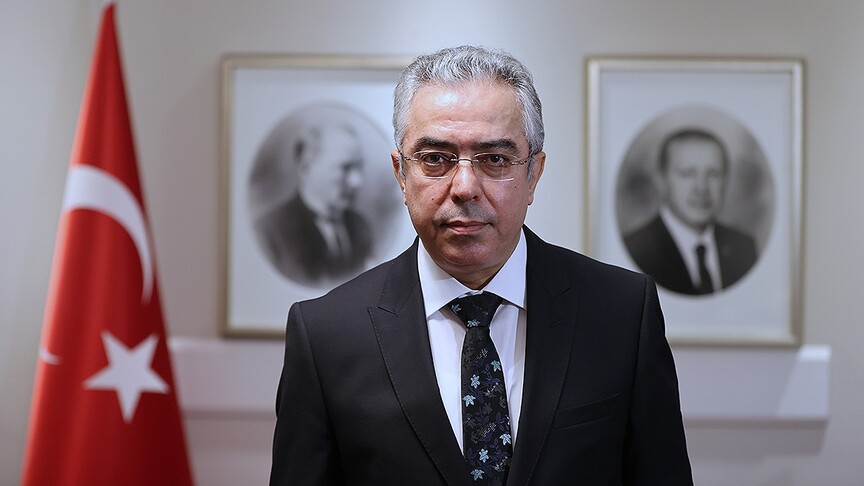
Uçum rejected the view that the goal of drafting a new constitution was unnecessary because most of the current constitution had already been amended. He argued that a new constitution was not only a need but also an obligation.
Principles he said should be preserved
Uçum said a new constitution should preserve the principles of the Turkish nation, Turkish citizenship, the official language, Turkish as the language of compulsory education, the republic, the unitary structure, secularism and the democratic rule of law. He said a debate over a different arrangement in these areas could not be accepted.
Uçum also listed the achievements of democracy and the Presidential Government System among the values that should be protected. He argued that the two votes, which he said strengthened the people’s will within the system, and the 50% plus one rule could not be changed against the will of the people.
Defining the constitution primarily as a system of safeguards rather than a regulation that directly produces executive effects, Uçum said a new constitution should provide broader guarantees of rights and freedoms for children and young people. He said the Presidential Policy Board on Legal Affairs would provide intellectual support for renewing the new constitution, the Rules of Procedure of the Grand National Assembly of Türkiye, the Political Parties Law and election laws.
Call for public participation in drafting a new constitution
Uçum said work on a new constitution was not the personal concern of any individual but a national issue affecting the entire society. He said contributing to legal policy work for an inclusive constitution in which every citizen sees themselves as a fundamental constituent was both a right and a national duty.
Uçum also argued that a new constitution would establish a stronger system of rules to support Türkiye’s future course. He predicted that the constitution would be approved by a high vote in the referendum that would have to be held if the Grand National Assembly of Türkiye drafted a new constitution no later than its 29th term.
Stay Updated with The Turkiye Times
Subscribe to be informed about special news, developments and announcements. We will keep you informed.
By signing up, you agree to our Privacy Policy