Minister of Trade Ömer Bolat presented data on Türkiye’s e-commerce volume at the E-Commerce and Retail Summit held at Halkbank’s headquarters in the Istanbul Finance Center. Bolat said data from the Electronic Commerce Information System showed that e-commerce volume rose 52.2% in 2025 from the previous year, exceeding 4.5 trillion liras.
Bolat said e-commerce volume in dollar terms rose 29% during the same period to reach $115.5 billion, while retail e-commerce volume increased 52% to 2.5 trillion liras.
E-commerce’s share of trade increased
Bolat said e-commerce’s share of gross domestic product was 2.7% in 2019 and rose to approximately 7% in 2025. E-commerce accounted for 19.3% of total trade in 2025.
According to data provided by Bolat, the number of e-commerce transactions in Türkiye rose from 1.36 billion in 2019 to approximately 6 billion in 2025. The number of retail e-commerce transactions also increased from 380 million to approximately 2 billion during the same period.
Bolat said the number of businesses engaged in e-commerce across Türkiye reached 634,000 by the end of 2025, with most of them classified as small and medium-sized enterprises. He said 75% of the businesses were sole proprietorships, 21% were limited companies and 4% were joint-stock companies.
Emphasis on digitalization and e-exports
Bolat said digitalization was advancing rapidly and that developments in e-commerce and telecommunications were being adapted to Türkiye. He said internet usage had reached 92.3% as of 2026, while the share of people ordering goods and services online stood at 60% in 2026.
Bolat said the Ministry of Trade was responsible for regulations in retail trade and e-commerce, adding that the regulations aimed to prevent practices that distort competition and welfare losses that consumers might face. He said efforts were being carried out to prevent sellers from imposing unfair commercial conditions on buyers or suppliers and to establish a market structure with multiple participants.
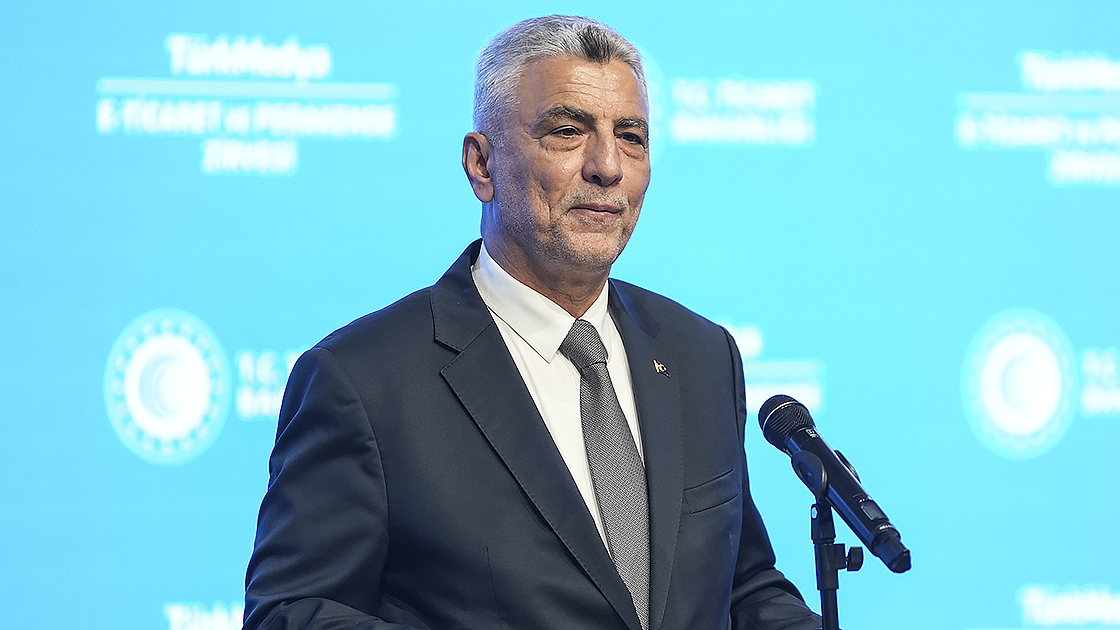
Bolat said Türkiye was engaged in intensive negotiations over additional duties under the European Union’s e-import regulation that took effect on July 1, citing the Customs Union. He said no additional duties had been imposed on Türkiye’s e-export products as a result of the talks.
Bolat said IGEXX was held in Istanbul and an e-export summit was held in Ankara to increase e-exports. He added that regulations had been introduced covering digital marketplace promotion, order fulfillment services and marketplace commissions. Bolat said 134 companies had benefited from these supports and that 638 million liras had been provided to companies for e-exports.
Bolat said the support covered e-exports to 26 countries, with the number targeted to increase to 35 countries in the first phase. He also said 15 companies had joined the e-export consortium model.
Credit support for tradespeople
Speaking about credit support for tradespeople and artisans as part of Ahilik Week, Bolat said Türkiye had approximately 2,960 chambers of tradespeople and artisans and that tradespeople’s unions operated in all 81 provinces. Bolat said Halkbank offered business loans to tradespeople with four-year terms, while loans for investment, commercial vehicles, machinery and equipment purchases had five-year terms.
Bolat announced that a total of 853 billion liras in financing had been provided through 4.76 million loans over the past 24 years, with 460 billion liras of that amount provided in the last three years. He said 178 billion liras in financing had been provided through 257,000 loans in 2025, while approximately 123 billion liras had been made available to tradespeople through 137,000 loans during the first eight months of this year.
Consumer disputes and retail regulations
Bolat said work was being carried out to ensure the domestic market operated fairly and to prevent unfair trade, and provided information on practices under the Law on the Regulation of Retail Trade.
Bolat said consumer arbitration committees had concluded 2,769,000 applications and ruled on disputes worth 34 billion liras between June 1, 2023, and August 31, 2026.

Bolat said food retail accounted for 20.5% of total retail trade. He said the aim was for traditional and organized retail to grow in balance without undermining one another or creating destructive competition.
New work on the Wholesale Markets Law
Bolat announced that a new draft concerning the Wholesale Markets Law had been prepared and was being evaluated with relevant public and private organizations. He said the regulation was planned to be presented in the next legislative term with provisions aimed at reducing price increases in the trade of vegetables and fruit.
Bolat recalled that the Wholesale Market Registration System had been introduced under Law No. 5957, enacted in 2012, and that the obligation for retailers to purchase products from wholesale markets had been abolished. He said this had paved the way for retailers to purchase products directly from producers.
Bolat said the new draft emphasized provisions to strengthen producer associations and cooperatives. He added that plans called for increasing the 20% discount applied to producer associations’ wholesale market rents and expanding the 20% area allocated to them in marketplaces. He said the draft also envisaged setting standards for packaging, transportation, storage and points of sale in the wholesale and retail trade of vegetables and fruit.
2.24 billion liras in fines imposed during inspections
Bolat highlighted the importance of inspections for unsafe products and said the rate of unsafe products among those inspected had fallen from 32% in 2011 to 1% in 2025.
Bolat announced that 322,000 companies and 39 million products belonging to those companies had been inspected during the first eight months of this year. He said administrative fines totaling 2.24 billion liras had been imposed for unsafe products, unfair pricing, excessive pricing and unfair trade practices.
Following the summit, Bolat was presented with a gift and a family photograph was taken.