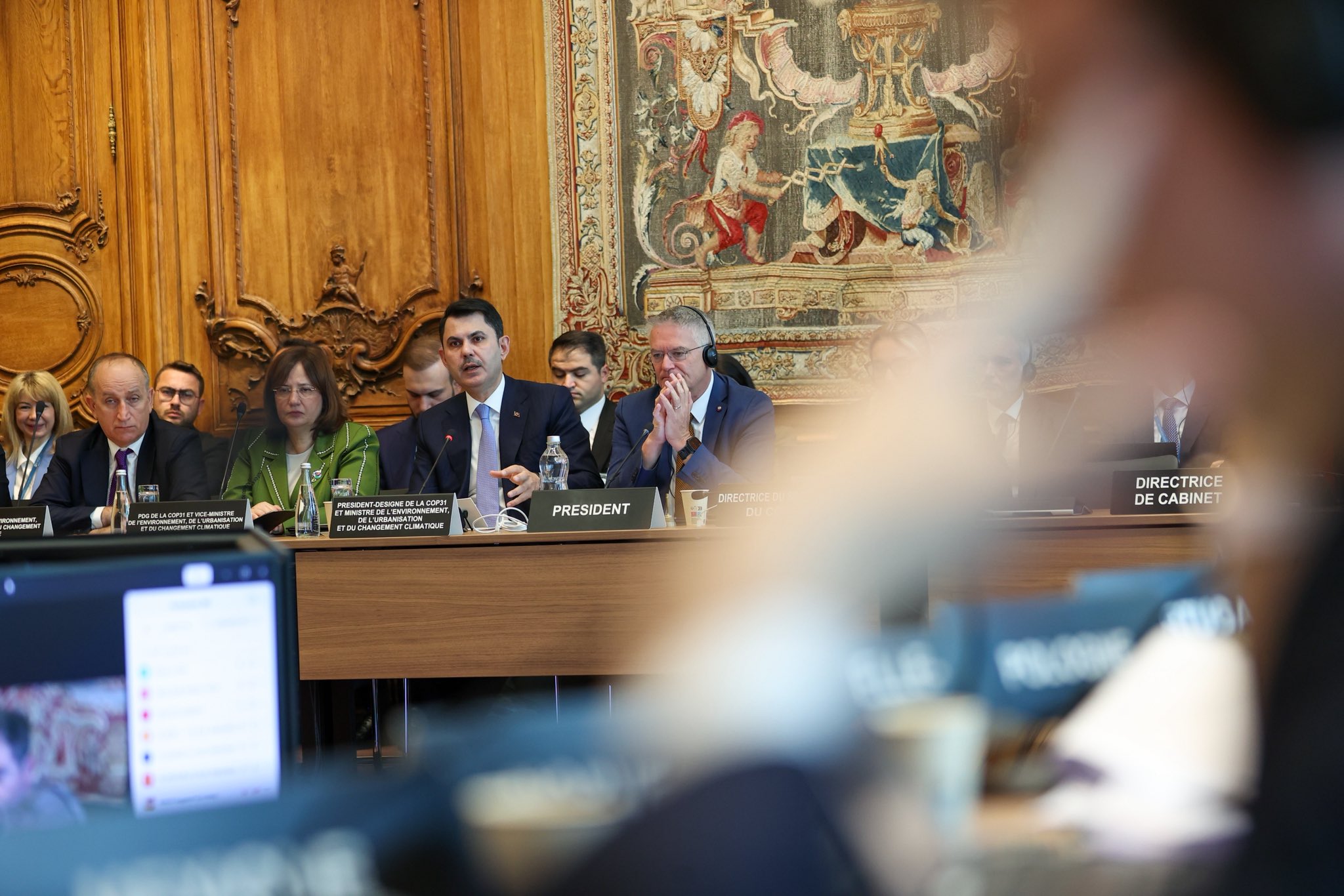
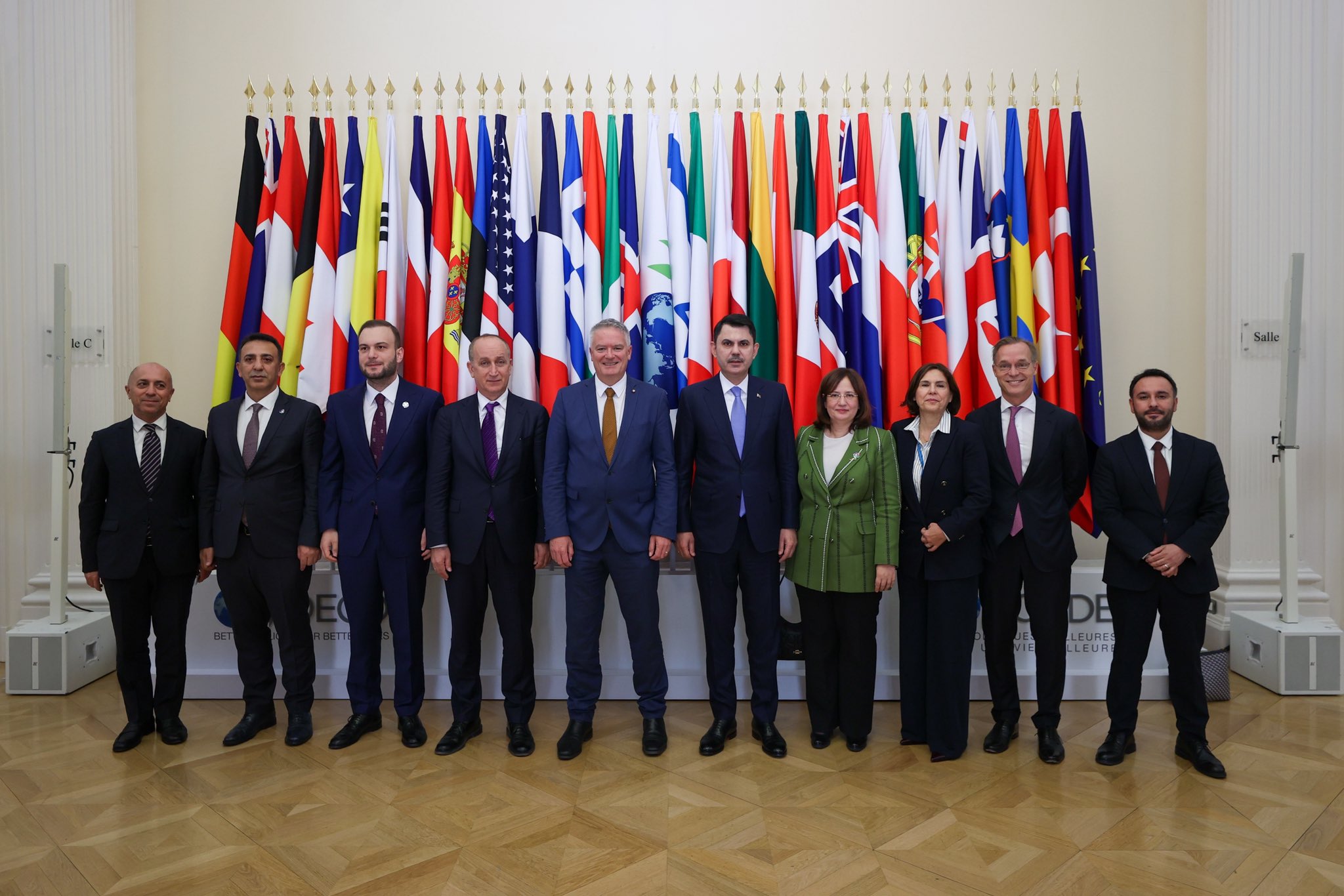
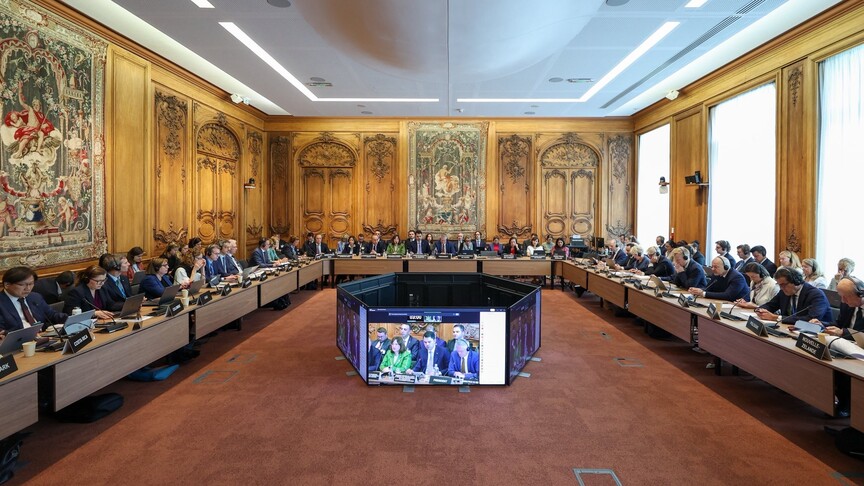
As part of international engagements for COP31, which Türkiye will host, Minister Kurum attended the OECD Council Meeting held in Paris, the capital of France. At the meeting, attended by OECD Secretary-General Mathias Cormann, ambassadors of OECD member countries and permanent representatives to the OECD, Kurum outlined the COP31 Presidency's Action Agenda and priorities.
Kurum said resources allocated to the climate crisis should be addressed with the same strategic seriousness as security investments. Referring to the approach of NATO countries to increase defense investments to as much as 5 percent of their gross domestic product, Kurum said the climate crisis was also a real and imminent threat to the future.
Emphasizing that climate security is not only an environmental issue but also an economic and social one, Kurum said, "Security is not only military; it is also climate-related, economic and social. The climate issue is no longer an agenda item but a security issue." Kurum said the climate issue could not be postponed or relegated to a secondary position.
The OECD's capacity will be brought into the COP31 agenda
Kurum said the OECD's expertise in economics, reliable data analysis and capacity for international comparison would make a significant contribution to the COP31 process. Summarizing the COP31 Presidency's implementation-oriented approach as "dialogue, consensus, action," Kurum said they aimed to turn this approach into concrete results.
Türkiye is assuming the presidency and hosting of COP31, while Australia is chairing the negotiation process. Kurum said work on the Action Agenda had been shared with the public at meetings held in Ankara, Istanbul, Hatay, Bonn, London and Trabzon as part of preparations for COP31.
Stating that the center of gravity in climate diplomacy needed to shift from targets to implementation, Kurum said, "We will now show the whole world together that we have moved from talking to action, and we will achieve results."
Four implementation targets for 2035
Kurum also announced the targets set by the COP31 Presidency under its 2035 Implementation Targets. These include increasing the global electrification rate to 35 percent by 2035, halving the increase in waste generation and reducing energy-use intensity in the building sector by at least 25 percent.
The targets also include increasing the share of circular material use in the production and manufacturing sectors to at least 15 percent. Kurum said the targets were concrete and feasible, and that emissions would be reduced if they were achieved.
Announcing the strategic partnership between the OECD and the COP31 Presidency, Kurum said they wanted to bring the OECD's data and economic analysis capacity, policy experience and international comparison tools together with COP31's implementation agenda. Kurum emphasized that they aimed to produce concrete outcomes under this cooperation before the COP31 process in Antalya.