- BIST10012,151-0.94%
- USD49.220.00%
- EUR55.21+0.28%
- GOLD4,195.90-0.48%
- INTEREST37.00%-1.00
- BITCOIN82,825-1.01%
- October 13, 202619°
- BIST10012,151-0.94%
- USD49.220.00%
- EUR55.21+0.28%
- GOLD4,195.90-0.48%
- INTEREST37.00%-1.00
- BITCOIN82,825-1.01%
- October 13, 202619°
Prof. Dr. Talloen, head of Sagalassos excavations, becomes Turkish citizen
Peter Talloen, after years of leading the Sagalassos excavations and his dedication to Türkiye, has obtained Turkish citizenship.


Born in Bruges, Belgium, and having lived in Türkiye for years, archaeologist Prof. Dr. Peter Talloen has acquired Turkish citizenship. Talloen, who heads the excavations at the ancient city of Sagalassos, said in a statement that his introduction to Türkiye began during his university years.
Talloen first came to Türkiye while studying classical archaeology at the University of Leuven, thanks to the Sagalassos excavations led by his professor, Prof. Dr. Marc Waelkens, setting foot on Anatolian soil for the first time in 1995 as an undergraduate student. Over time, his interest in Sagalassos became the center of his academic career.
%20kopya.jpg?format=jpg&quality=50)
Talloen, whose undergraduate, graduate, and doctoral work focused on ancient cities in Anatolia, continued his post-doctoral research on Türkiye. He worked at the British Institute at Ankara, the Koç University Research Center for Anatolian Civilizations, and Isparta Süleyman Demirel University. Although he had to return to Belgium for a time, he began working at Bilkent University in 2023.
The Turkish citizenship process
Talloen, whose wife is also an archaeologist and Turkish, prioritized learning Turkish after settling in Türkiye. "I think if you work in a country, you should learn its language. I took Turkish lessons. I still make mistakes, but I try to speak," he said, adding that his citizenship application was delayed due to legal regulations in Belgium and the Covid-19 pandemic.
After completing the procedures following the pandemic, Talloen said, "We prepared our file and, in September, finally obtained Turkish citizenship." Stressing that citizenship is not just a formal status for him, the archaeologist continued, "Our home is here. Our children were born here. They have Turkish names. They go to Turkish schools. I work at a Turkish university, teaching Turkish students. I conduct excavations in Türkiye. Almost our entire lives take place here. I can perhaps say that I am Turkish too."
Noting that he was impressed by Turks' love for their homeland, Talloen said, "I haven't memorized the Istiklal Marşı completely, but I can say that I know the Turkish national anthem better than the Belgian one."
Admires Türkiye's cultural heritage
Talloen stated that what impressed him most in Türkiye was the cultural richness, saying that Anatolia's archaeological heritage offers a diversity rarely found in the world. "In almost every ancient city in Türkiye, you can see theaters, baths, and monumental structures. Such dense cultural heritage exists in very few places in the world," he added. He also noted that Turkish cuisine offers riches that can be discovered in different regions.
New findings at Sagalassos
Providing information about the excavation work, Talloen announced that in recent years they have obtained important findings demonstrating the cultural interactions of the Roman Empire. He stated that last year, Egyptian-themed reliefs made of Afyon marble were unearthed, explaining that these works were carved by local craftsmen but reflect Egyptian iconography. The reliefs feature figures such as the Sphinx and the crocodile-headed god Sobek.

Religious center in the stadium complex
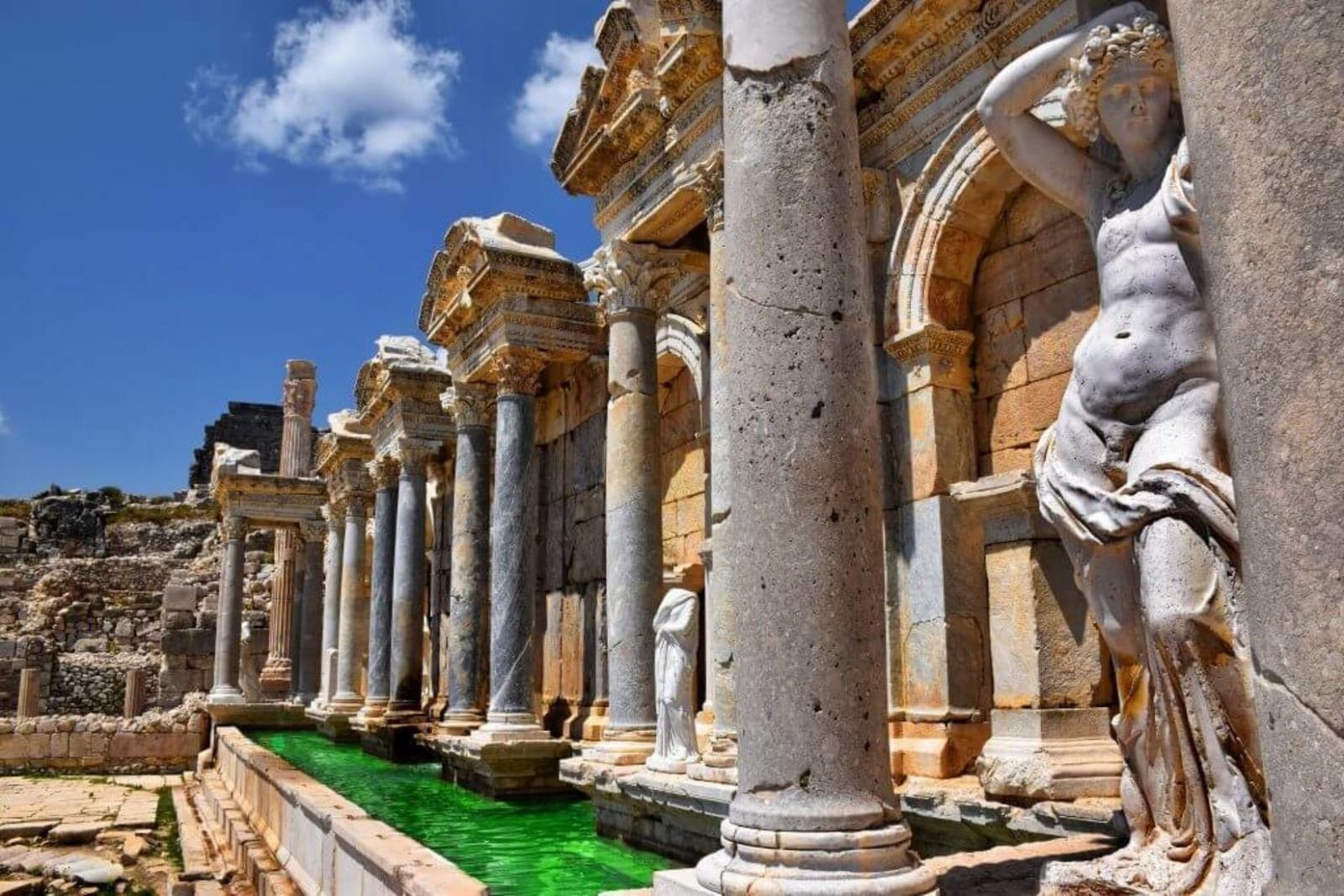
Talloen reported that excavations have recently concentrated on the stadium complex, where two churches, a sacred fountain, and a large religious complex from the late antique period have been unearthed. He noted that they believe the site was used as a regional pilgrimage center, and that special ceramic bottles produced for transporting sacred water have also been found.
Stressing that the goal in the coming period is to fully uncover the sacred fountain, Talloen said, "All the blocks of the structure are there. We want to re-erect it like Lego. If possible, we aim to bring back the water and make the sacred water flow again." He added that they hope to reach a saint's tomb during the excavations and noted that the work is planned to be completed in about five years.
Stay Updated with The Turkiye Times
Subscribe to be informed about special news, developments and announcements. We will keep you informed.
By signing up, you agree to our Privacy Policy