Excavation, restoration and landscaping work continues at the Seljuk Meydan Cemetery in the Ahlat district of Bitlis Province, one of the world's largest Turkish-Islamic cemeteries, with permission from the Ministry of Culture and Tourism.
The team led by Dr. Mehmet Kulaz, a faculty member in the Department of Art History at Van Yüzüncü Yıl University, focused on a 400-square-meter area this year. In recent weeks, excavations uncovered 16 new graves.
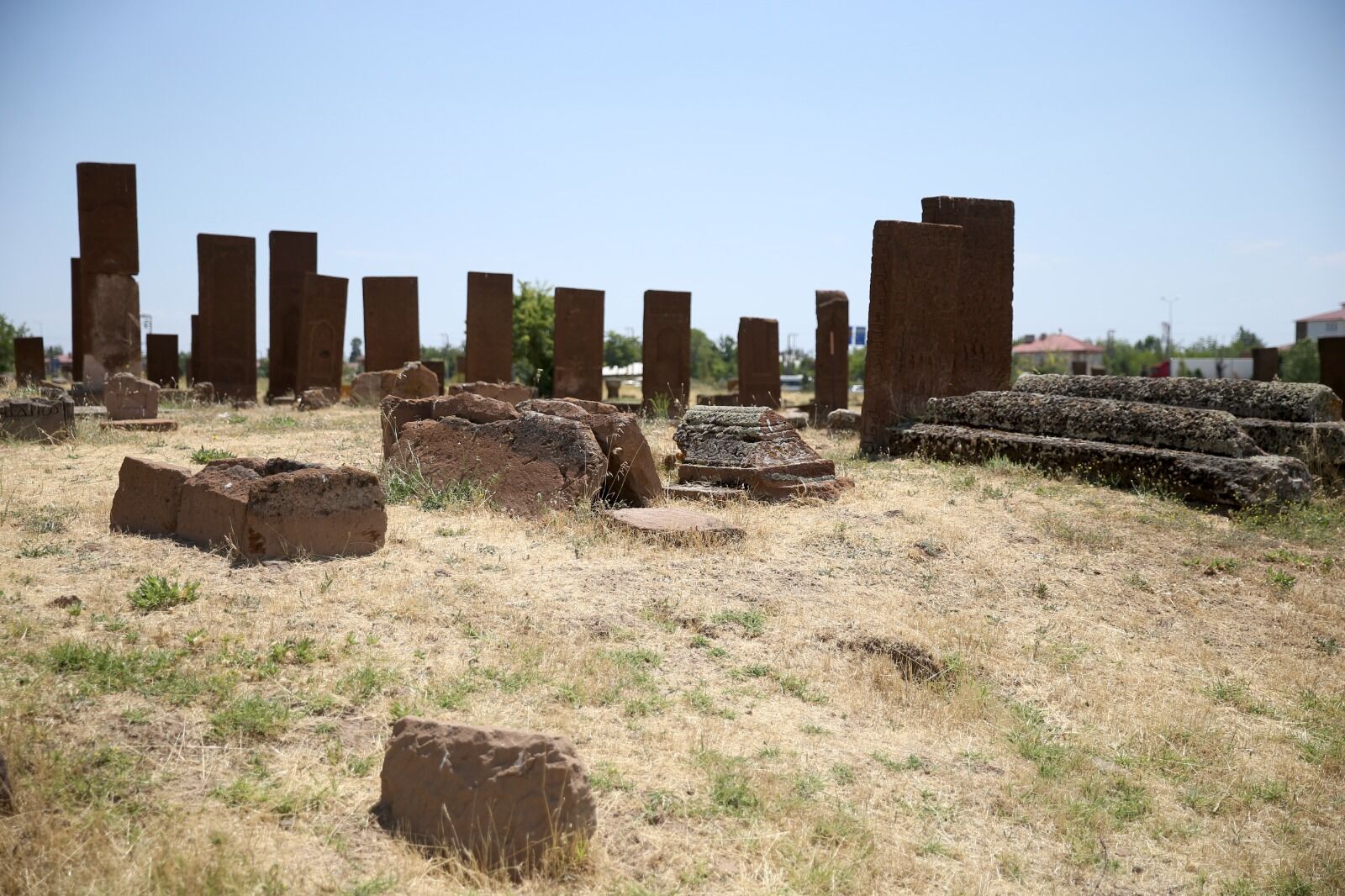
16 New Graves Unearthed
Excavation leader Mehmet Kulaz stated that they expanded work in an area where only four gravestones were initially visible. "According to the map, there were four gravestones visible in the area we excavated, but now 16 new graves have been uncovered. The stones have been glued and joined. The blocking and excavation work continues," he said.
Kulaz noted that the discovered graves were especially of the sanduka (sarcophagus) type, and explained that after the gravestones underwent cleaning, lowering, blocking, restoration, joining and gluing, they were examined using epigraphic methods and registered.
Gravestone Broken Into 27 Pieces Re-erected
One of the excavation team's most remarkable efforts was the restoration of a gravestone found broken into about 27 pieces. Dr. Kulaz said, "We had a previously identified broken gravestone. It was split into about 27 pieces. Last week, we re-erected the stone by joining the pieces. Two or three pieces are still missing. The fragment found while removing the surface soil will be fitted into place."
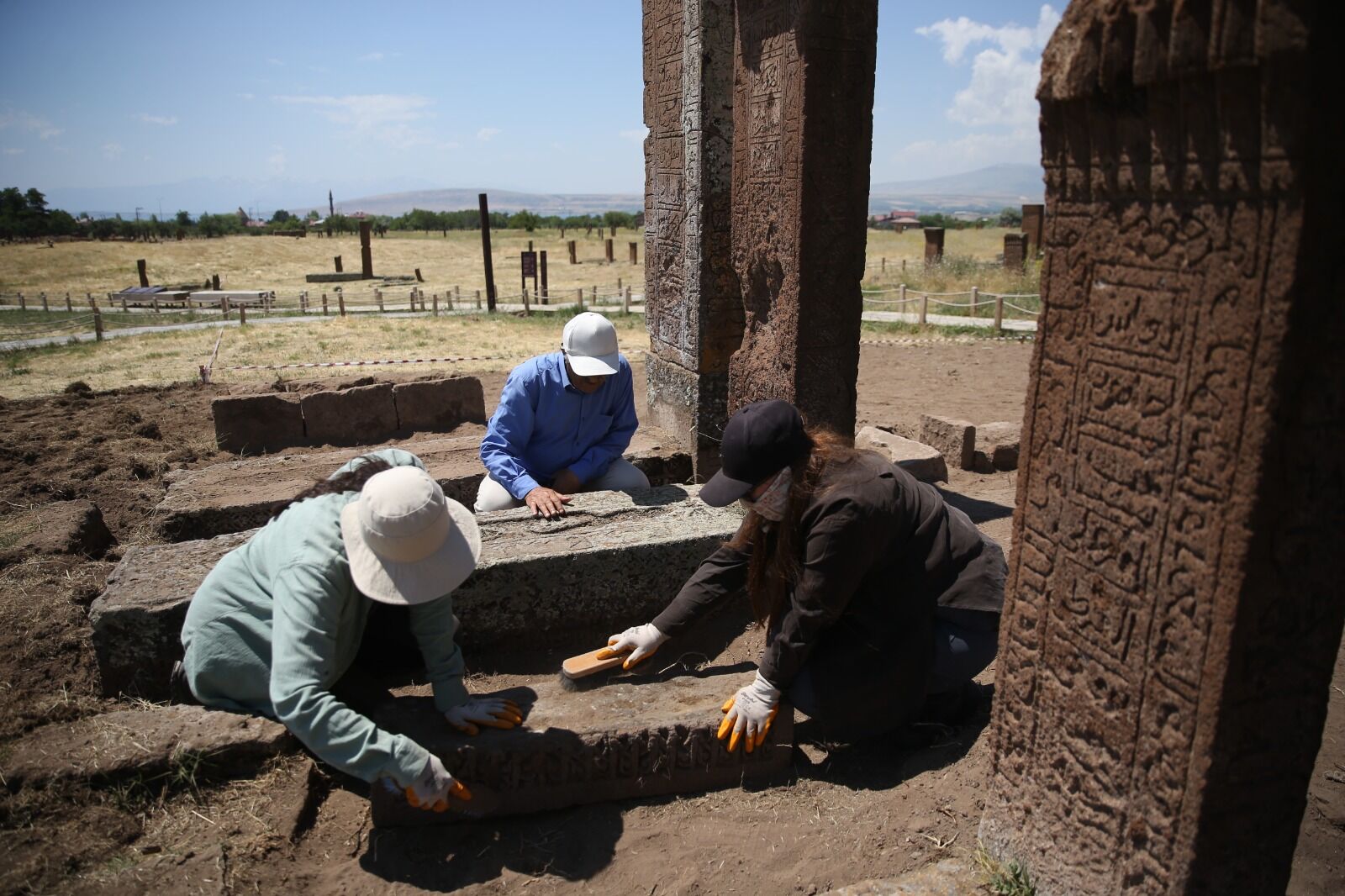
Stressing that the gravestone bears both personal information and the date 1310, Kulaz added: "For these stones we use the expression 'the title deed of Anatolia.' This stone is like that. Both identity details and the year 1310 can be read on the gravestone of a person who migrated from Central Asia to Ahlat in Anatolia. The stone contains personal information about the deceased, verses from the Quran and hadiths. Re-erecting a grave marker that also reflects the Seljuk style in its ornamentation was important to us."
Ahlat Welcomes 500,000 Visitors Annually
In addition to the excavation work, weed clearing and landscaping are being carried out meticulously. Dr. Kulaz emphasized that these efforts aim to prepare the site for visitors. Noting that the cemetery, with its vast 210-decare area, attracts a large portion of the approximately 500,000 visitors who come to Ahlat each year, Kulaz said they also place importance on promoting other historical sites in the region. He added that the excavation work aims both to uncover cultural heritage and to contribute to regional tourism.