UAE-Israel relations are again under scrutiny over claims that Netanyahu was warned before the October 7, 2023 attack, Western countries’ preparations to impose sanctions on illegal settlements in the West Bank, and changing security dynamics in the Gulf.
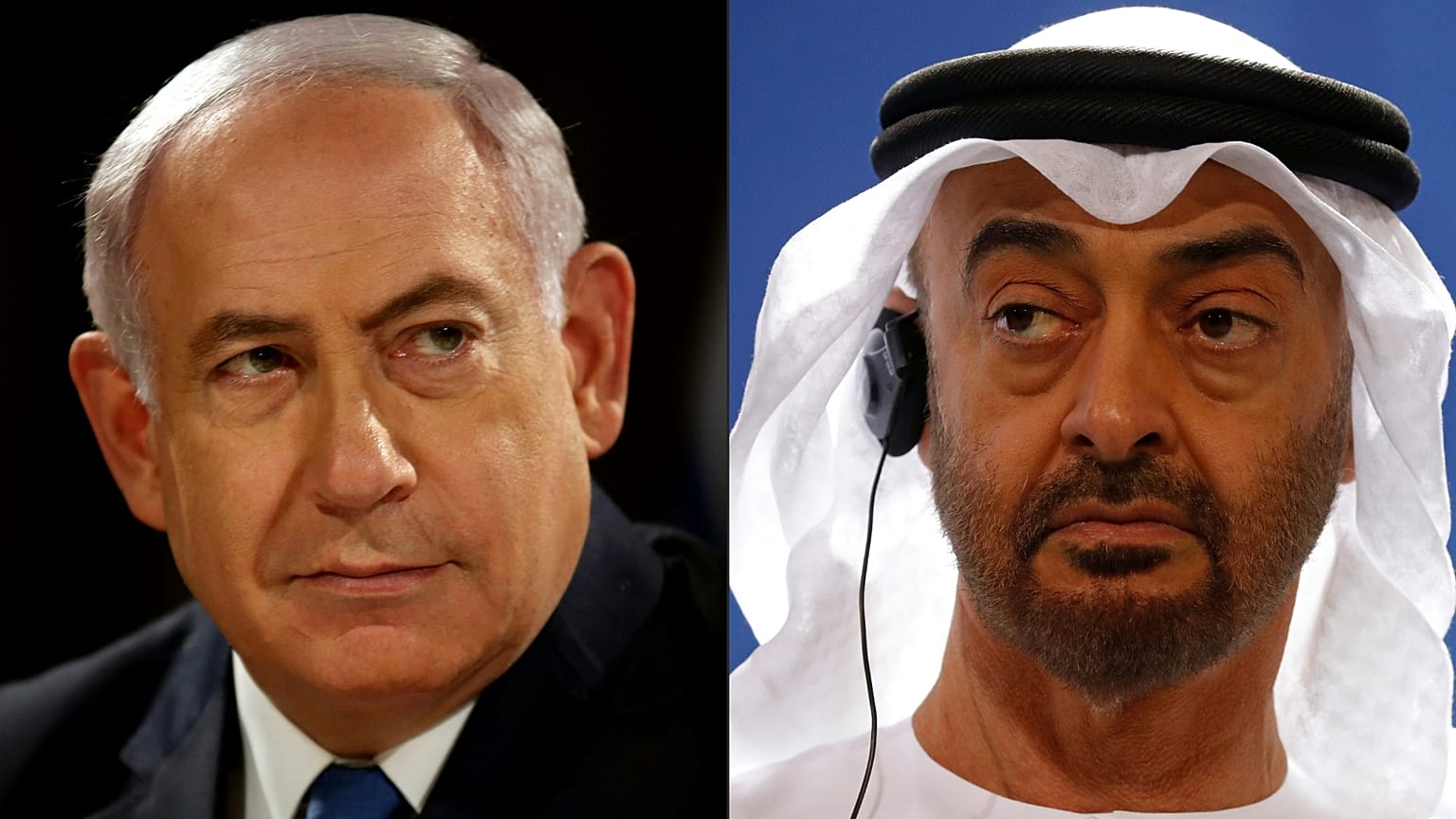
According to the claim, UAE President Mohammed bin Zayed Al Nahyan held an encrypted phone call with Israeli Prime Minister Benjamin Netanyahu about 10 days before the October 7 attack. The claim alleges that he warned Netanyahu that Hamas leader Yahya Sinwar was preparing a major operation and described it as an “earthquake.”
The call allegedly took place after an official from the UAE Embassy in Israel went to Netanyahu’s office with a secure phone. Netanyahu reportedly linked a possible Hamas operation to the West Bank and said Israel was prepared for every scenario.
The claim alleges that Netanyahu did not share the information with the then-directors of the Shin Bet and Mossad or with the chief of staff of the Israel Defense Forces. It also alleges that the same warning was conveyed to then-CIA Director William J. Burns.
Netanyahu rejected the claims
Netanyahu described the claims as an “absolute lie” and a “conspiracy.” He announced that he would sue Haaretz and argued that the report had been fabricated to win the election.
The Likud Party, meanwhile, alleged that Palestinian politician Mohammed Dahlan, who lives in the UAE, was behind the claim. Necmettin Acar’s analysis argues that Dahlan holds an important position in diplomatic channels between the UAE and Israel and that it was unlikely for the information to have been leaked to the public without Abu Dhabi’s knowledge.
The UAE did not directly deny the claim
In a statement, the UAE said institutions in the country and Israel had maintained open and direct lines of communication for more than five years and that relevant intelligence was shared between institutions when necessary. The statement neither directly confirmed nor denied the claim that Netanyahu had been warned.
Associate Professor Necmettin Acar assessed that this stance could reflect the UAE’s effort to adapt to changes in the regional security architecture. The analysis argues that the message conveyed through Dahlan may have amounted to delivering through a political actor a warning that the UAE might have found difficult to communicate through official channels.
The UAE seeks contact with Türkiye
The analysis also examined the UAE’s release of Egyptian writer Abd al-Rahman Yusuf al-Qaradawi on September 4, 2026, as a possible sign of a shift in its regional orientation. In a video message, Qaradawi thanked Türkiye and President Recep Tayyip Erdoğan, describing Erdoğan as a leader who stands on the right side of history.
The same assessment said Türkiye’s Ministry of Foreign Affairs and intelligence agencies played a decisive role in Qaradawi’s release. It said the development could point to the UAE’s effort to establish a new communication channel with Türkiye and diversify its regional security options.
The Abraham Accords signed by the UAE and Israel were described as an important economic and security pillar for Abu Dhabi. However, the analysis argues that this pillar has come under scrutiny because of the war in the region, developments in the Strait of Hormuz and attacks targeting oil facilities in the Gulf.
The UAE’s swift denial after Netanyahu’s secret visit was made public in May 2026 was also cited as an example of the fragility of relations between the two countries.
Electoral process increases pressure on Netanyahu
The analysis listed the decisions by Spain, France, the Netherlands and other Western countries, led by the United Kingdom, to impose sanctions on illegal settlements in the West Bank among the sources of diplomatic pressure on Netanyahu.
It also assessed Vice President JD Vance’s statement that the United States could not subordinate its Middle East policy to Israel, as well as his description of U.S. President Donald Trump as the leader most willing to part ways with Netanyahu in the event of a conflict of interest.
It was argued that developments emerging weeks before the elections scheduled to take place in Israel on October 27 could represent preparations for the post-Netanyahu period. Opposition figures Gadi Eisenkot, Naftali Bennett, Avigdor Lieberman and Yair Golan jointly raised the demand for an investigation into intelligence warnings issued before October 7.
The analysis said some senior figures in the security establishment had stated that security agencies were not informed of the relevant intelligence. It assessed that these developments could narrow Netanyahu’s political room for maneuver with both international and regional actors.
The assessment argues that the UAE has kept open the possibility of moving closer to a new security framework allegedly formed by Türkiye, Pakistan and Saudi Arabia. It said Gulf countries may be seeking more predictable relations with an Israeli government after Netanyahu.

















