Decisions paving the way for legislation to ban headscarves in public schools and kindergartens in Switzerland’s cantons of Zurich and Aargau have drawn criticism from representatives of the Muslim community in the country.
Commenting on the proposed regulations, Güneş said they viewed the process as part of the political developments leading up to Switzerland’s 2027 general election. Güneş said political demands had been approved by the cantonal parliaments of Zurich and Aargau, but noted that the legislative process had not yet been completed.
Two-year period for drafting legislation
Güneş said the relevant authorities had two years to prepare concrete legal provisions for implementation. Güneş said it was unlikely that these provisions would be submitted for consultation before the 2027 general election, but added that the headscarf issue could nevertheless be used extensively in political rhetoric targeting Muslims and Islam in the coming period.
According to Güneş, the debate is not limited to headscarves worn in schools. Güneş argued that, following the 2009 vote on mosque minarets and the 2021 burqa ban, the headscarf had also been turned into a political issue through the visible expression of an Islamic lifestyle. Güneş said these symbols could be used to activate voters’ concerns about Islam and Muslims.
Güneş said slogans such as “we do not want a caliphate,” “we do not want parallel societies,” “we must stop political Islam” and “integration is important” could come to the fore during election periods. Güneş warned that such an atmosphere could influence political choices through fear, insecurity and identity concerns, while strengthening social polarization and discriminatory attitudes toward Muslims.
Legal counterpart expected to become clear
Güneş said some Muslim groups had launched petition campaigns against the headscarf ban. Güneş said that, for referendums or legal campaigns to be effective, the specific legislation and its provisions first needed to be set out. Güneş added that it would be more appropriate to launch campaigns once the legal counterparts and legal grounds had been clarified.
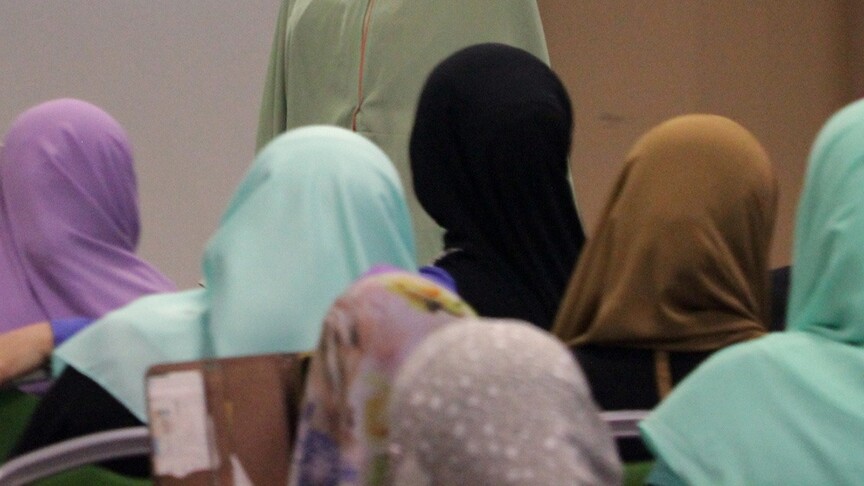
Güneş said that claiming there was a general headscarf problem in Switzerland would amount to accepting the prevailing political rhetoric without questioning it. Güneş said wearing or not wearing a headscarf was a personal decision for each woman to make of her own free will.
“The headscarf debate could become a broader debate about identity”
Güneş said they were concerned that the debate over headscarves could develop into a broader debate about religion and identity. Güneş said legislation should not directly or effectively target a particular religious community, adding that regulations should be based on objective and general criteria and comply with freedom of religion, the principle of equality and the prohibition of discrimination.
Suat Şahin, president of the Swiss Turkish Community, said they viewed with concern and did not consider appropriate the initiatives to ban headscarves in schools in the cantons of Zurich and Aargau. Şahin argued that there was no concrete problem threatening social order and said the initiative could deepen division and othering.
Şahin said the initiative launched in the two cantons could later spread to other cantons and other areas of life, posing a risk to the culture of living together. Şahin said that forcing someone to wear a headscarf was just as wrong as forcing someone who wanted to wear one for religious reasons to remove it. Switzerland, he said, should strengthen coexistence on the basis of law, mutual respect and freedoms rather than bans.
FIDS’s area of representation
Güneş said FIDS, founded in 2006, represented 16 Islamic umbrella organizations at the national level. Güneş said approximately 300 mosques, community organizations and associations operated in Switzerland, adding that around 240 of them were united under FIDS.
Güneş said these organizations discussed Muslim identity and the visible expression of an Islamic lifestyle with the Federal Chancellery, parliaments, universities, the Swiss army, spiritual support services, media organizations and institutions combating racism.