US President Donald Trump has escalated airstrikes on Iran and threatened a broader military escalation. Yet there is little sign that the military strategy, which has so far failed to extract concessions from Tehran, will yield results this time either.
With the collapse of a temporary ceasefire reached a month ago, Trump is seeking an exit from a war he launched that is increasingly losing public popularity. The US President has found himself at an impasse as he tries to break Iran's control over the vital Strait of Hormuz and bend Tehran to his will.
Although both sides have so far avoided sliding into all-out conflict, increasingly alarming developments have dimmed hopes for a short-term exit from the crisis. Global oil prices have risen again while financial markets have also been shaken.
Mutual attacks enter sixth day
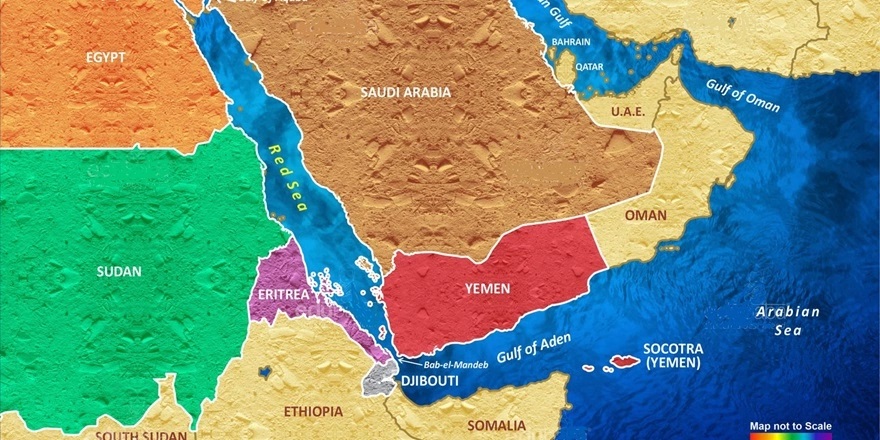
As mutual retaliatory strikes entered their sixth day on Thursday, Iran signaled it could direct the Houthis in Yemen to close the Bab el-Mandeb Strait at the entrance to the Red Sea if Washington strikes its energy infrastructure as threatened.
In a sign of growing frustration, Trump discussed options with his advisors including striking power plants and bridges, sending ground forces to seize Iran's Kharg Island oil hub, and bombing the underground nuclear-related facility known as Mount Kazma. The President has voiced some of these options publicly.
Some of these options may be unrealistic due to high risks and the potential for domestic political or geopolitical backlash. Trump has made similar threats before only to back down.
Experts say strategy will not work
Most analysts agree that short of an extremely dangerous and politically unsustainable ground invasion to topple the Iranian government, a major US escalation is no more likely to force Tehran to change course than the earlier phases of the roughly four-and-a-half-month war, during which senior leaders were killed and military capabilities heavily damaged in US and Israeli strikes.
"There is no reason to believe that this latest series of strikes, or whatever the president has in mind, will force the Iranians to change their thinking," said Jonathan Panikoff, a former US intelligence officer now at the Atlantic Council think tank, adding: "It will likely only harden their position."
Temporary deal unravels
The ceasefire's collapse comes as Trump is under pressure to end a war that has killed thousands, caused economic hardship at home, and driven down his approval ratings ahead of the November midterm elections.
Negotiations aimed at turning the temporary deal into a lasting peace have ground to a halt. However, there are signs of possible diplomatic activity behind the scenes. Trump welcomed the release of a US citizen detained in Iran, calling it a goodwill gesture. But Iran's judiciary told state media that no prisoner had been released or exchanged.
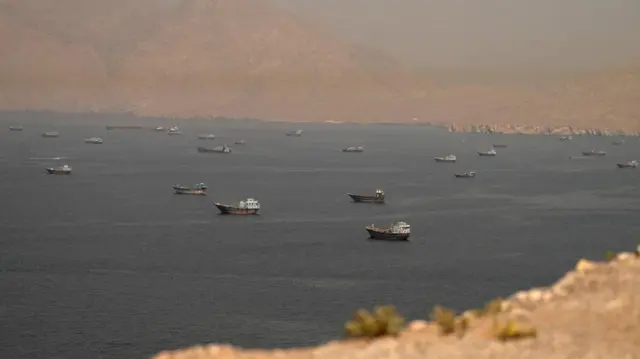
Trump may hope to bomb Iran back to the negotiating table over its nuclear program, which he has set as the main war objective. Yet the recent hostilities are rooted in differing interpretations of what the temporary deal meant for control of the strait. Iran demonstrated during the war that it could halt a fifth of the world's oil shipments.
Tehran believes it has a role in managing the waterway, even that it can charge fees or tolls. The US and its Gulf allies insist on a return to free and safe passage. Most experts see little sign that Tehran will grant the concessions Trump seeks.
Iran resumes attacks on commercial ships
Iran's resumption of attacks on commercial vessels in recent days — which the White House on Thursday called a violation of the temporary deal — triggered the latest US response, including the reimposition of a blockade on Iranian ports.
Tehran also faces mounting economic pressure after Washington revoked the waiver allowing Iran to sell oil internationally. That waiver was one of Iran's biggest gains under the temporary deal.
Three US officials told Reuters that the wave of US strikes could serve as "shaping operations," giving Trump more options by targeting Iranian military capabilities he wants destroyed before taking bigger steps.
Iran, meanwhile, has signaled it is ready to widen the war, warning it could strike civilian facilities of US Gulf allies if Trump continues the escalation. Tehran still holds significant missile and drone stockpiles.
Red Sea route under threat
Tehran has also asked the Houthis in Yemen to be ready to close the Red Sea oil route if the US strikes Iran's energy infrastructure. Three sources told Reuters on Thursday that this demand poses a potent new threat to global energy supplies, especially at a time when some shipments are being diverted to the Red Sea.
Mark Dubowitz, head of the hawkish anti-Iran Washington think tank Foundation for Defense of Democracies, wrote on X that Tehran was "playing the Hormuz card out of desperation" and that such moves would accelerate global efforts to build new pipelines and shipping corridors, eroding Iran's "ability to blackmail the world."
Some analysts suggest Trump, who campaigned for a second term on promises to avoid foreign entanglements and focus on Americans' economic concerns, may be repeating some of the mistakes he made when he launched the war on February 28. He offered little explanation for his rationale and laid out no clear exit strategy at the time.
"No matter how much pressure the administration applies or how many new threats it makes, the Iranian leadership is highly unlikely to surrender," Danny Citrinowicz, a senior Iran researcher at the Institute for National Security Studies in Israel and a former Israeli military intelligence officer, wrote on X. Citrinowicz added: "If President Trump continues to expand the target list, Tehran is likely to respond in kind."