The TSK Munitions Separation and Sorting Facility in Yahşihan, Kırıkkale, operates to safely separate out-of-service munitions and put them into recycling. The 216,000-square-meter complex has 12 workshops, 17 service buildings and 3 munitions depots.
Officers, noncommissioned officers, civilian employees and workers who have received training in explosive materials and munitions safety, as well as occupational health and safety, work at the facility. Munitions are directed to different workshops according to their type and caliber.
Munitions are separated by type
Caseless munitions and mortar munitions are processed at the F-20 Workshop, cased munitions and land mines at the F-30 Workshop, and rockets and missiles at the F-40 Separation Workshop. Modular equipment allows munitions ranging from 40 to 600 millimeters in caliber to be processed.
Under automated safety measures, the munitions are dismantled into main components such as fuzes, initiators, explosive fillings and metal bodies. Munitions that cannot be processed in the separation workshops are sent to the F-50 Water-Jet Cutting Workshop following a committee decision.
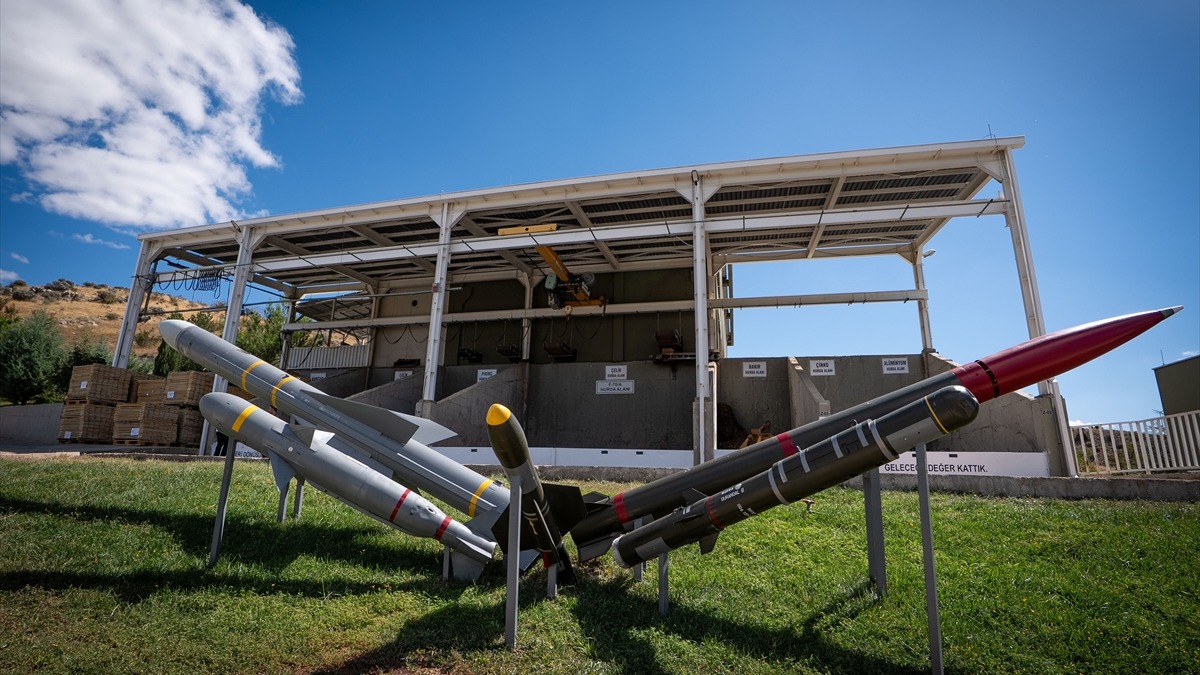
At this section, munitions bodies are cut in a controlled manner using two water jets, a band saw and a guillotine press.
Explosive removal is managed remotely
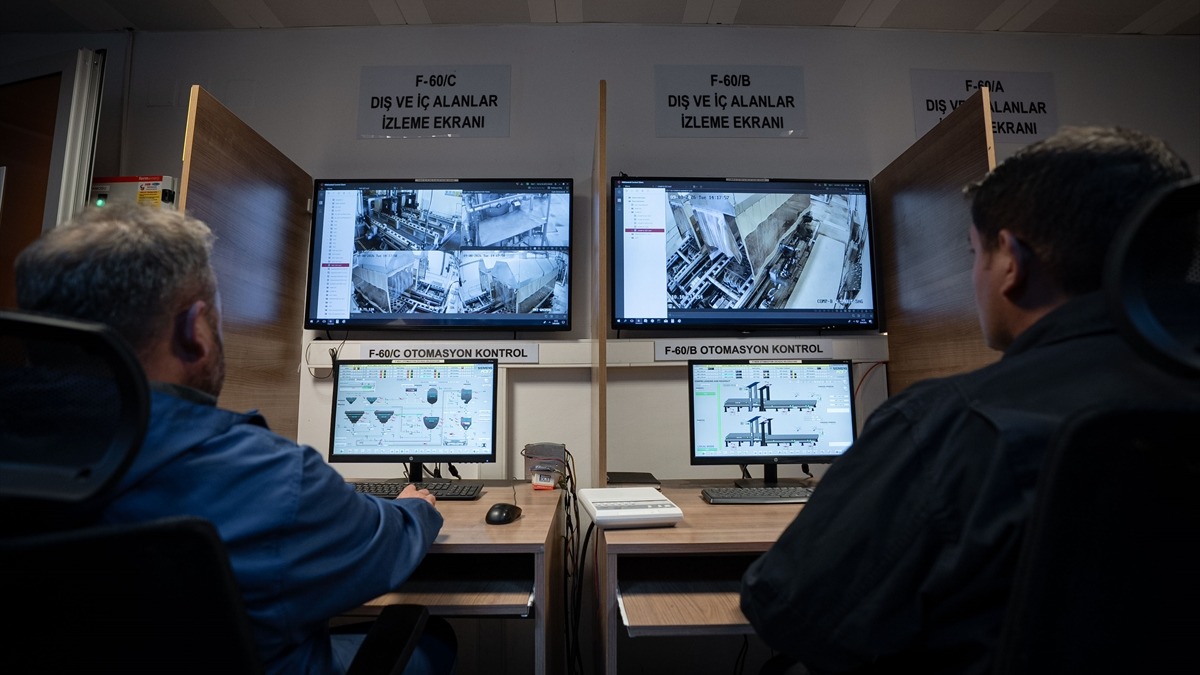
Operations at the F-60 Explosive Removal Workshop are managed remotely from a control room. Munitions bodies are transported by an automated conveyor to hot-water emptying stations, where the explosives inside are melted and removed.
The removed explosives are converted into solid particles in a drying and shaping system. The resulting material is then automatically weighed and packaged without human intervention.
Water mixed with explosives is passed through a treatment system and reused in the process. Munitions containing TNT, Composition B and amatol-type explosives are either destroyed or recovered, depending on their condition.
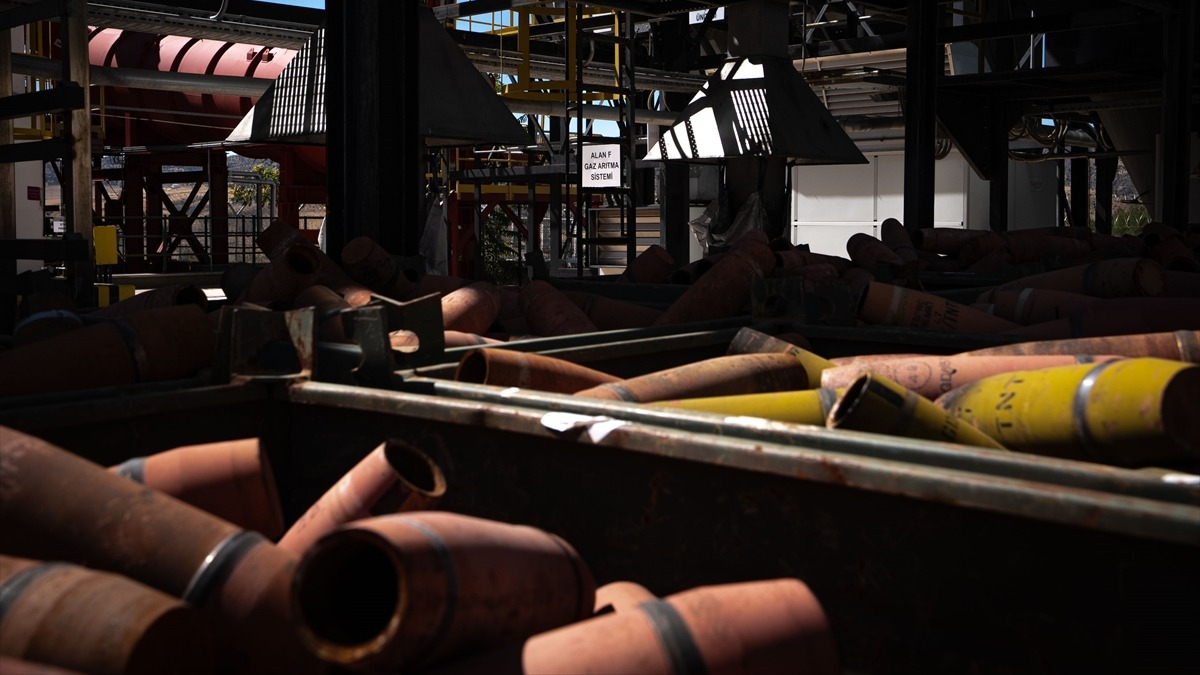
Fuzes, boosters and initiators removed during separation that contain small amounts of explosives are destroyed in the F-80 Armored Incinerator. Boxes filled with explosives are loaded into a robotic weighing system at the F-81 Explosive Incineration Workshop and sent to static furnaces through an automated transfer system.
Munitions bodies cleared of explosives are burned in a flash furnace. The gases produced during the process are treated and brought into compliance with national and European Union environmental legislation.
Metal and wood components are sent for recycling
Metal bodies cleared of explosive components are processed and pressed at the F-70 Final Processing Workshop, where their original forms are destroyed. Metals such as steel, aluminum, copper and brass are sent for recycling.
Suitable wood materials are made into pallets by workers holding carpentry qualification certificates. Munitions crates impregnated with chemicals are burned in a furnace at the F-130 Wood Incineration Workshop in compliance with environmental legislation, and the resulting energy is recovered.
Other waste generated by separation, sorting and maintenance operations is collected at a temporary waste depot and handed over to authorized companies under a protocol.
Modernization of the facility was completed in 2022
An agreement was signed between the Ministry of National Defence and the NATO Support and Procurement Agency to modernize the facility, which was established in 2007 to separate out-of-service munitions without harming the environment. The TSK Munitions Separation and Sorting Facility Modernization Project, carried out by ROKETSAN as the contractor, began on September 18, 2015.
The facility was inaugurated on February 5, 2020, at a ceremony attended by President Recep Tayyip Erdoğan. The modernization project was completed on December 1, 2022, and the facility was certified after qualification work.
Following an inspection by the Ministry of National Defence's Quality Assurance Department on October 4-6, 2023, the facility received an AQAP-2110 Quality Assurance Certificate. On October 20, 2025, the facility also began factory- and company-level munitions refurbishment and maintenance activities.



















