After providing military and political support to the government in western Libya, Turkey has recently expanded cooperation with forces in the country's east. According to information obtained by Al Jazeera from special sources, contacts between Ankara and the General Command in eastern Libya have moved beyond political talks to encompass military and technical areas.
While official statements from the Turkish Ministry of Defense and the Libyan General Command highlighted "strengthening military cooperation," "training," and "experience sharing," special sources claim the parties have reached agreement on developing military facilities, surveillance and monitoring systems, and training officers affiliated with the General Command in Turkey. Turkish defense industry companies are also said to be involved in these projects. However, these details have not yet been confirmed by official authorities.
Saddam Haftar plays a critical role
Security sources speaking to Al Jazeera said that military cooperation is no longer limited to western Libya but has expanded to the eastern region, covering training, capacity building, and improvement of military infrastructure. A significant part of this rapprochement is being led by Saddam Haftar, deputy commander of forces in eastern Libya; Haftar frequently meets with the Turkish defense minister, chief of general staff, and senior military officials.
What do experts say?
Libyan national security expert Faysal Burayka told Al Jazeera that this rapprochement signals a shift in Turkey's Libya policy. Burayka said, "Ankara is no longer limiting its relations to the west; it has opened channels with the General Command in the east that include training, technical cooperation, and military visits." He noted that this process gives the General Command an opportunity to diversify its military partnerships while allowing Turkey to extend its influence into eastern and southern Libya. However, Burayka stressed that the relationship has not yet reached the level of a strategic alliance, as there is no declared defense agreement and the General Command maintains ties with Egypt, Russia, and the United Arab Emirates. Burayka warned, however, that a permanent Turkish military presence near the Egyptian border or in southern Libya would increase sensitivities in Cairo and Algiers.
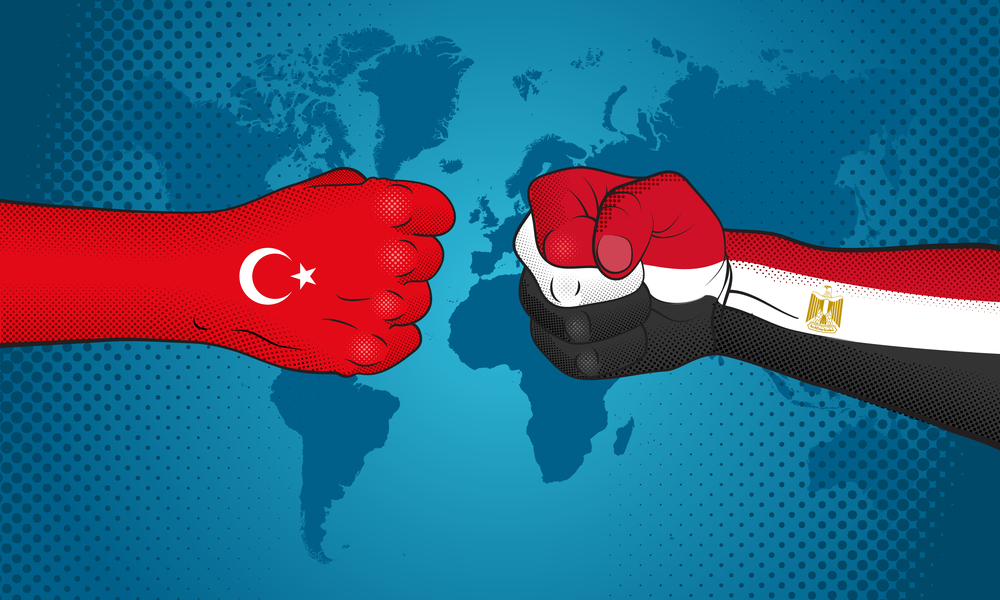
Egyptian military expert and head of the Arab Center for Strategic Studies, Brigadier General Samir Ragheb, believes these developments are not a crisis or a source of concern for Egypt. Speaking to Al Jazeera, Ragheb said that Turkey's cooperation with eastern Libya and Khalifa Haftar could be positive, especially at a time when Egyptian-Turkish coordination has reached its highest level at all levels, including the military. Ragheb stated that a base in southern Libya, far from the Egyptian border, does not pose a problem for Egypt, and that Cairo is only concerned with the eastern Libyan region adjacent to Egypt's western border.
Ragheb also suggested that military cooperation between Haftar and Turkey could serve Egypt's strategic goals, as it would limit Haftar's influence in the Sudan file and reduce support for the Rapid Support Forces. The Egyptian expert added that the Turkish presence would fill gaps that could otherwise be filled by another regional actor whose views and interests do not align with Egypt's.
The maritime jurisdiction agreement dimension
Another claim by Al Jazeera based on special sources is that behind Turkey's outreach to eastern Libya lies a desire to facilitate the ratification of the maritime jurisdiction delimitation agreement signed with the former Government of National Accord in 2019. Accordingly, Ankara aims to pave the way for the agreement by expanding communication channels with influential parties in eastern Libya. However, this information has not been confirmed by either the Turkish government or the Libyan House of Representatives.
Egypt emphasizes "coordination"
An Egyptian source close to Egypt-Turkey relations told Al Jazeera, "Turkey is currently not taking any step in Libya without prior coordination with Egypt," shutting the door on claims that Egypt is concerned about such moves.
International relations expert Ilyas Baruni described Turkey's outreach to eastern Libya as a "strategic repositioning." According to Baruni, this step aims to preserve Turkish influence regardless of the outcome of the political process and is linked to protecting economic interests, adapting to shifts in the balance of power, and preparing for a possible political solution.
Experts note that the Libya file has moved from an era of rigid alliances to one of flexible partnerships, and that the future of this rapprochement depends on the boundaries of cooperation and whether it evolves from tactical coordination into a long-term partnership.



















