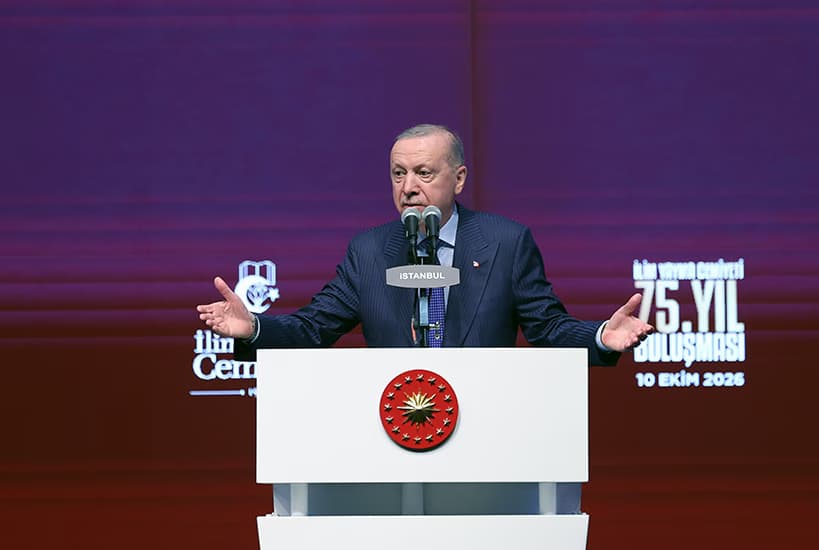
According to a statement by the Ministry of National Education, Türkiye's education indicators were assessed in the Education at a Glance 2026 report published by the Organisation for Economic Co-operation and Development (OECD). With teacher shortages as its main theme this year, the report presents comparative data on the education systems of OECD countries.
According to the report, Türkiye stood out with positive indicators at a time when teacher shortages were increasing and the appeal of the teaching profession was declining across OECD countries. Türkiye, together with South Korea, became one of only two OECD countries to fully meet its teacher needs in primary and secondary education.
Türkiye's teaching workforce is younger
The share of teachers under the age of 35 in Türkiye was recorded at 32%. The OECD average was 22%.
According to data from surveys conducted among school principals as part of the Programme for International Student Assessment (PISA), 6% of school principals in Türkiye said that teacher absenteeism negatively affected students' learning. The OECD average reached 27%.
Teacher salaries rose above the OECD average
According to 2025 data, the gross salary, based on purchasing power parity, of a newly appointed primary school teacher was above the OECD average.
Between 2015 and 2025, the real salaries of lower-secondary teachers with 15 years of experience rose by 31% in Türkiye. The increase in the OECD average remained at approximately 6-7%.
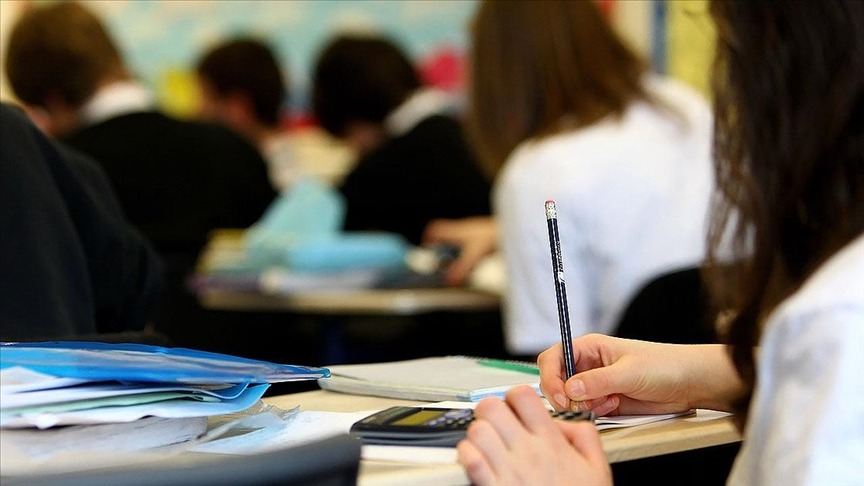
Learning environments improve
Between 2015 and 2024, the number of students per teacher fell from 17 to 14 in lower-secondary education and from 14 to 11 in upper-secondary education. As a result, the number of students per teacher in upper-secondary education in Türkiye fell below the OECD average of 13, while the figure for lower-secondary education approached the OECD average of 13.
The average primary school class size was 23 students in Türkiye, compared with an OECD average of 21. In lower-secondary education, the average class size fell from 25 to 23 over the same period, reaching the OECD average.
Education spending and investment
The share of public expenditure allocated to education was 9.9% in Türkiye. The OECD average remained at 9.8%.
Education investment, consisting of buildings, facilities, equipment and other investments, accounted for 14% of total education expenditure in Türkiye. The figure for the OECD average was 9%.
92% complete secondary education on time
In Türkiye, 92% of students complete secondary education within the expected four-year period. The rate in OECD countries was 75%.

In Türkiye, 1% of students had not completed secondary education or continued their education two years after the end of the expected period. The OECD average reached 12%.
Together with Canada, Ireland and Switzerland, Türkiye ranked among the most successful OECD countries in terms of completing secondary education on time.
Participation in early childhood education increased
In Türkiye, the participation rate in early childhood education among children aged 3 to the starting age of compulsory education rose by 13 percentage points between 2015 and 2024. The increase in the OECD average was 4 percentage points over the same period.
The participation rate was recorded at 15% for three-year-olds, 43.5% for four-year-olds and 87% for five-year-olds.
Higher education graduation rate rises among young women
In Türkiye, the higher education graduation rate among women aged 25-34 rose from 27% in 2015 to 50% in 2025. The OECD average increased from 46% to 54% over the same period.
During this period, the increase in Türkiye was 23 percentage points, while the rise in the OECD average was limited to 8 percentage points.