- BIST10012,151-0.94%
- USD49.220.00%
- EUR55.21+0.28%
- GOLD4,195.90+0.13%
- INTEREST37.00%-1.00
- BITCOIN82,500-1.40%
- October 13, 202618°
- BIST10012,151-0.94%
- USD49.220.00%
- EUR55.21+0.28%
- GOLD4,195.90+0.13%
- INTEREST37.00%-1.00
- BITCOIN82,500-1.40%
- October 13, 202618°
Vice President Yılmaz expects Türkiye’s economy to grow 3.3% this year
Vice President Yılmaz said at the 27th TÜRKONFED Business Summit, held as part of his provincial program, that Türkiye’s economy is expected to grow 3.3% this year despite adverse conditions.


Vice President Yılmaz assessed Türkiye’s economy at the 27th TÜRKONFED Business Summit, held at a hotel as part of his provincial program. Yılmaz said the economy had maintained its resilience and was expected to grow 3.3% this year despite adverse conditions.
Yılmaz said growth was expected to increase gradually and reach around 5% in 2029, adding that they expected the downward trend in inflation to continue as temporary adverse effects disappeared. He said they believed that single-digit inflation rates would be restored in the medium term through the coordinated implementation of monetary, fiscal and incomes policies.
Assessment of economic indicators
Yılmaz said the macroeconomic fundamentals were solid and that the budget deficit-to-GDP ratio had remained at reasonable levels despite 5.4 trillion liras being spent on earthquakes over the past four years. He said this spending amounted to an additional $104 billion at current prices.
Yılmaz said the current-account deficit-to-GDP ratio had remained below 2% in recent years, adding that it was expected to rise to 2.6% this year because of the effects of the war. He said 0.7 percentage points of the increase stemmed from the war and that the ratio remained below 2% when this effect was excluded.
Yılmaz said the Central Bank’s reserves had reached a good level and that financial markets had gained a stronger outlook. He said a temporary problem had occurred in a limited area of the capital markets, adding that administrative and judicial measures had been taken, relevant institutions were working in coordination and there was no structural problem.
Economic security and energy policy
Yılmaz said their main priorities were to reduce external dependence in critical areas, strengthen the economy’s strategic capacity and increase its resilience against multiple shocks. He said reducing external dependence did not mean isolation and advocated developing relations with global trade, investment and technology networks in a more strategic manner.
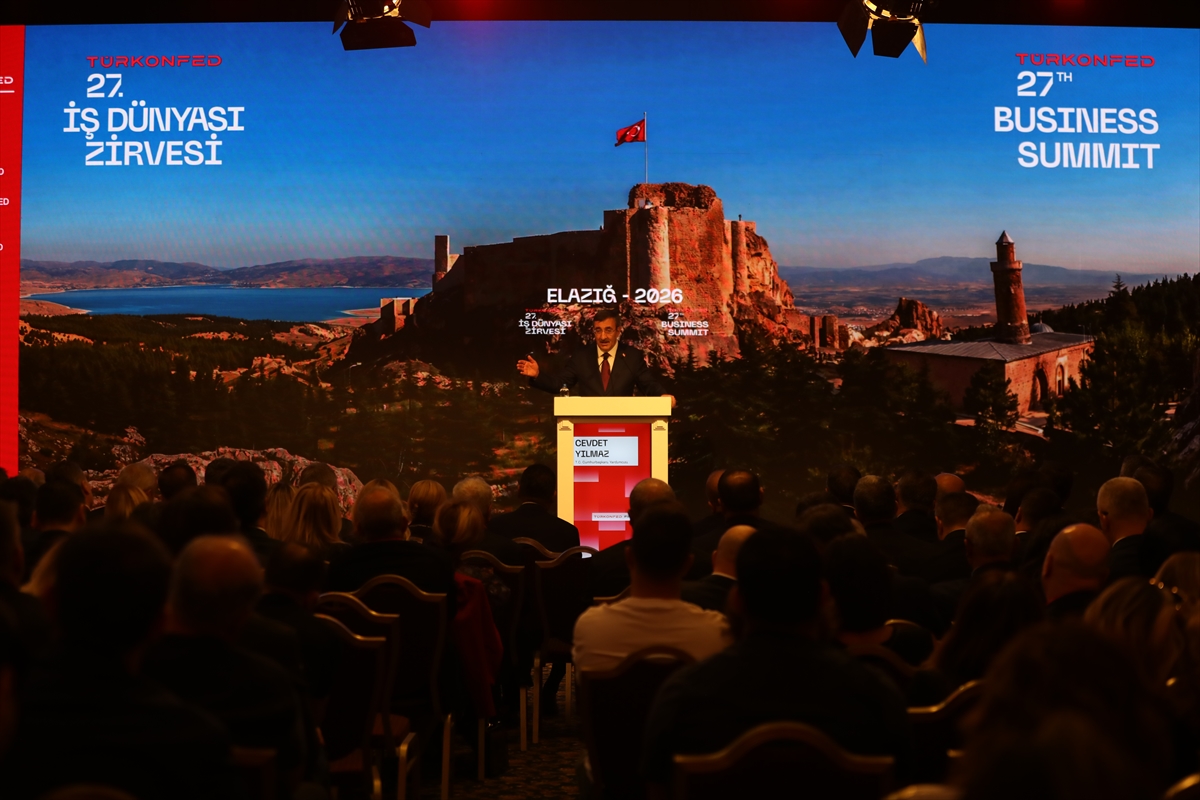
Yılmaz said the economic security approach in the Medium-Term Program offered a perspective aimed at protecting Türkiye’s economy against global risks, emphasizing the importance of balancing resilience with openness and security with competitiveness.
Yılmaz said security of supply in energy and natural resources was one of the priority areas, adding that work would continue to explore and produce domestic resources, diversify energy sources and increase storage capacity. He said research and development and domestic production capacity would be increased to localize critical minerals, nuclear and hydrogen technologies, as well as inputs used in energy and mining.
Yılmaz said low-carbon production capacity, energy efficiency and clean technology investments would be among the main factors shaping countries’ positions in global value chains, adding that COP31 would be held in Türkiye. He said the private sector and civil society should participate actively in this process.
Priorities in food, technology and foreign trade
Yılmaz described the food and agriculture sector as one of the strategic areas, saying food supply security would be prioritized and domestic capacity in strategic inputs would be strengthened against global shocks. He said supply-side measures had been developed in food production and social housing as part of the Medium-Term Program.
Yılmaz said research and development and product development activities would be increased in critical technologies, particularly the defense industry, healthcare, semiconductors and artificial intelligence. He said production and innovation capacity would be positioned in a way that would increase the country’s prosperity.
Yılmaz described the diversification of foreign trade and supply chains as an important element of economic resilience, saying the risks created by excessive dependence on a single market, product or supplier would be reduced. He said traditional export items and existing markets would be maintained while the focus would shift to new products and markets.
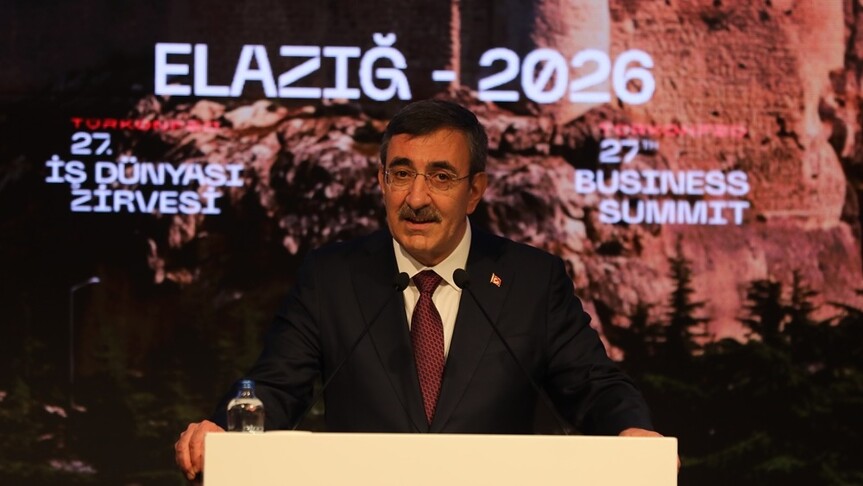
Yılmaz said regional development policies should reflect the differing potential of provinces and regions, calling for the joint development of high-value-added and technology-intensive sectors alongside sectors that provide employment. He said directing capital toward Anatolia would make it possible for metropolitan areas to focus on higher-value-added fields while strengthening Anatolia’s economic potential.
Yılmaz addresses the process for a Türkiye free of terrorism
Yılmaz said a new law had been adopted with the votes of 467 lawmakers following the parliamentary commission’s work as part of the process for a Türkiye free of terrorism. He said the development pointed to broad political consensus and that the law envisaged a two-stage implementation beginning with the laying down of arms and the dissolution of organizational structures.
Yılmaz said a board had been established within the executive branch under his chairmanship, adding that subcommittees had been formed on law and justice, social cohesion and integration, field assessment and monitoring, and disarmament and strategic coordination. He said these committees were monitoring developments on the ground and that responsibilities among institutions had been assigned.
Yılmaz said the first stage would involve verifying the laying down of arms and the dissolution of structures on the ground, followed by confirmation from the National Security Council. He said the second stage would not begin until these assessment and confirmation processes were completed, adding that a monitoring commission would be established in Parliament when it reconvened and that the executive branch would brief Parliament on developments at regular intervals.
Yılmaz said all of Türkiye, particularly people living in the eastern and southeastern regions, would benefit from an environment in which terrorism was no longer on the agenda. He said public investments were continuing and that they expected improvements in security and stability to have the strongest positive impact on private-sector investment and the investment climate.
Yılmaz said a strong economy was sustained by a strong society, while a strong society was sustained by an economy that generated sustainable prosperity. He said ensuring that transformation in high-value-added fields translated into social prosperity and stability was among their priorities. Yılmaz said they would continue working to preserve economic stability, support producers and entrepreneurs, and increase the country’s competitiveness and social welfare.
Stay Updated with The Turkiye Times
Subscribe to be informed about special news, developments and announcements. We will keep you informed.
By signing up, you agree to our Privacy Policy