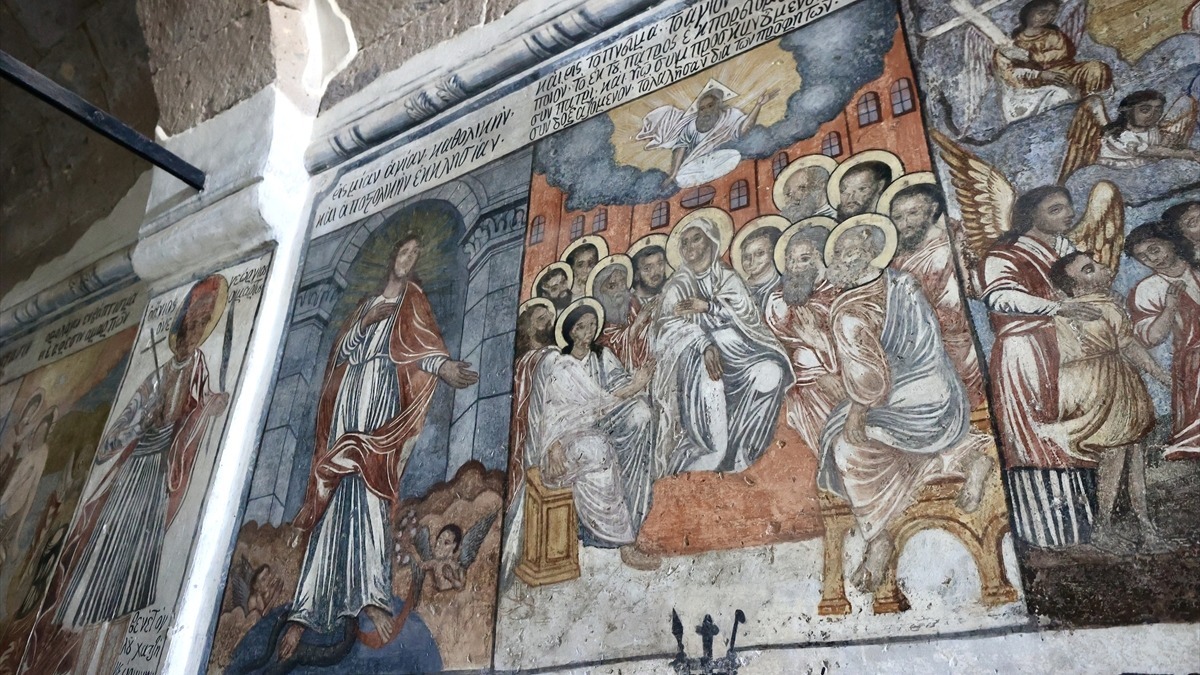
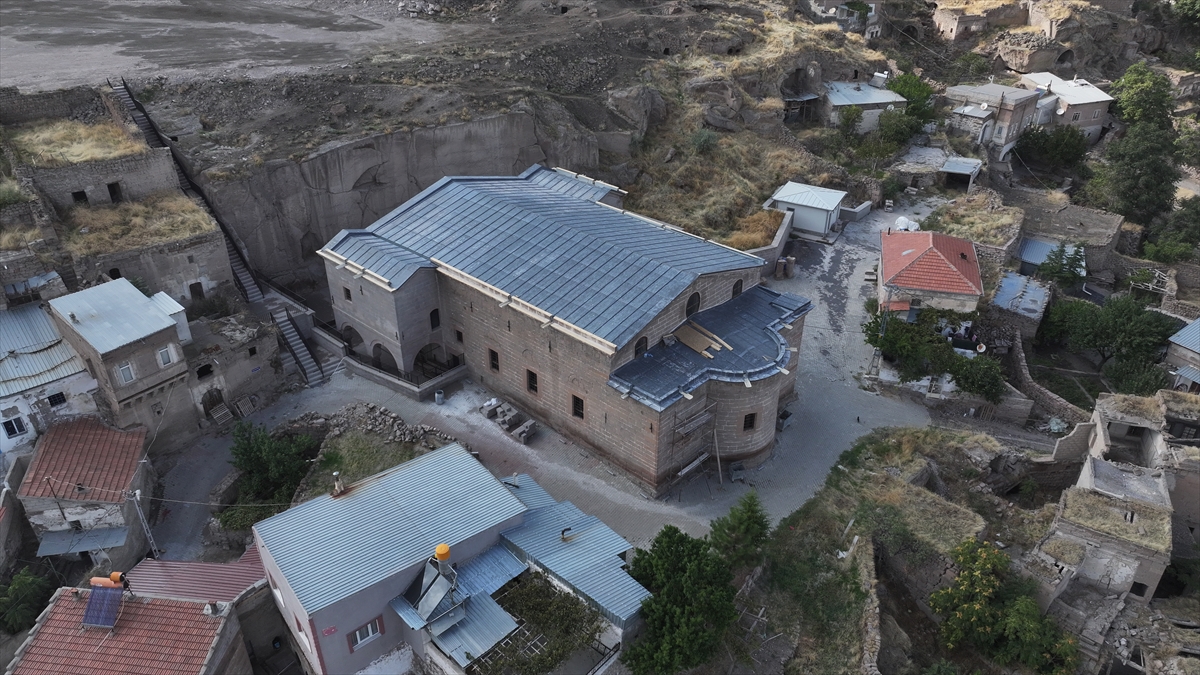
The Aziz Eustathios Greek Orthodox Church, built in 1836 in Kayseri’s İncesu district, is among the district’s significant historic structures, with paintings, frescoes, stonework and remnants from different periods on its interior walls.
The three-aisled, barrel-vaulted building has a rectangular plan and was taken up for restoration by Kayseri Metropolitan Municipality in 2021. Its load-bearing walls and original fabric were reinforced with materials and techniques faithful to the original.
The interior stonework and frescoes were preserved during the restoration. Karamanlı inscriptions depicting scenes, charitable endowment records, reliefs and carvings on the walls were also brought to light through conservation work.
It will serve as the İncesu City Museum
The restoration, carried out using archival photographs and documents, was completed last year. The historic building, noted for its wall paintings, will serve as the İncesu City Museum.
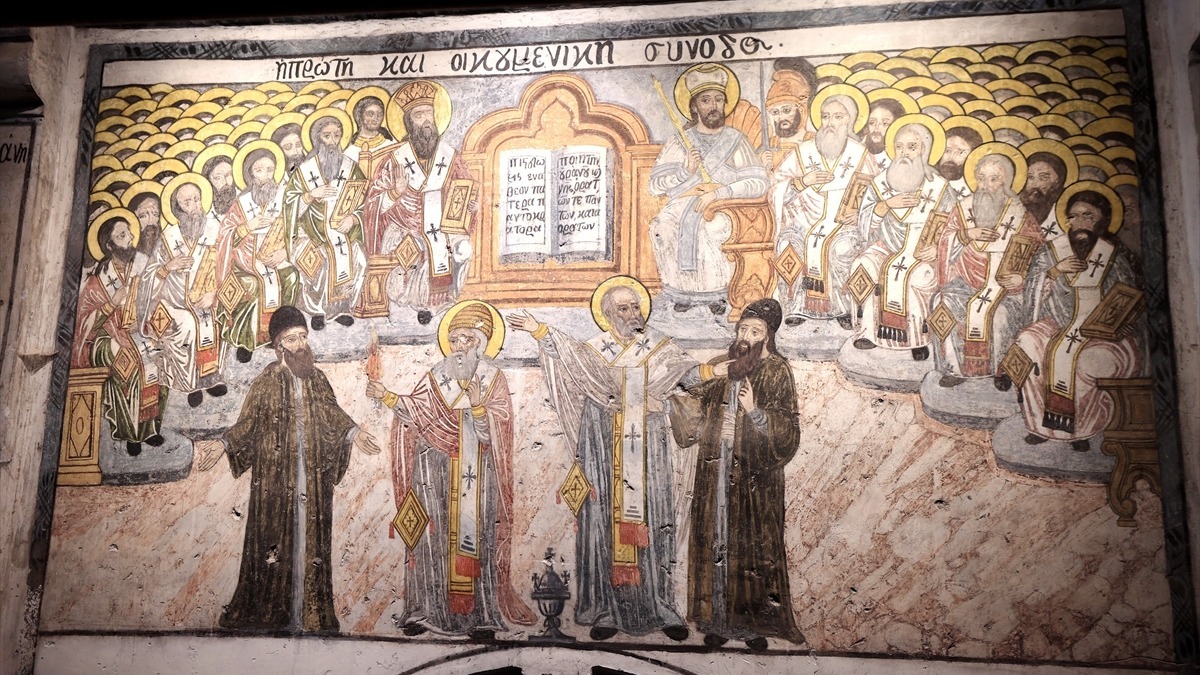
More than 80% of the exhibition and arrangement work has been completed. The building is being targeted for inclusion in Cappadocia tourism destinations such as Avanos, Ürgüp and Göreme, located 45 to 50 kilometers from İncesu.
Tayfun Talaslı, head of the Historic Structures and Museums Department at the Kayseri Metropolitan Municipality’s Department of Urban History Promotion and Tourism, said the church was one of the examples of classical Greek Orthodox architecture in Anatolia.
Talaslı said the building was used as a place of worship until the 1923 population exchange, and later served various functions, including as a military warehouse, archive, theater hall and vocational school.
Talaslı said the restoration began at the end of 2021 and was completed last year under a protocol signed between Kayseri Metropolitan Municipality and İncesu Municipality. He emphasized that avoiding damage to the historic building was the fundamental principle guiding the exhibition and arrangement work.
Walking platforms installed so visitors can examine the frescoes, along with lighting fixtures and display units, were designed not to touch the building. These elements were created as an independent system standing on its own supports.
The museum will present İncesu’s cultural heritage
Talaslı said old photographs and the oral histories of people who had lived in the area were used during the restoration, which was carried out under a project prepared in line with art history reports.
Talaslı said they planned to complete the exhibition and arrangement work soon and open the museum to visitors. He added that the ground floor would present İncesu’s tangible and intangible cultural heritage.
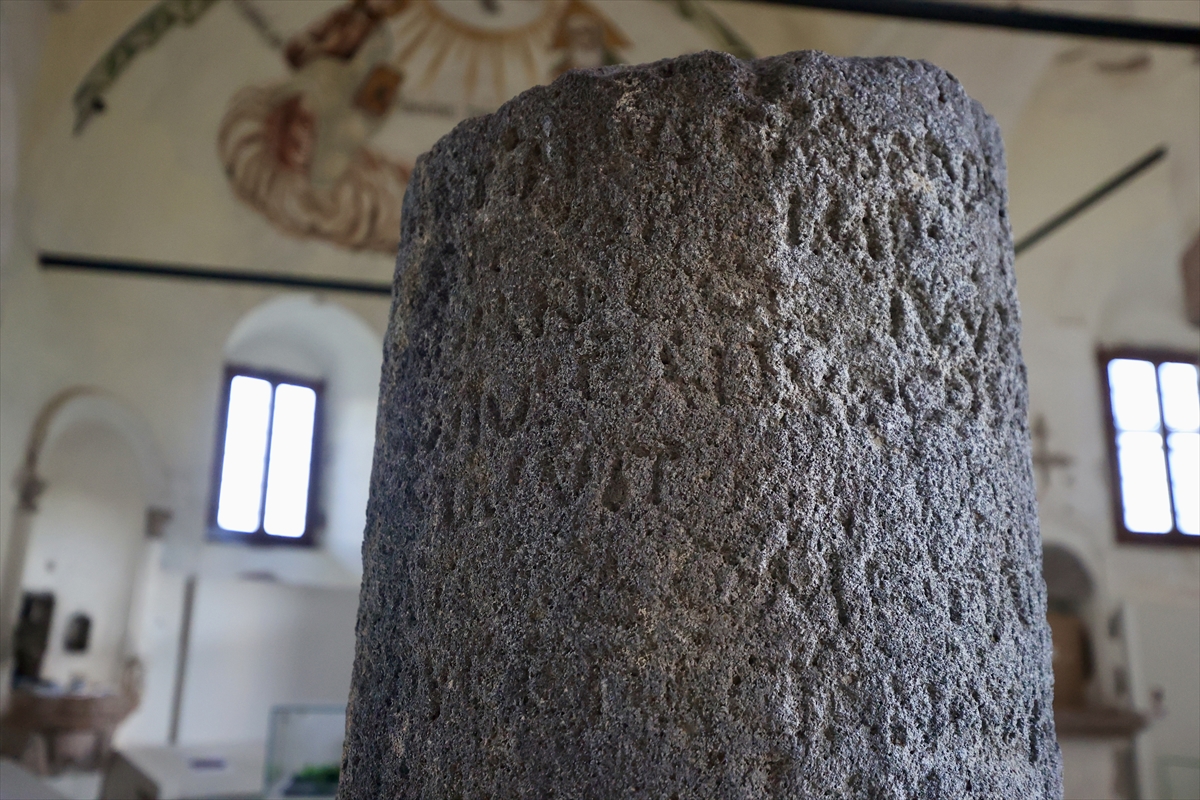
The museum will present visitors with İncesu’s historical chronology, people who originated from the district and left their mark on its history, and its architectural structures. Alongside the Kara Mustafa Pasha Complex and a Roman-era milestone, examples of ceramics and other archaeological finds unearthed in Örenşehir will also be displayed.
The exhibitions will also include information about the district’s gastronomy, population structure, the population exchange it experienced in the past, architectural heritage, flora and fauna, geological structure, agriculture and grapes.