- BIST10012,151-0.94%
- USD49.220.00%
- EUR55.21+0.28%
- GOLD4,192.30-0.57%
- INTEREST37.00%-1.00
- BITCOIN82,747-1.11%
- October 12, 202619°
- BIST10012,151-0.94%
- USD49.220.00%
- EUR55.21+0.28%
- GOLD4,192.30-0.57%
- INTEREST37.00%-1.00
- BITCOIN82,747-1.11%
- October 12, 202619°
Book scanning for AI training intensifies copyright debate
Attorney Melahat Boran, secretary-general of the Türkiye Publishers and Press Professionals Association, said scanning books to train artificial intelligence models could qualify as reproduction under copyright law.


Attorney and arbitrator Melahat Boran, secretary-general of the Türkiye Publishers and Press Professionals Association, assessed the growing legal debate over artificial intelligence companies using copyrighted books to train models, purchasing physical copies and scanning them, and adding digital copies to datasets.
The scope of the German ruling
Boran highlighted the ruling issued by the Munich Regional Court I in Germany on July 31 in a lawsuit filed by music copyright organization GEMA against AI music platform Suno. The court considered that a work’s memorization by a model and its recognizability in generated outputs could indicate that protected elements had been embedded in the model’s parameters and that the work had been reproduced.
Boran said this type of memorization was not covered by Germany’s text-and-data-mining exception, and that compliance with the European Union AI Act alone did not automatically provide companies with copyright protection. She said such reproductions would also not qualify as fair use in a training process governed by U.S. law.
Emphasizing that the ruling was a first-instance decision and could be changed by higher courts, Boran said the same court had ruled in 2025, in GEMA’s lawsuit against OpenAI, that memorizing the lyrics of nine German songs in a model and reproducing them in outputs constituted reproduction. She said a ruling by the Court of Justice of the European Union was awaited for a binding approach across Europe, adding that the Like Company-Google case referred from Hungary asks whether model training qualifies as reproduction and whether the text-and-data-mining exception covers AI training.
Scanning physical books
Boran said documented information and hearsay should be distinguished in assessments concerning the purchase and scanning of physical books, identifying Anthropic’s “Project Panama” as the best-documented example.
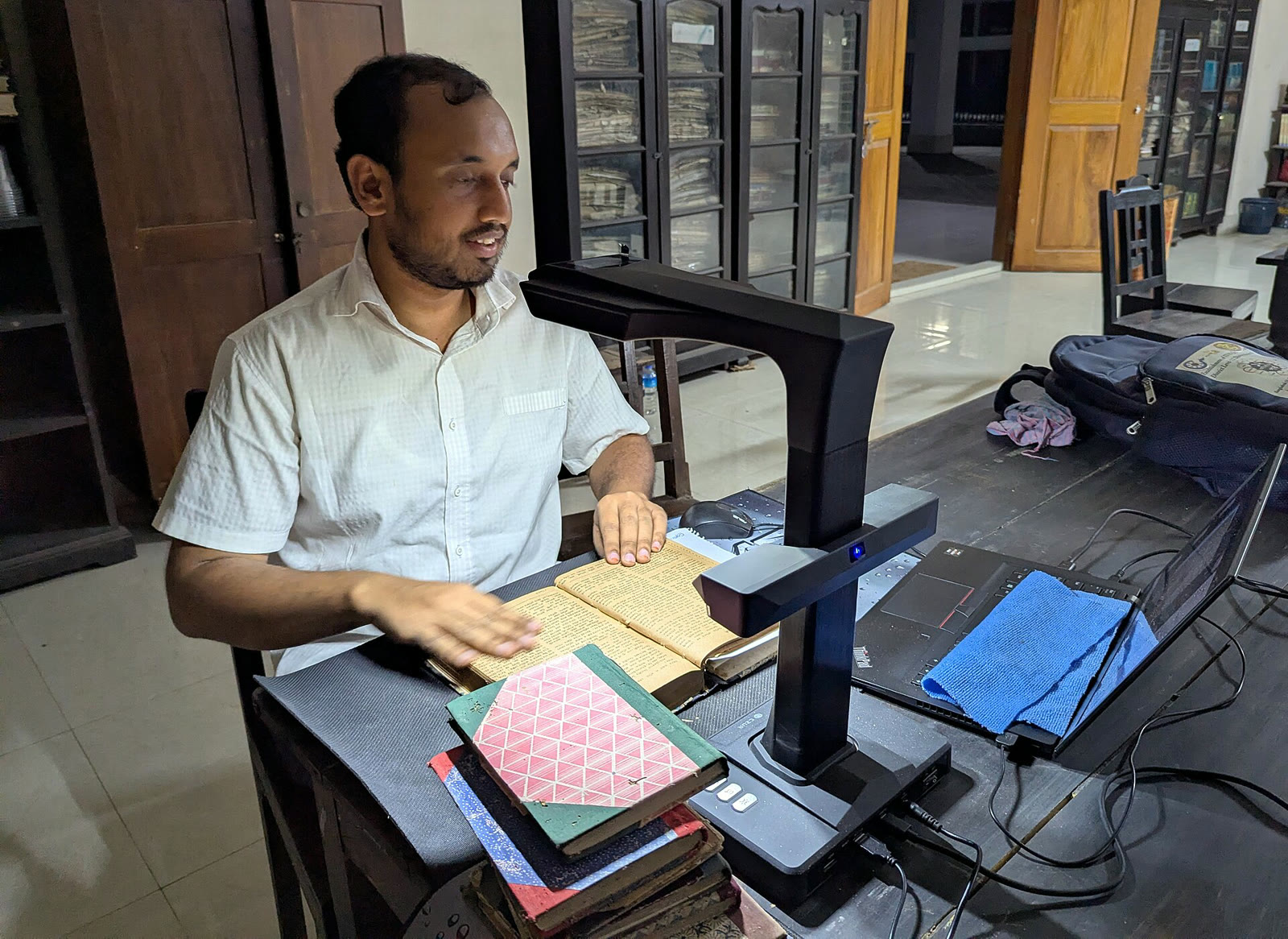
Boran said the books were processed by a contractor using hydraulic cutting equipment, their bindings were removed and their pages were scanned. The digital files were delivered to the company, while the physical books were sent for recycling. A supplier’s proposal envisaged processing between 500,000 and 2 million books within six months.
Boran said there were also suspicions that high-volume orders placed with booksellers in Europe were intended for AI training, adding that the buyers and purpose of use had not been independently verified in most of these purchases.
U.S. lawsuits and the licensing debate
Boran said that in the U.S. case Bartz v. Anthropic, training models with books that had been purchased and scanned was considered fair use, while training with copies downloaded from pirated sources and kept in a centralized library was deemed an infringement. She said the case ended with a $1.5 billion settlement.
Boran warned that bulk purchases of books and the destruction of physical copies could be used to avoid paying licensing fees. She said those opposing a general licensing requirement for AI training and those advocating fair compensation for rights holders were confronting each other. Boran said innovation and the protection of rights holders were not alternatives, adding that the leading approach was moving toward licensing and transparency.
Boran said licensing could provide rights holders with predictable income, developers with legal certainty and access to lawful content. She cited the U.S. Copyright Clearance Center’s voluntary, non-exclusive collective licensing system as an example. She said AI training, which involves large numbers of works and users, was an area suited to collective management.
The legal framework in Türkiye
Boran said the legal situation in Türkiye differed from that in the United States, adding that the provisions of Law No. 5846 on the reproduction right were decisive. She said Article 22 of the law defines the reproduction of a work, temporarily or permanently, by any method as the exclusive right of the author, adding that scanning a book or adding its digital copy to a dataset technically constitutes reproduction.
Boran said Türkiye had no equivalent of the European Union’s text-and-data-mining exception and that commercial AI model training could not fall under the personal-use exception either. She said purchasing a physical book exhausted only the distribution right, allowing the buyer to resell or give away the book but not to scan and reproduce it.
Recommendations for the publishing sector
Boran said Türkiye’s Artificial Intelligence Action Plan contained no action regulating the copyright regime for training AI models. She added that the rights of authors, translators and publishers should also form part of cultural-content objectives. She called for barriers to collective licensing to be removed and for artists and authors to be protected against AI companies.
Boran recommended that publishers record unusual bulk orders and review their inventories and author contracts. She said digital content should expressly reserve rights, AI providers should be required to be transparent about the contents of training data, and any possible exceptions should be regulated with guarantees of a right to object, fair compensation and effective oversight.
Boran said the state should amend Law No. 5846 in line with current needs, strengthen the fight against digital piracy and establish a workable collective licensing system. She recommended that publishers’ and authors’ professional associations work on a common tariff, model contract and AI licensing model. She added that rights-holder payments arising from lending activities in public libraries should be addressed first, followed by licensing in university libraries.
International meeting
Boran said the World Intellectual Property Organization’s first Global Forum on intellectual property and artificial intelligence would be held in Geneva on November 9-10, 2026. She said progress had been made in combating physical book piracy, but regulations were still needed in digital piracy and collective licensing to ensure that rights holders received income.
Stay Updated with The Turkiye Times
Subscribe to be informed about special news, developments and announcements. We will keep you informed.
By signing up, you agree to our Privacy Policy

















