- BIST10010,977+3.02%
- USD50.68+0.07%
- EUR55.60+0.36%
- GOLD3,660.00+2.68%
- INTEREST36.00%-1.00
- BITCOIN59,760-1.22%
- November 27, 202615°
- BIST10010,977+3.02%
- USD50.68+0.07%
- EUR55.60+0.36%
- GOLD3,660.00+2.68%
- INTEREST36.00%-1.00
- BITCOIN59,760-1.22%
- November 27, 202615°
China tests firefighting robot dog that works at 1,000°C
China’s first firefighting reconnaissance robot dog capable of operating at 1,000 degrees Celsius for 10 minutes has completed its first field test at a fire station in Suzhou. The “fireproof jacket” protecting the robot from flames was adapted from heat-protection material used in Long March 5 rockets.

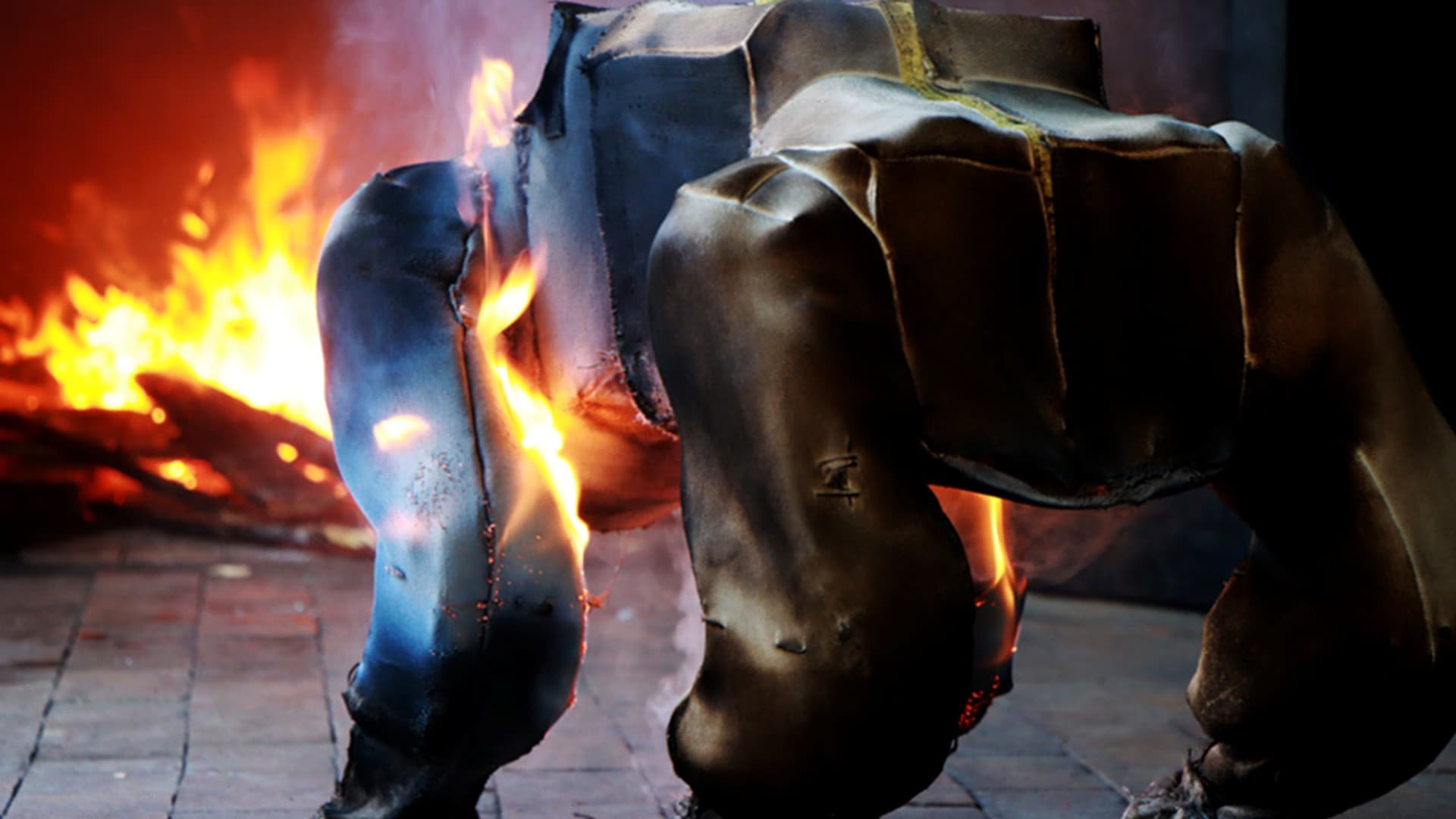
China has conducted a field test of a firefighting reconnaissance robot dog capable of withstanding temperatures of up to 1,000 degrees Celsius. Chinese media reported that during the test at a fire station in Suzhou, in eastern China’s Jiangsu province, the robot completed an operational trial under real conditions, a first of its kind in the country.
Developed by the Suzhou Research Institute of the Harbin Institute of Technology, the four-legged robot can operate continuously for 10 minutes in environments reaching 1,000 degrees. The robot is expected to be usable in approximately 95 percent of fire scenarios.
The robot can detect hazards, conduct reconnaissance, determine locations and transmit data in real time.
Imaging system cuts through dense smoke
Equipped with a laser-gated imaging system capable of penetrating dense smoke, the robot can maintain stable control and provide high-resolution images even inside buildings exceeding 30 floors, thanks to 5G and video-transmission connections. This allows the source of a fire and trapped people to be detected in real time.
When flames engulf an entire building during a fire, indoor temperatures can rise to between 300 and 1,100 degrees. Dense smoke filled with toxic gases such as carbon monoxide and cyanide can make it impossible to see even a few steps ahead. Most firefighting robots currently used in China, however, can withstand temperatures of only up to 300 degrees. Lithium batteries also face a risk of explosion above 200 degrees.
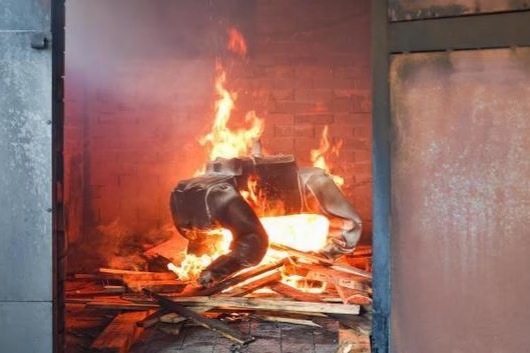
“Fireproof jacket” adapted from rocket technology
The robot dog itself is not actually fireproof. Its protection comes entirely from a specially designed “fireproof jacket.” The jacket is built around a multilayer composite fabric adapted from heat-protection materials used in the aerospace industry.
Project researcher Guo Shuai said, “We adapted heat-protection technology originally developed for rockets for the robot dog.” Guo said the same material had previously been used in three launches of the Long March 5 rocket. Only 5 to 6 millimeters thick, the flexible fabric has an outer layer that resists burning, while its inner layers provide insulation, heat absorption and reflection.
The development process was not trouble-free. Guo said, “During the first test, all four of the robot’s legs were burning when it emerged from the flames.” The team solved the problem by reformulating the rubber on the legs with flame-retardant and heat-reflective materials.
Ma Xiaoliang, general manager of the company that produces the material, said the fireproof fabric is about to enter mass production and could eventually be incorporated into firefighters’ protective clothing. The single and coordinated use of reconnaissance dogs is expected to soon become routine at fire scenes.
Stay Updated with The Turkiye Times
Subscribe to be informed about special news, developments and announcements. We will keep you informed.
By signing up, you agree to our Privacy Policy