Abdulvehab Ejupi, Digital Team Lead at TRT World, assessed the importance of EVREN, the national artificial intelligence platform recently made available, in terms of Türkiye’s infrastructure and sovereignty goals in the field of AI.
EVREN offers shared AI infrastructure
Rather than defining EVREN as Türkiye’s ChatGPT, it should be viewed as a platform that brings together different stages of AI development on a shared infrastructure. Developed under the Presidency of Defence Industries, the system covers processes including data preparation and labelling, model training, computer vision applications and the operation of large language models.
The platform provides access to 11 open-weight large language models. Users can earn credits by uploading datasets, labelling data or sharing models they have trained; these credits can be used for model training and inference on high-performance Graphics Processing Unit infrastructure.
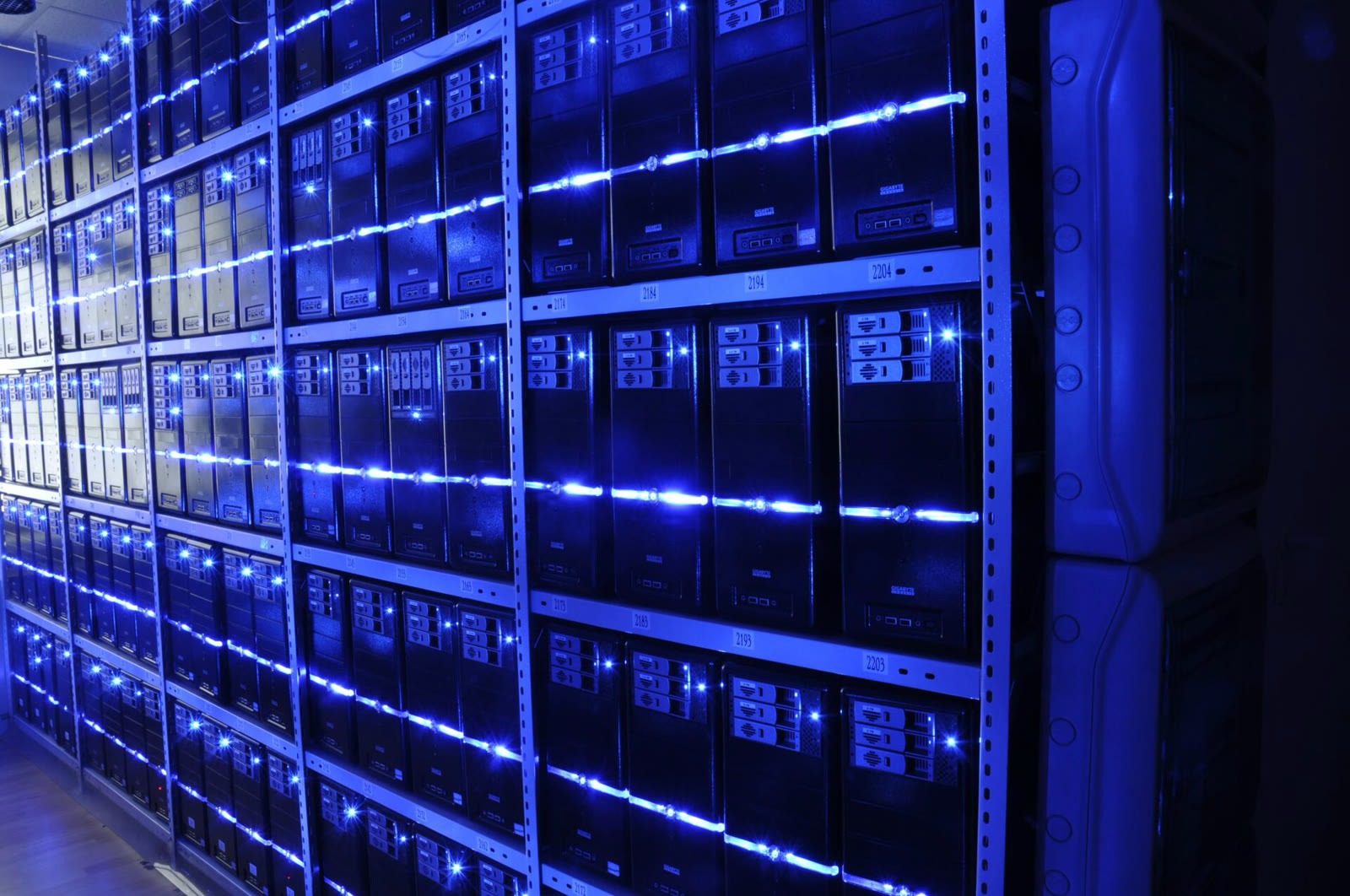
EVREN’s computing infrastructure includes 64 Nvidia H200 GPUs, each with 141 gigabytes of HBM3e memory. The system offers approximately 9 terabytes of high-bandwidth GPU memory and 47.5 petaflops of FP16 Tensor Core computing capacity.
The platform reached approximately 15,000 active users in a short period. The next phase is expected to include adding domestic large language, image and audio models to the system and developing distributed GPU infrastructure. The aim is to provide access to computing power, particularly for universities, researchers and technology startups.
Data and computing power become strategic assets
In the age of AI, competition is not measured solely by the ability to develop the largest model. Energy, data centres, computing capacity, data and qualified human resources are also among the factors that determine countries’ strength in AI.
One of EVREN’s prominent features is its goal of data sovereignty. User prompts, responses and usage data are intended to be processed on high-performance GPU infrastructure located in Türkiye. This approach raises questions, particularly in defence, public services and critical sectors, not only about where data is held but also where AI operations are carried out and who controls the computing infrastructure.
AI sovereignty is shaped by three fundamental elements: data, models and computing power. In this context, technological sovereignty is assessed less by whether every chip, model and piece of software is produced domestically than by the ability to create strategic room for manoeuvre in critical technologies.
Artificial Intelligence Action Plan targets
EVREN is not viewed as an initiative independent of Türkiye’s Artificial Intelligence Action Plan. Announced to the public in June and entering into force on August 18, 2026, the plan for the 2026–2030 period sets out a four-year roadmap under the headings “Recognise, Benefit, Produce and Govern.”
The plan aims to reach at least 1 gigawatt of AI and data-centre capacity by 2030, attract at least $10 billion in investment, primarily from the private sector, and train 10,000 advanced AI specialists and 100,000 AI application professionals. It also plans to include 5 million people in AI literacy programmes within two years.
The “GPU for Everyone” programme for researchers, startups and small and medium-sized enterprises, the National Data Library, sector-specific AI models, and the development of physical AI and robotics capacity are also among the plan’s elements.
Energy and data-centre capacity will be decisive
AI infrastructure consists of more than software and chips. Large data centres require uninterrupted electricity, strong grids, cooling systems and fibre connections. For this reason, achieving Türkiye’s 1-gigawatt data-centre target will depend on investments in energy and physical infrastructure.
Türkiye’s role as an energy corridor is also being assessed in terms of AI infrastructure, alongside electricity transmission projects, renewable energy investments and the nuclear capacity planned to come online with Akkuyu. Türkiye’s transformation into an energy and computing corridor between Europe and Asia is currently considered a goal and a possibility.
Specialisation and measures of success
Türkiye does not need to replicate the race to develop general-purpose models costing hundreds of billions of dollars at the scale of OpenAI, Google DeepMind or Anthropic. Defence and autonomous systems, industrial AI and robotics, energy, logistics, agricultural technologies, and models for Turkish and regional languages are identified as areas for specialisation.
EVREN’s computing infrastructure includes Nvidia H200 GPUs, while a significant portion of the platform’s large language models consists of global open-weight models. Nevertheless, the platform’s importance is assessed in terms of Türkiye’s ability to keep data within the country, run models on its own infrastructure and expand researchers’ access to computing power.
Establishing the platform and creating a globally competitive AI ecosystem are not the same outcome. EVREN’s success is expected to be measured in the coming years less by its number of users than by the domestic models developed, startup products created, research commercialised and defence technologies transferred to the civilian economy.
The ultimate goal of this approach is not so much to overtake the United States or China in the AI race as to establish an AI production, computing and applications hub at the intersection of Europe, the Gulf, the Balkans, the Caucasus and Central Asia. EVREN’s contribution to this goal will depend on its effective use by the private sector and universities, support from energy and data-centre investments, and the strengthening of human resources.