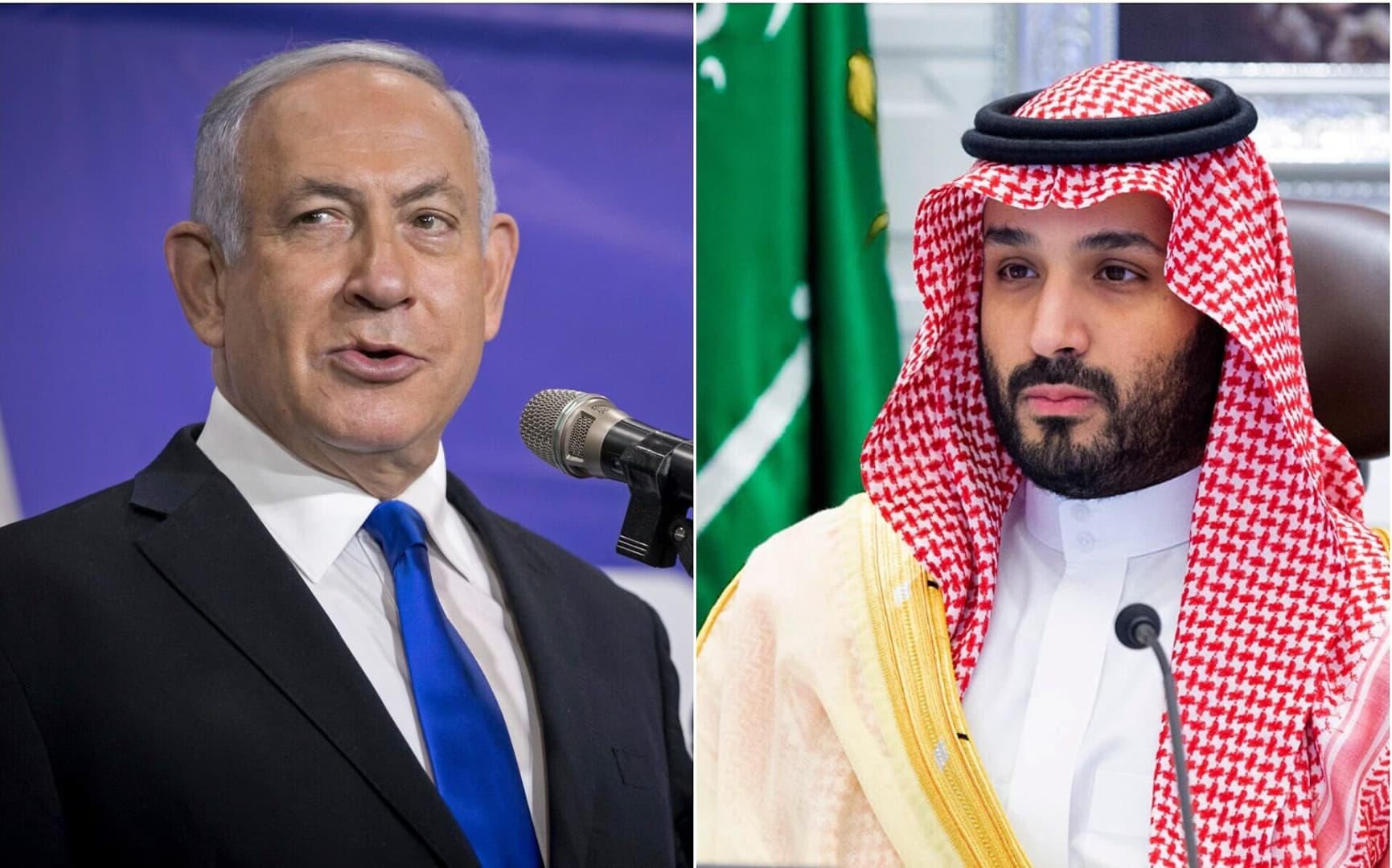
Israeli newspaper Haaretz criticized Israeli Prime Minister Benjamin Netanyahu’s decision to launch an attack on northern Syria. The newspaper warned that the escalating tensions could turn into a direct conflict between Israel and Türkiye.
In an editorial published on Sunday, Haaretz wrote that Netanyahu had taken action in northern Syria as elections planned for October approached, instead of escalating tensions in Gaza, Lebanon or the West Bank. Haaretz described the move as an initiative targeting Türkiye.
Eight strikes hit an airfield in northern Syria
Israeli warplanes carried out eight strikes on the runway of the Abu al-Duhur military airfield in Idlib province in northwestern Syria last Tuesday. The strikes damaged the airfield’s infrastructure.
Turkish Defense Ministry sources said that no Turkish military mission had been present at Abu al-Duhur Air Base either before or during the attack.
Haaretz wrote that Netanyahu defended the attack on the grounds that it targeted the expansion of the Turkish presence in the region. Haaretz said Ankara and Washington rejected this assessment and accused Netanyahu of acting out of electoral calculations.
U.S. envoy warns of direct conflict
Haaretz wrote that Thomas Barak, the U.S. ambassador to Türkiye and the U.S. president’s special envoy for Syria, said the attack could turn into a direct military conflict between Israel and Türkiye. Haaretz said Barak had indicated that this could be Israel’s actual objective.
Haaretz reported that Barak said Türkiye did not want to attack Israel or enter into a military conflict with Israel, but warned that Israel could make “irrational decisions” on these issues under the influence of the election period.
Haaretz calls for diplomacy
Haaretz wrote that Israel’s military move came at a time when international powers were trying to establish stability in Syria. Preventing Iran and Russia from rebuilding their influence in the country was identified as one of the main objectives of these efforts.
Haaretz argued that Israel’s policies contradicted this effort and could distance not only Syrians but also the international powers involved in the Syria file, particularly the United States, from Israel.
The editorial questioned whether the bombardment could drive Türkiye away from Syria and whether diplomatic avenues had been exhausted. It warned about the consequences of Israel confronting Türkiye, a NATO member and a close U.S. ally.
Haaretz said Israel needed to develop a policy suited to the new conditions in the Middle East. The newspaper described Netanyahu’s operation in northern Syria as “limited, dangerous and pointless” and said Israel had been left outside the new alliances taking shape in the region.
Haaretz stressed that security and the prevention of threats could not be achieved through bombardment alone and that military action could not replace systematic policy and diplomacy. The newspaper called on the Israeli government to heed Barak’s warnings and avoid being drawn into a conflict with Türkiye.
Syria appeals to the United Nations
Syria sent two separate letters to the United Nations and the United Nations Security Council following the attack on Abu al-Duhur Airfield. The letters, described as identical, said Israel’s attacks, carried out through bombardments, ground advances and abductions, were obstructing efforts to establish stability and exposing the region to the threat of further tensions.
After the administration in Syria was overthrown on December 8, 2024, Israel expanded the scope of its attacks to weapons and missile depots and strategic military sites across the country.