Nofel Belamri, president of the Moroccan Human Rights Organization, said the situation of irregular migrants in Spanish-administered Ceuta was creating humanitarian and legal problems, and called for an approach based on human dignity and legal safeguards.
Basic needs of migrants in Ceuta
Belamri said migrants needed access to shelter, food and water, and that the dignity of people who had crossed into Ceuta and Melilla had to be protected. He said migrants in the two Spanish-administered cities had rights guaranteed by international human rights law, the rulings of European courts, the Spanish judiciary and the country’s national legislation.
Belamri opposed the forced return of migrants without respect for their human rights and dignity. He said international human rights law prohibited collective expulsions and stressed that the issue could not be addressed solely from a security perspective.
Deaths and differing figures in the crossing wave
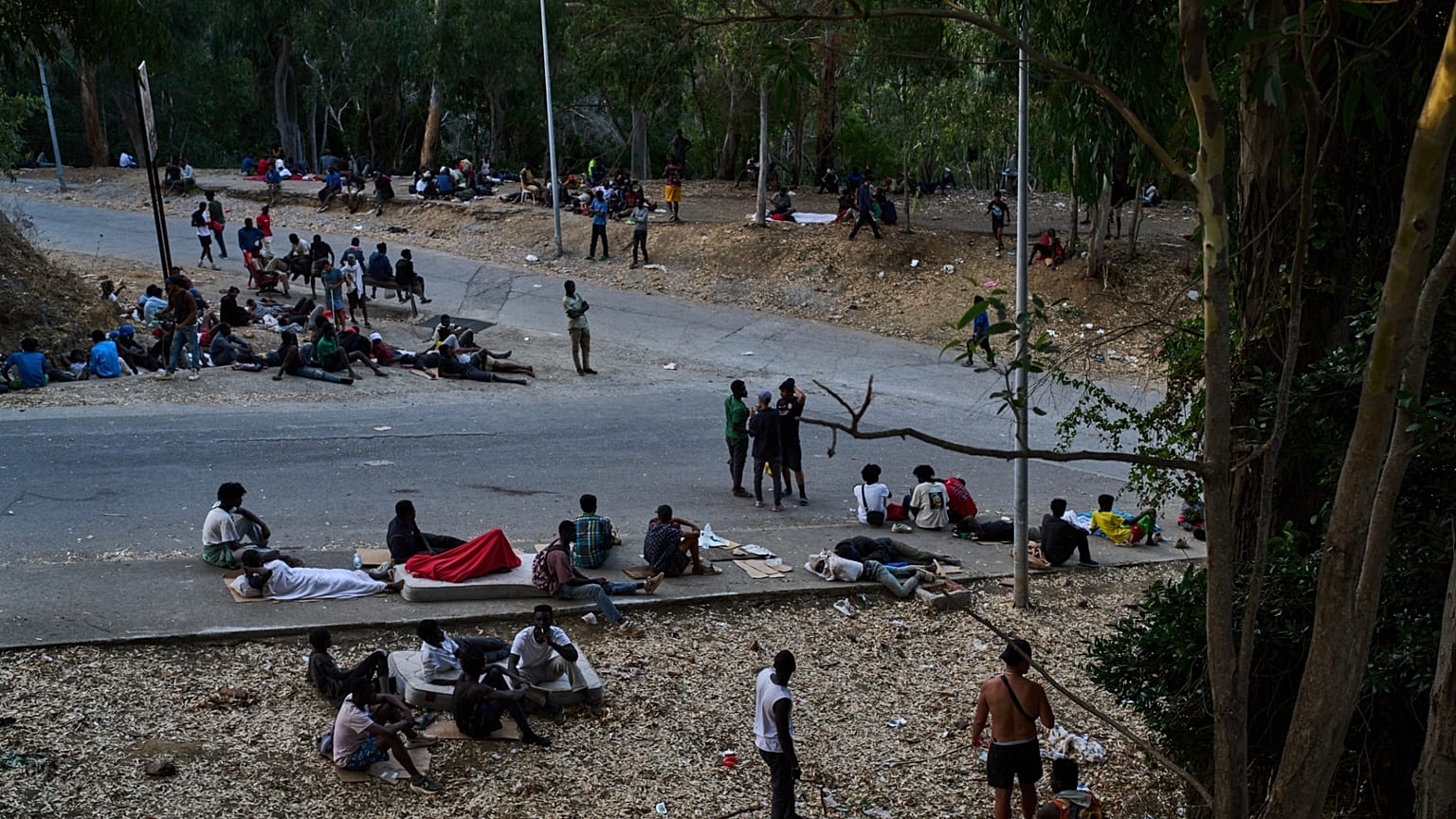
A large-scale wave of irregular crossings took place at the Ceuta border from July 29 to 31, involving tens of thousands of people arriving from Morocco and African countries. Most of those who crossed were later returned to Fnideq in Morocco.
The Moroccan National Human Rights Council put the death toll at 14 on August 7. Spanish data said 80 people had died. Moroccan authorities estimated that about 40,000 people crossed, while Spanish authorities put the figure at more than 70,000.
Belamri said all migrants in Ceuta should be registered, adding that the figures made public were not based on an actual count.
Situation of unaccompanied children
Belamri said the situation of unaccompanied migrant children was more complex, noting that the children were in Ceuta without their families. He said the city’s shelter could not accommodate all the children there and that some were left without shelter, food or water on the streets.
According to Belamri, protecting the children required registering them, establishing their identities, interviewing them and enabling them to challenge administrative decisions concerning them. He stressed that the best interests of the children had to be taken into account throughout the process.
Belamri argued that the authorities administering Ceuta had not yet implemented the measures set out in General Comment No. 6, adopted in 2005 by the UN Committee on the Rights of the Child on unaccompanied and separated children. The text calls for children to be identified, their identities to be established, guardians to be appointed, their views to be heard, appropriate shelter and care to be provided, protection from collective expulsion to be ensured, and the right to challenge administrative decisions to be granted.
General Comment No. 16, adopted in 2013, addresses state obligations concerning the impact of business activities on children’s rights. It emphasizes preventing companies from adversely affecting children, applying the duty of due diligence and establishing effective remedies.
Return process between Spain and Morocco
On August 12, Morocco called for procedures concerning the return of unaccompanied children in Ceuta to be accelerated. Markus Lamert, a European Commission spokesperson, said on August 18 that EU legislation contained provisions on the return of unaccompanied children in an irregular situation.
Lamert said they encouraged the administrations in Madrid and Rabat to cooperate to ensure that return procedures were carried out effectively. The Spanish government also announced on August 19 a plan to transfer about 500 unaccompanied children to different parts of the country to ease administrative pressure in Ceuta and strengthen their care.
Allegations of human rights violations
Belamri said the Moroccan Human Rights Organization and other human rights groups had identified several violations in Ceuta. He alleged that young women and girls had been subjected to violence and sexual assault.
Belamri also alleged that children lacking shelter, food and water were living on the city’s streets and had not been placed in shelters in accordance with international law. He claimed that some migrants on the streets of Ceuta had been attacked by the Spanish Civil Guard and soldiers.
Belamri said a security-focused approach would not provide a solution and called for the situation of migrants to be addressed within a humanitarian and legal framework.
In addition to Ceuta and Melilla, some islands in the Mediterranean are under Spanish administration. The Moroccan authorities describe these areas as “occupied Moroccan territories.”