- BIST10012,151-0.94%
- USD49.220.00%
- EUR55.21+0.28%
- GOLD4,192.30-0.57%
- INTEREST37.00%-1.00
- BITCOIN82,747-1.11%
- October 12, 202619°
- BIST10012,151-0.94%
- USD49.220.00%
- EUR55.21+0.28%
- GOLD4,192.30-0.57%
- INTEREST37.00%-1.00
- BITCOIN82,747-1.11%
- October 12, 202619°
NASA explains Artemis Accords principles at Antalya's 77th International Astronautical Congress
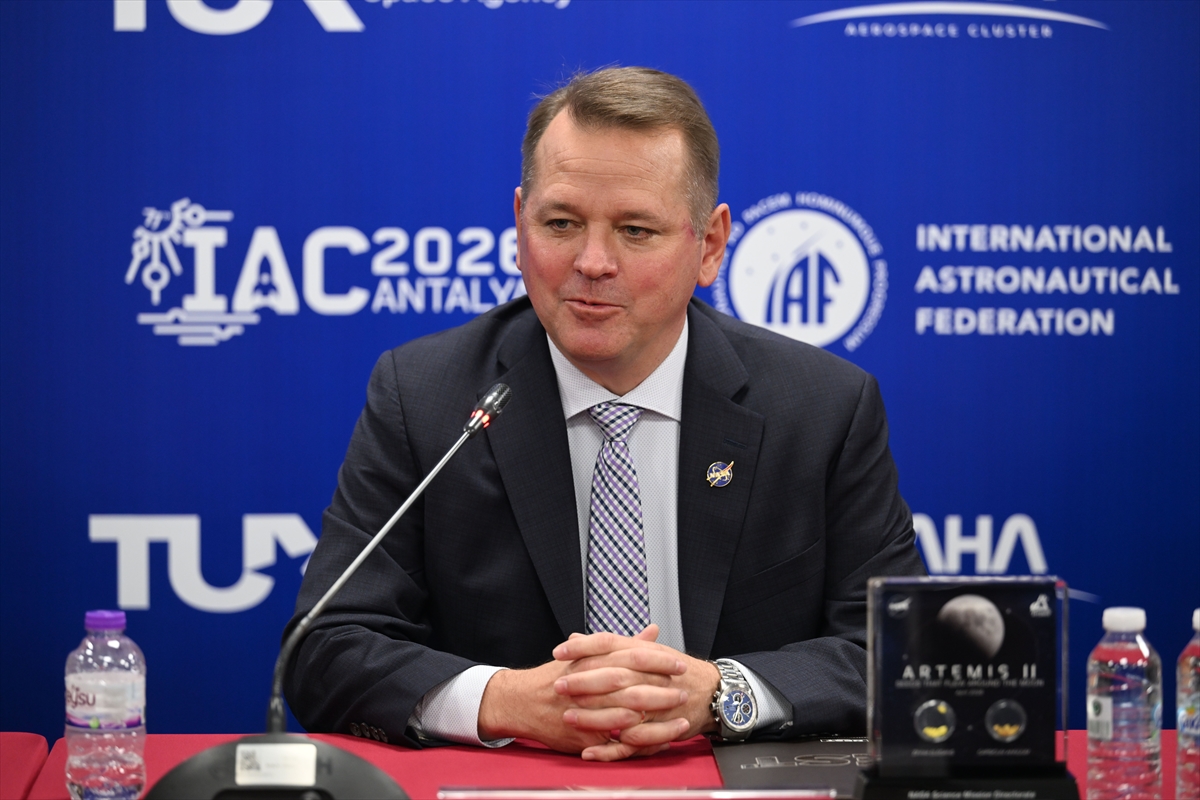
A briefing on the Artemis Accords was held as part of the International Astronautical Congress. NASA Vice President Matt Anderson said 76 countries are part of the accords and that 24 countries had joined over the past 18 months.


A briefing on NASA's Artemis Accords was held as part of the ongoing 77th International Astronautical Congress in Antalya. The briefing was included in the program of the congress, co-hosted by the Türkiye Space Agency and SAHA Istanbul under the coordination of the Ministry of Industry and Technology.
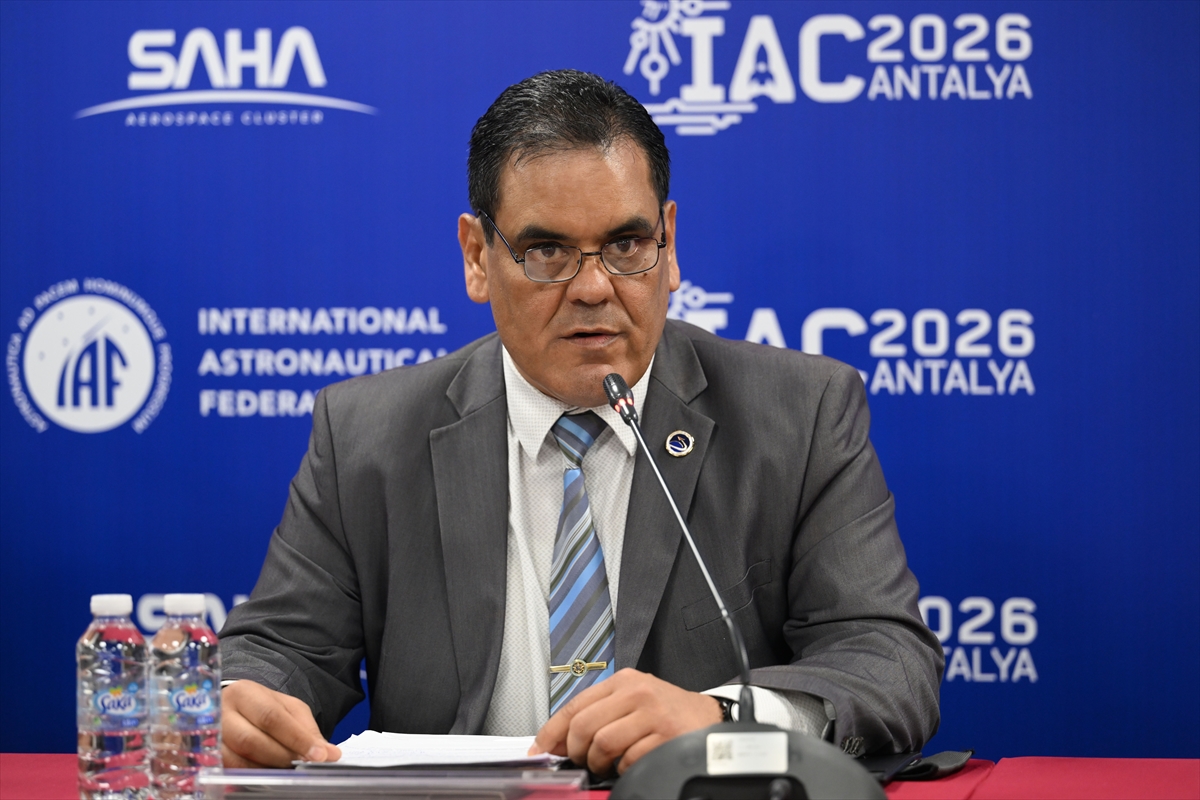
NASA Deputy Press Secretary George Alderman moderated the briefing, which featured NASA Vice President Matt Anderson and Peruvian Space Agency President Major General Roberto Melgar Sheen as speakers.
76 countries join the Artemis Accords
Anderson said an event had been held the previous day with the founding members of the Artemis Accords, adding that the gathering provided an opportunity to expand the partnership by enabling countries to get to know one another. He said the accords bring together countries that seek to conduct responsible, safe and transparent operations in space around common principles.
Anderson said 76 countries are part of the Artemis Accords and that 24 of them had joined over the past 18 months. Referring to NASA's Artemis II mission, Anderson said that, after more than 50 years, NASA had successfully traveled around the Moon for the first time.
Peru emphasizes space diplomacy
Peruvian Space Agency President Sheen said he was pleased to attend the briefing and recalled that Peru's capital, Lima, had hosted the International Artemis Accords Workshop. He said the workshop had been held through cooperation between the Peruvian Space Agency and Peru's Ministry of Foreign Affairs.
Sheen said the workshop in Lima was more than just a meeting, noting that it demonstrated Peru's commitment to space diplomacy and governance. He said that, as the sixth anniversary of the Artemis Accords approaches, Peru had reaffirmed its commitment to the vision set out in the accords.
Sheen said the future of lunar and space exploration should be shaped by the principles of transparency, sustainability, interoperability and inclusiveness. He added that Peru would contribute to ensuring that space exploration benefits humanity by building bridges of cooperation.
Possible participation by Russia and China discussed
Asked whether Russia and China might join the Artemis Accords, Anderson said membership could become possible in the future if those countries reached agreement on the principles set out in the accords. He said there was currently no indication that Russia and China had reached agreement on those principles.
Anderson also addressed the U.S. approach to Artemis Accords signatories conducting academic cooperation with countries such as China, saying that sovereign countries can make their own decisions. He said agreement among signatories on common principles does not prevent other forms of cooperation that serve national interests.
Space debris and education discussed in talks
Space debris and waste around the Moon were also discussed in talks with member countries. Anderson said countries could move forward according to the level of investment they determine in line with their national priorities.
Anderson said around 40 member countries had taken part in the meeting and that education had also been discussed. He said the first way to prevent space debris was to stop the waste from being created in the first place.
Türkiye's space capabilities highlighted
Referring to cooperation between Türkiye and the United States and Türkiye's growing capabilities in space, Anderson said Türkiye had joined a structure based on shared principles and values by signing the Artemis Accords.
Anderson said Türkiye had set a new standard for the congress, highlighting that President Recep Tayyip Erdoğan had attended the event and devoted his speech entirely to space. He said Türkiye viewed space as one of the ways to take Turkish industry to a more advanced level.
Anderson also addressed the militarization of space, saying that the Artemis Accords focus on the civilian space sector and peaceful, transparent activities.
Statement on UFO and UAP documents
Anderson also spoke about documents made public by the United States concerning the terms Unidentified Flying Object and Unidentified Aerial Phenomenon. He said the U.S. administration wanted the public to know what it knew and had therefore released the documents, adding that not all of the documents could be explained.
Sheen recalled that Peru had signed the Artemis Accords in 2004. He said Peru had wanted to demonstrate its commitment to the international community and cooperation, adding that its request to host the workshop was intended to build commitment and trust.
Sheen said this was the first time a developing Latin American country had had this opportunity and predicted that many developments would take place in 2027 and 2028.
Stay Updated with The Turkiye Times
Subscribe to be informed about special news, developments and announcements. We will keep you informed.
By signing up, you agree to our Privacy Policy

















