- BIST10012,151-0.94%
- USD49.220.00%
- EUR55.21+0.28%
- GOLD4,195.90+0.13%
- INTEREST37.00%-1.00
- BITCOIN82,500-1.40%
- October 13, 202618°
- BIST10012,151-0.94%
- USD49.220.00%
- EUR55.21+0.28%
- GOLD4,195.90+0.13%
- INTEREST37.00%-1.00
- BITCOIN82,500-1.40%
- October 13, 202618°
President Erdoğan calls for ending the UN Security Council veto
President Recep Tayyip Erdoğan called for the veto privilege on the United Nations Security Council to be abolished and global decision-making mechanisms to be restructured. Erdoğan proposed strengthening the powers of the General Assembly and electing Council members on a rotating basis for fixed terms.


President Recep Tayyip Erdoğan said the United Nations Security Council’s veto power should be abolished and called for global decision-making mechanisms to be adapted to present-day conditions.
In an article he wrote, Erdoğan said pandemics, energy crises, disruptions to supply chains and regional conflicts had shown that resolving global crises could not be left to the will of a few capitals. He noted that the United Nations Security Council still reflected the structure established after the Second World War.
Call to abolish the veto privilege
Erdoğan said a more effective, fair and accountable approach to representation was essential, adding that the experience, capacity and will of different regions should be incorporated into efforts to resolve global and regional problems.
Erdoğan said the call that “the world is bigger than five” was an invitation to embrace a broader understanding of responsibility and called for the need for reform to be turned into a concrete road map. He said abolishing the veto privilege should be at the center of that road map.
Erdoğan said adding new privileged members to the Security Council would not resolve the problem of decision-making power being concentrated in the hands of a few states. He said reform should not mean granting the same privilege to other states. Erdoğan proposed building a broad coalition around the principle that no state should have the power to permanently block the will of the majority of the international community.
General Assembly powers should be strengthened
Erdoğan stressed the need to reestablish the balance between the Security Council and the General Assembly and called for the General Assembly’s powers to be strengthened.
Under Erdoğan’s proposal, the Security Council should have no permanent memberships, and Council members should be elected by the General Assembly on a rotating basis for fixed terms. Countries seeking reelection, he said, should have to regain the confidence of a majority of members in elections.
Erdoğan said this structure would increase the Security Council’s representational capacity and accountability to the General Assembly, adding that the international order of the future could not be built by preserving the hierarchies of the past.
Call for global institutions to adapt
Erdoğan said developments over the past quarter-century had shown that no balance of power or international order was permanent. He noted that the current system remained inadequate to prevent new wars, reduce inequalities and respond to changing balances of power.
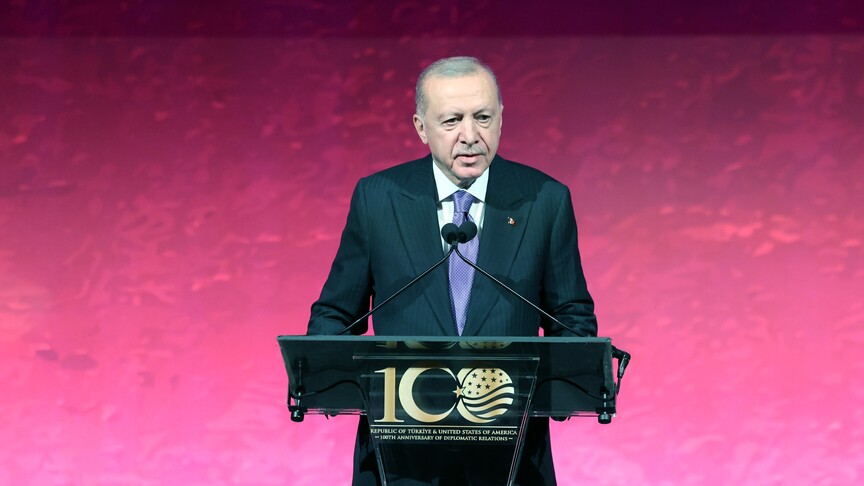
Erdoğan said international institutions had been unable to adapt to the same extent as new centers of power emerged in the fields of economics, security, technology and diplomacy. He added that wars, the climate crisis, irregular migration and economic vulnerabilities had increased the need for strong institutions and resilient economies.
Erdoğan said the security and sustainability of trade, logistics, transport and energy corridors had become more decisive. He noted that Asia’s economic weight was growing, Africa was calling for stronger representation, and developing countries were voicing their own priorities more forcefully.
Emphasis on development and access to finance
Erdoğan said regional issues could not be resolved through methods determined from outside, adding that approaches based on the will of the countries concerned, local conditions and common interests would produce more lasting results.
Erdoğan said countries with diplomatic capacity, economic resources and the ability to communicate with different parties should assume more active roles in establishing peace and stability. He noted that expectations that globalization would spread prosperity had not been fully met.
Erdoğan said inequalities in income distribution had deepened and that technological and economic dependencies had become new areas of competition. He called for responsibilities to be shared fairly for global justice. He said the right of developing countries to development and their access to the financing they need should be guaranteed.
Türkiye’s support for reform efforts
Erdoğan said Türkiye would continue to use its strong global relations and experience in multilateral diplomacy in support of efforts to pursue reform.
Erdoğan said they supported efforts to abolish the veto privilege, give elected members greater weight in decision-making processes and strengthen the role of the General Assembly. He added that bringing countries from different regions together on common ground would strengthen the legitimacy and representational capacity of the international system.
Erdoğan said lasting peace could not be established through the proliferation of disconnected blocs that did not communicate with one another. He said the experience, capacity and will of different regions needed to be brought together on common ground.
Stay Updated with The Turkiye Times
Subscribe to be informed about special news, developments and announcements. We will keep you informed.
By signing up, you agree to our Privacy Policy