- BIST10012,151-0.94%
- USD49.220.00%
- EUR55.21+0.28%
- GOLD4,194.50-0.52%
- INTEREST37.00%-1.00
- BITCOIN83,014-0.79%
- October 12, 202619°
- BIST10012,151-0.94%
- USD49.220.00%
- EUR55.21+0.28%
- GOLD4,194.50-0.52%
- INTEREST37.00%-1.00
- BITCOIN83,014-0.79%
- October 12, 202619°
TAV operates 15 airports in 8 countries and targets new investments
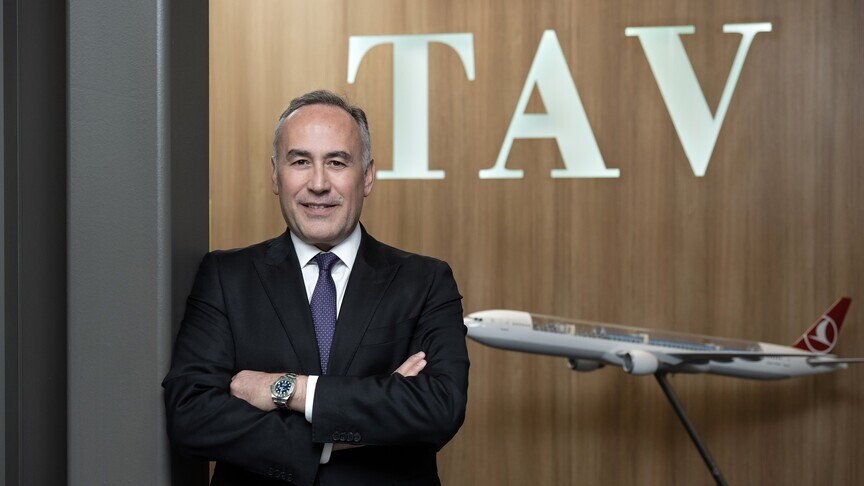
TAV Airports Executive Board Chairman Serkan Kaptan announced that the company is focusing on new airport investments in North Africa, the Middle East and Central Asia. The company served approximately 113 million passengers in 2025 and passed the prequalification stage of an airport tender in Egypt.


TAV Airports operates a total of 15 airports in Türkiye and 7 other countries. The company is focusing on opportunities in North Africa, the Middle East and Central Asia for new investments.
TAV Airports Executive Board Chairman Serkan Kaptan said the company aims to make new investments in airports around the world. TAV operates in airport financing, development and management.
TAV served 113 million passengers in 2025
The airports operated by the company are located in Türkiye, North Macedonia, Georgia, Kazakhstan, Tunisia, Latvia, Saudi Arabia and Croatia. TAV served approximately 113 million passengers in 2025.
The company's shares are traded on Borsa Istanbul, and TAV is included in the exchange's sustainability index. The company is also continuing its efforts to achieve a net-zero emissions target by 2050.
TAV participates in an airport tender in Egypt
As part of its growth plans in North Africa, TAV is participating in an official tender for an airport in Egypt. The company passed the prequalification stage of the tender and is awaiting the start of the competitive process.
Kaptan said TAV was one of the participants in the tender in Egypt. The company has also been operating in Tunisia's airport market since 2007.
Second investment phase at Almaty Airport
TAV aims to continue its growth in Central Asia through the experience it has gained from operating Almaty Airport in Kazakhstan. Kaptan said they were pleased with the Almaty investment and that investments in the region were continuing.
The company is continuing work to expand Almaty Airport. The second phase of the investment is scheduled to begin soon, while TAV is also exploring new opportunities in Central Asia.
Expansion projects in Medina and Tbilisi
TAV's ongoing investments are not limited to Central Asia. The company is building a new terminal at Medina Airport in Saudi Arabia while expanding the terminal at Tbilisi Airport in Georgia.
TAV is also carrying out smaller-scale renovation and expansion projects at the other airports it operates outside Türkiye. Kaptan said investments in airport infrastructure needed to continue because of economic growth and rising passenger numbers in the regions where the company operates.
Kaptan likened airports to a continuously growing child and said investment did not end when a project was completed. He noted that existing facilities needed to be renovated or expanded through the addition of new facilities.
Use of artificial intelligence at airports
Alongside infrastructure investments, TAV is also increasing its use of artificial intelligence at the airports it operates. The technology is primarily being used to improve passenger satisfaction and the passenger experience at airports.
The company is assessing ways to speed up processes and improve the experience by monitoring where passengers spend time at the airport and how long they remain there. The time spent on security checks, passport procedures and other stages is measured to track operational efficiency.
Türkiye's airport infrastructure
Kaptan said civil aviation in Türkiye had developed through the privatization process that began in the early 2000s, during which new airport buildings and upgraded infrastructure were created.
Kaptan said Türkiye had one of the most modern aviation infrastructures and noted that renovation work was being carried out at airports operated directly by both the private sector and the state. Development and new investment projects continue at the airports operated by TAV.
Stay Updated with The Turkiye Times
Subscribe to be informed about special news, developments and announcements. We will keep you informed.
By signing up, you agree to our Privacy Policy

















