- BIST10011,457+4.52%
- USD50.00+0.05%
- EUR55.95-0.09%
- GOLD4,054.00+2.88%
- INTEREST36.00%-1.00
- BITCOIN78,347+1.30%
- November 4, 202615°
- BIST10011,457+4.52%
- USD50.00+0.05%
- EUR55.95-0.09%
- GOLD4,054.00+2.88%
- INTEREST36.00%-1.00
- BITCOIN78,347+1.30%
- November 4, 202615°
Türkiye's population rises by 410,000 to exceed 86.5 million
According to TÜİK's quarterly data, the population reached 86,502,286 as of October 1. The increase in the first nine months of the year exceeded the 315,710-person rise recorded during the same period last year by approximately 94,000.


The Turkish Statistical Institute (TÜİK) released the latest results of its quarterly population statistics. The country's population reached 86,502,286 as of October 1. The population, which stood at 86,092,168 at the end of 2025, increased by 410,118 during the first nine months of this year. The population rose by 181,684 during the July 1-October 1 period alone.
Men accounted for 50.02% of the population, or 43,264,337 people, while women accounted for 49.98%, or 43,237,949 people. The male population exceeded the female population by 26,388.
Increase surpasses last year's pace
According to data released by TÜİK last November, the population increased by 315,710 during the first nine months of 2025, reaching 85,980,654 on October 1, 2025. The nine-month increase this year was 94,408 higher than that figure. The increase in the third quarter also surpassed last year's 155,800. Population figures released in August recorded 86,320,602 people as of July 1.
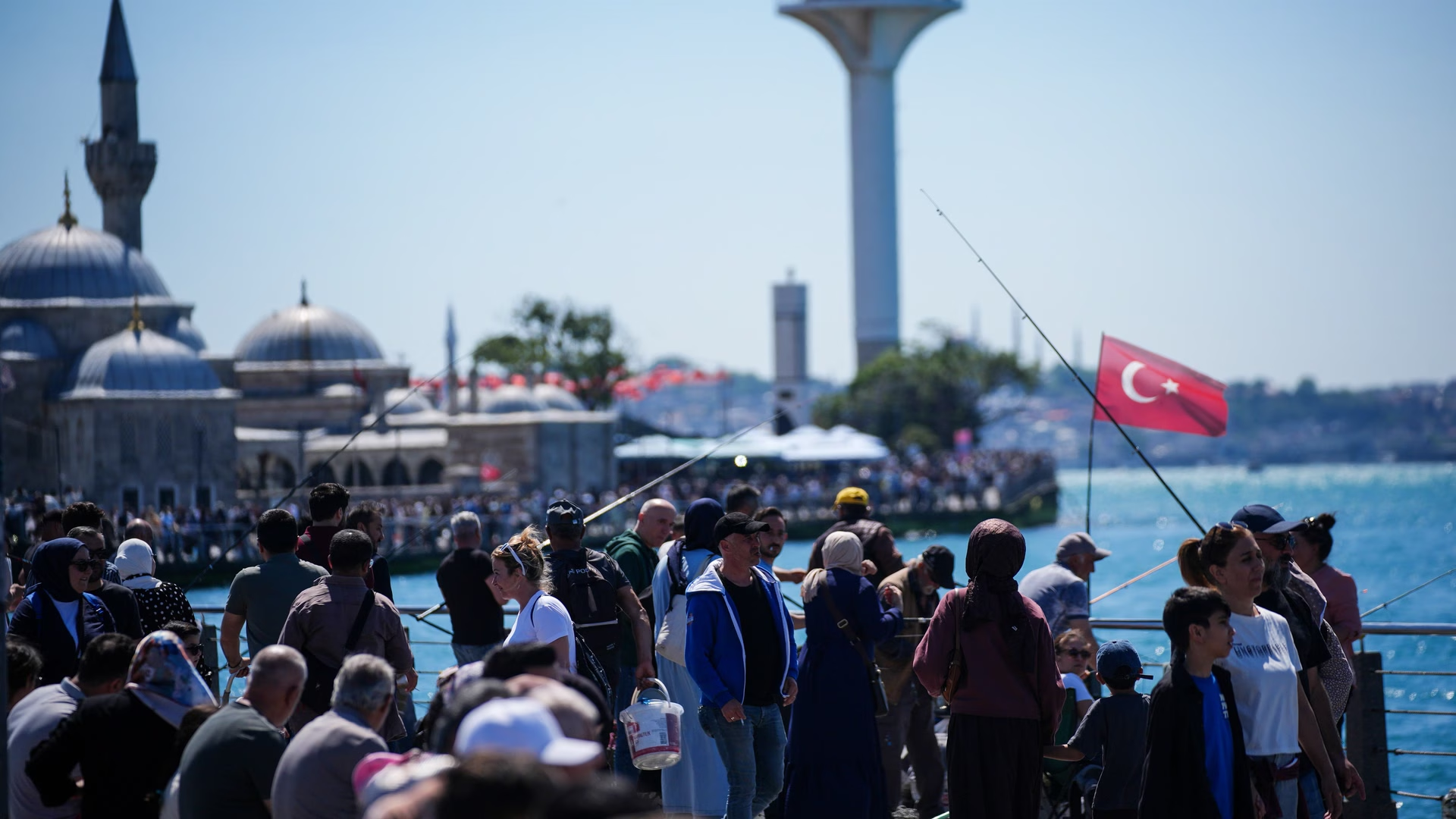
According to the 2025 results of the Address-Based Population Registration System (ADNKS), released in February, the population had increased by 427,224 in one year, while the annual population growth rate rose from 3.4 per thousand to 5 per thousand. The same results showed that Istanbul was the most populous province, with 15,754,053 residents, followed by Ankara with 5,910,320, Izmir with 4,504,185, Bursa with 3,263,011 and Antalya with 2,777,677. Bayburt was the least populous province, with 82,836 residents. Istanbul's Esenyurt district became the first district to exceed a population of 1 million, with 1,003,905 residents, while the number of foreigners living in Türkiye rose to 1,519,515. The median age also increased from 34.4 to 34.9.
Fertility reaches its lowest level on record
Births continue to decline as the population grows. According to birth statistics released by TÜİK in May, 895,374 babies were born in 2025. The total fertility rate, which indicates the average number of children a woman has over her lifetime, fell to 1.42, its lowest level on record. The rate stood at 2.38 in 2001 and fell below the replacement level of 2.1 in 2017. The highest fertility rate was recorded in Şanlıurfa at 3.15, and the lowest in Bartın at 1.09.

Declining fertility is also on the government's agenda. A Presidential Circular published in the Official Gazette on May 2, 2026, declared the 2026-2035 period the "Decade of Family and Population." The circular aims to encourage marriage and having children; the last week of May will also be celebrated each year as "National Family Week."
Data: TÜİK / Photos: AA (the photos in the article are archival)
Have a story, event or announcement of your own?Send us your news on WhatsApp
Spotted an error in this story?Report it on WhatsApp
Share on all social platforms
Sponsored Ads
Featured Listings
Loading featured properties...
Stay Updated with The Turkiye Times
Subscribe to be informed about special news, developments and announcements. We will keep you informed.
By signing up, you agree to our Privacy Policy