- BIST10012,151-0.94%
- USD49.220.00%
- EUR55.21+0.28%
- GOLD4,196.10+0.13%
- INTEREST37.00%-1.00
- BITCOIN82,500-1.40%
- October 13, 202618°
- BIST10012,151-0.94%
- USD49.220.00%
- EUR55.21+0.28%
- GOLD4,196.10+0.13%
- INTEREST37.00%-1.00
- BITCOIN82,500-1.40%
- October 13, 202618°
AFAD President Pehlivan calls for preparedness and earthquake-resilient buildings
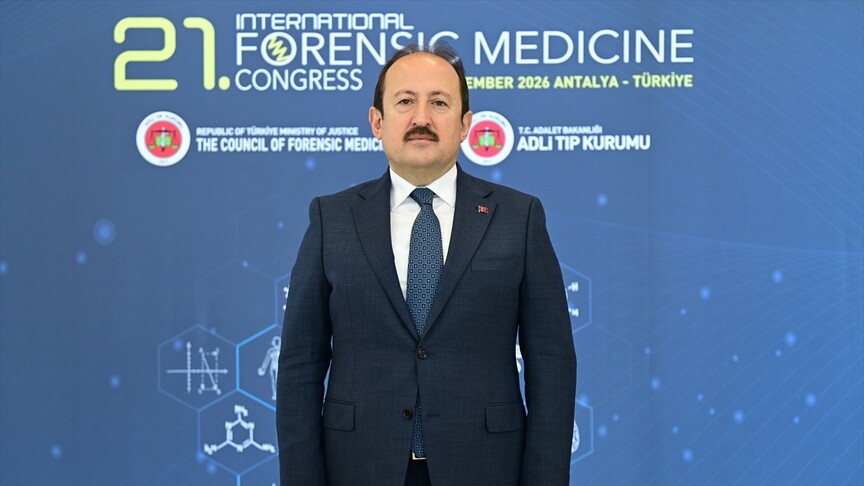
AFAD President Pehlivan emphasized the importance of preparedness and resilient buildings at the 21st International Forensic Medicine Days Congress in Antalya, noting that earthquakes cannot yet be predicted in advance.


Speaking at the 21st International Forensic Medicine Days Congress held at the Justice Organization Strengthening Foundation Facilities in Antalya, AFAD President Pehlivan assessed efforts to prepare for disasters.
Pehlivan said AFAD was established in 2009 and conducts its work with a risk-focused approach. He said the agency focuses on preparedness and risk reduction before disasters, effective response during disasters, and recovery efforts afterward.
Pehlivan said scientific studies are being conducted on when earthquakes may occur, but that it is not yet possible to predict earthquakes in advance. He highlighted the importance of preparedness across society.
If we want to be prepared for earthquakes, we must first recognize that they are an inevitable reality and work to make the places where we live resilient.
Pehlivan said cooperation with institutions working in this field was necessary. He said they scientifically monitor all types of disasters, particularly earthquakes, and conduct periodic assessments with the scientific board.
Disaster awareness efforts in schools
Pehlivan said a disaster awareness teacher program had been launched in schools in cooperation with the Ministry of National Education. He announced that drills would be held at universities across Türkiye under a protocol signed between the Ministry of Interior and the Council of Higher Education.
Number of AFAD volunteers reaches 1.6 million
Pehlivan said they attach importance to volunteer initiatives to spread disaster awareness throughout society. He said the number of registered volunteers, which stood at around 600,000 before the February 6 earthquakes, had reached 1.6 million.
Pehlivan said AFAD has approximately 5,000 search-and-rescue personnel. He added that the number of search-and-rescue personnel trained by the Turkish Armed Forces, law enforcement agencies, ministries and the private sector had reached 178,000.
Pehlivan said the scope of the work had been expanded following the February 6 earthquakes and that technological capabilities were being used in search-and-rescue operations. He said AFAD's inventory of unmanned aerial vehicles had reached 200 and the number of pilots operating them had reached 600, adding that the operations also use artificial intelligence and thermal-capable unmanned aerial vehicles.
Stay Updated with The Turkiye Times
Subscribe to be informed about special news, developments and announcements. We will keep you informed.
By signing up, you agree to our Privacy Policy














