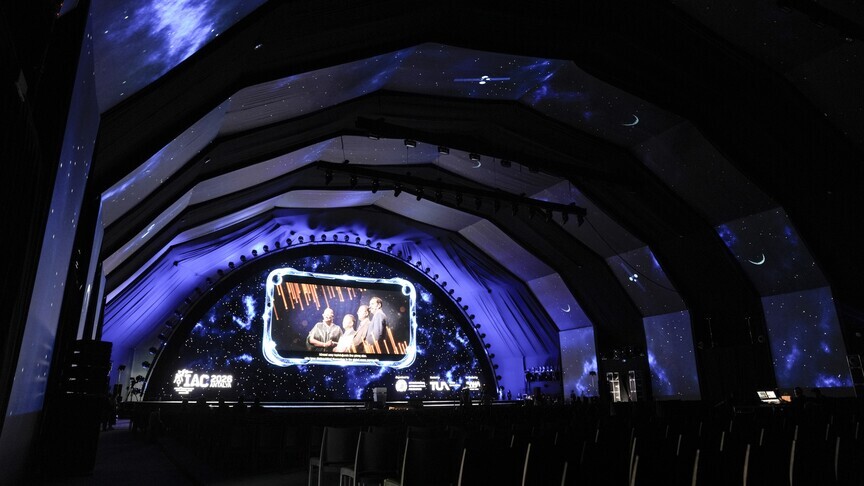
The second day of the 77th International Astronautical Congress in Antalya will focus on the results of the Artemis II mission, the future of large satellite constellations, and the relationship between commercial space activities and geopolitics.
Held from October 5 to 9, the congress is organized by the International Astronautical Federation. The Türkiye Space Agency is hosting the event, while SAHA Istanbul is serving as co-host. The congress is being held in Türkiye for the first time.
Artemis II mission to be discussed
NASA Artemis Program Manager Jeremy Parsons will take part in an industry panel at 11:45 a.m. examining the results of the Artemis II mission.
In April, Artemis II carried four astronauts around the Moon. As the first crewed flight around the Moon in more than 50 years, the mission aimed to test systems intended for use in future missions planned to take astronauts to the lunar surface.
NASA executive Matt Anderson said on the first day of the congress that the civilian space race between the United States and China was “closer than we would currently like.” Anderson said some developments would be announced soon but did not provide details.
Satellite congestion in low Earth orbit to be debated
Orbital congestion will be another major topic of the day. Michael Nicolls, SpaceX’s senior vice president responsible for Starlink engineering, will assess the sustainability and safety of large satellite constellations during a special evening session.
The session will address the challenges created by operating large numbers of satellites in low Earth orbit, where satellite networks continue to expand.
Commercial space activities and geopolitics
In the afternoon, space industry executives will assess the increasingly close relationship between commercial space activities and national interests. The general session titled “Geopolitics and innovation” will discuss how companies operating Earth-observation fleets, in-space infrastructure and other commercial systems balance global markets with growing demands from governments and security institutions.
The morning program will begin with a session on the transition from national space programs to a broader global space ecosystem encompassing lunar research, satellite infrastructure and commercial space activities.
The session titled “Bridging the Ages: From Silk Road Astronomy to Lunar Exploration” will feature Axiom Space Chief Astronaut Michael Lopez-Alegria, along with representatives from the Türkiye Space Agency, ASELSAN, Fergani Space and the TÜBİTAK Space Technologies Research Institute.
Heads of space agencies from established and emerging space nations will also meet at the third gathering of the International Astronautical Federation’s Global Space Leaders Summit.