- BIST10011,483+0.04%
- USD50.05+0.05%
- EUR56.25-0.01%
- GOLD4,067.80-1.11%
- INTEREST36.00%-1.00
- BITCOIN75,828-0.20%
- November 6, 20269°
- BIST10011,483+0.04%
- USD50.05+0.05%
- EUR56.25-0.01%
- GOLD4,067.80-1.11%
- INTEREST36.00%-1.00
- BITCOIN75,828-0.20%
- November 6, 20269°
Belgian king rejects De Wever’s resignation, gives coalition until Nov. 16
Belgian King Philippe kept Prime Minister Bart De Wever in office after he offered his resignation amid a budget crisis and called on him to immediately resume budget talks. The palace said it had secured formal commitments from the leaders of the coalition’s five parties that they were ready to make concessions for a compromise.


Belgium’s coalition government has survived for now after failing to agree on the 2027 budget. King Philippe rejected the resignation of Prime Minister Bart De Wever, whom he received at the Royal Palace in Brussels on Friday morning, Nov. 6, and asked him to immediately resume budget negotiations. According to the palace, De Wever will report back to the king on Monday, Nov. 16.
De Wever, leader of the Flemish nationalist N-VA, submitted his resignation on Monday, Nov. 2, after the five-party coalition failed to reach agreement on the budget. The king suspended his decision that day and, stressing that the country “cannot withstand a prolonged political crisis,” began meeting individually with the leaders of the coalition parties the following day.
Palace: All five parties are ready to make concessions
According to the palace’s statement on Friday, the king saw during his meetings with the leaders of the five governing parties that each wanted to conclude the budget negotiations as soon as possible. All the party leaders reiterated their determination to agree on a sound budgetary path for the next three years and formally committed to the king that their parties were ready to make concessions to reach a compromise within the government.
The king stressed the need to strike a fair balance between preserving social cohesion and reviving economic growth. The palace said the resignation was rejected on the basis of these findings. VRT reported that the meeting lasted about one hour and 15 minutes; De Wever left the palace without making a statement.
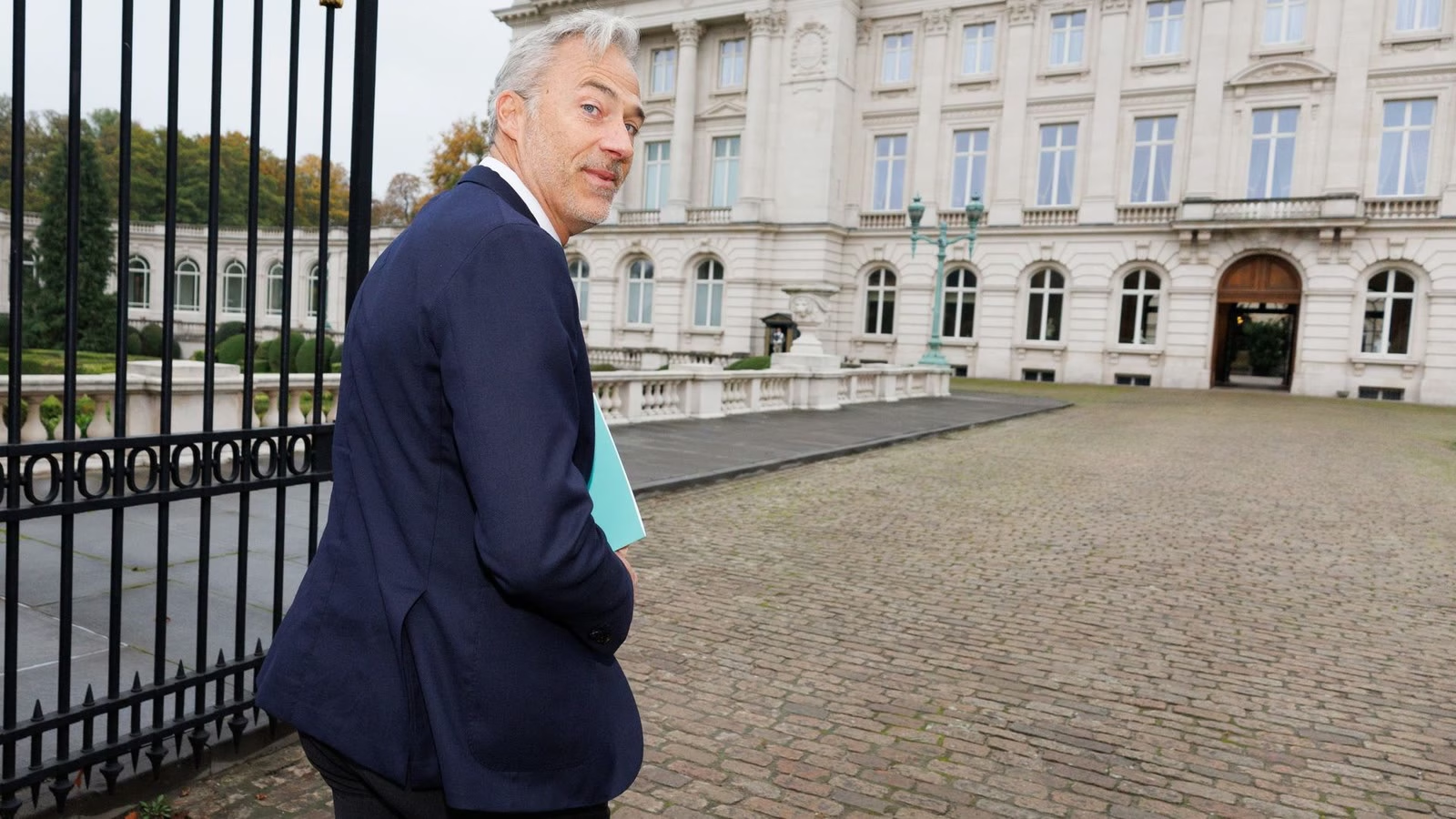
The king’s consultations began on Nov. 3 with Les Engagés President Yvan Verougstraete and CD&V President Sammy Mahdi. Conner Rousseau of Vooruit and Georges-Louis Bouchez of MR then arrived at the palace, followed by N-VA President Valerie Van Peel. As Mahdi entered the palace, he said: “I am angry. There is no room for political games or dragging things out.”
What will happen by Nov. 16?
The new date gives the coalition about 10 additional days. During a similar deadlock last year, De Wever asked the king for 50 days, and an agreement was reached on a 9.2-billion-euro savings package on Nov. 24, 2025. Political scientist Bart Maddens told VRT that the Nov. 16 deadline was necessary to maintain pressure. The emergency budget system that takes effect when the budget is not approved does not create a natural deadline.
On Nov. 5, De Wever told Parliament that the country would enter the system known as “provisional twelfths” for a second consecutive year and described the situation as a “terrible failure” for the government. Under this system, the government can spend each month up to one-twelfth of the previous year’s budget. De Wever said he wanted to be prime minister of a government that prioritized only this task; otherwise, he said, it made no sense.
VRT reported that the king saw during the talks that none of the coalition partners wanted new elections at present. According to an assessment by the Brussels Times, if no agreement is reached, the options of changing parties within the coalition or holding early elections could come back onto the table.
A 10-billion-euro dispute
The government is seeking 10 billion euros in savings or new revenue by 2029. According to the Brussels Times, Belgium’s budget deficit stands at 5.2 percent of gross domestic product, the highest in the eurozone, while public debt will exceed 110 percent this year. The country has been under the EU’s excessive deficit procedure since 2024 and is expected to reduce its deficit to below 3 percent by 2029.
The negotiations have stalled between the left and the right. Vooruit, CD&V and Les Engagés support seeking a greater contribution from the wealthiest, while N-VA and MR oppose new taxes. MR leader Bouchez said on Friday that holding elections would be “completely irresponsible”: “There is 348 billion euros in public spending in this country. It is not very reasonable to say that we cannot find 10 billion out of 348 billion.”
Les Engagés Deputy Prime Minister Maxime Prévot said he was ready to return to the negotiations as soon as the prime minister called. Socialist Party leader Paul Magnette, who is in opposition, urged the government to use these 10 days to change course.
Photos: Belga (via DH and RTBF)
Have a story, event or announcement of your own?Send us your news on WhatsApp
Spotted an error in this story?Report it on WhatsApp
Share on all social platforms
Sponsored Ads
Featured Listings
Loading featured properties...
Stay Updated with The Turkiye Times
Subscribe to be informed about special news, developments and announcements. We will keep you informed.
By signing up, you agree to our Privacy Policy