- BIST10011,682-3.22%
- USD49.42+0.06%
- EUR55.41+0.20%
- GOLD4,203.30+0.80%
- INTEREST37.00%-1.00
- BITCOIN82,080-0.06%
- October 16, 202614°
- BIST10011,682-3.22%
- USD49.42+0.06%
- EUR55.41+0.20%
- GOLD4,203.30+0.80%
- INTEREST37.00%-1.00
- BITCOIN82,080-0.06%
- October 16, 202614°
Cevdet Yılmaz unveils 2027 budget: 4.2% growth, 21% inflation targeted
Vice President Cevdet Yılmaz said Türkiye expects the economy to grow 3.3% in 2026 and 4.2% in 2027, with inflation falling to 28.4% by the end of this year and 21% by the end of 2027. Budget spending for 2027 is projected at 27.276 trillion liras.
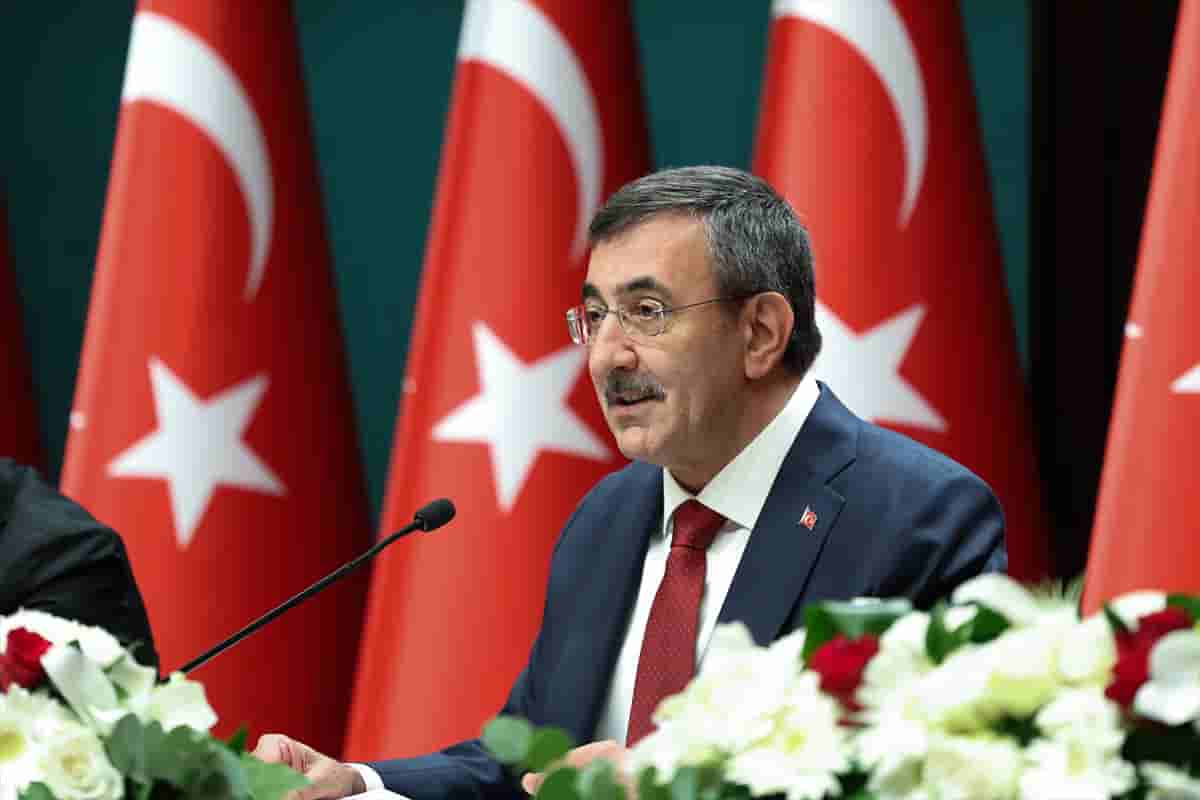
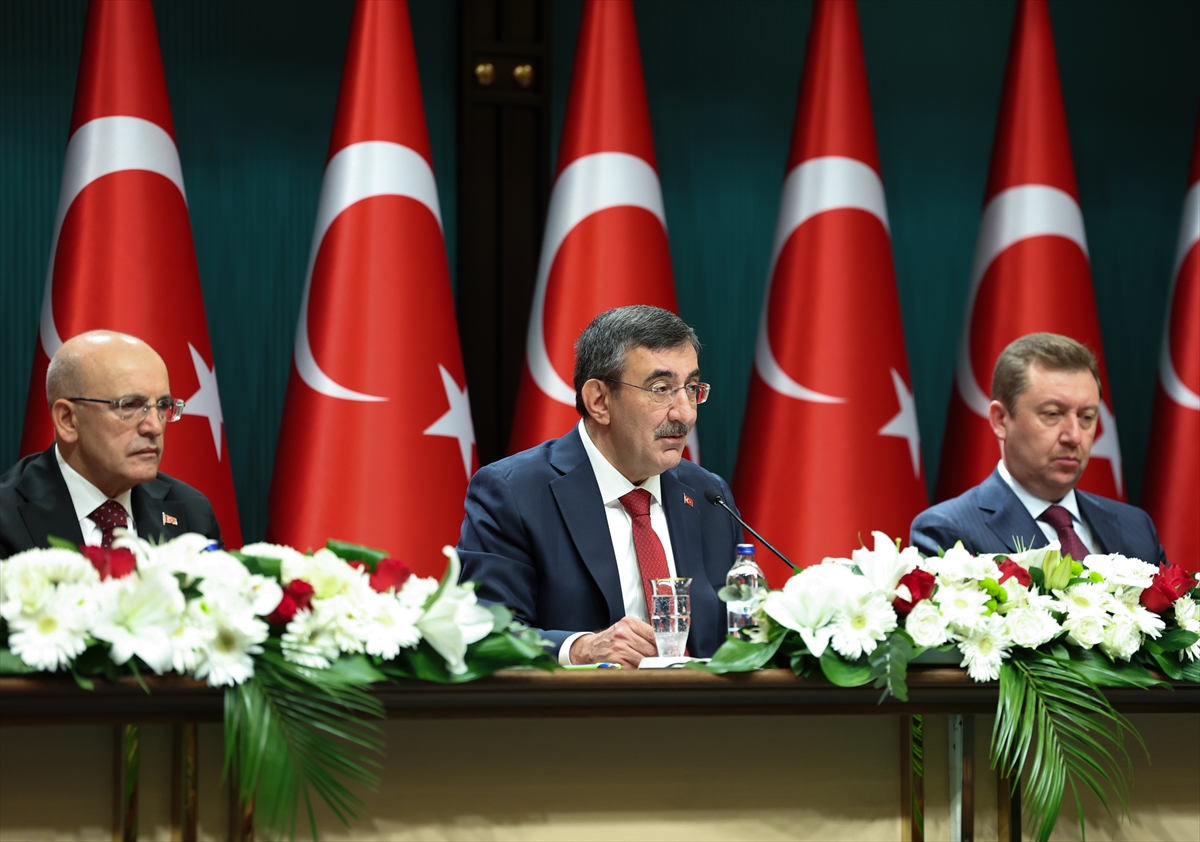
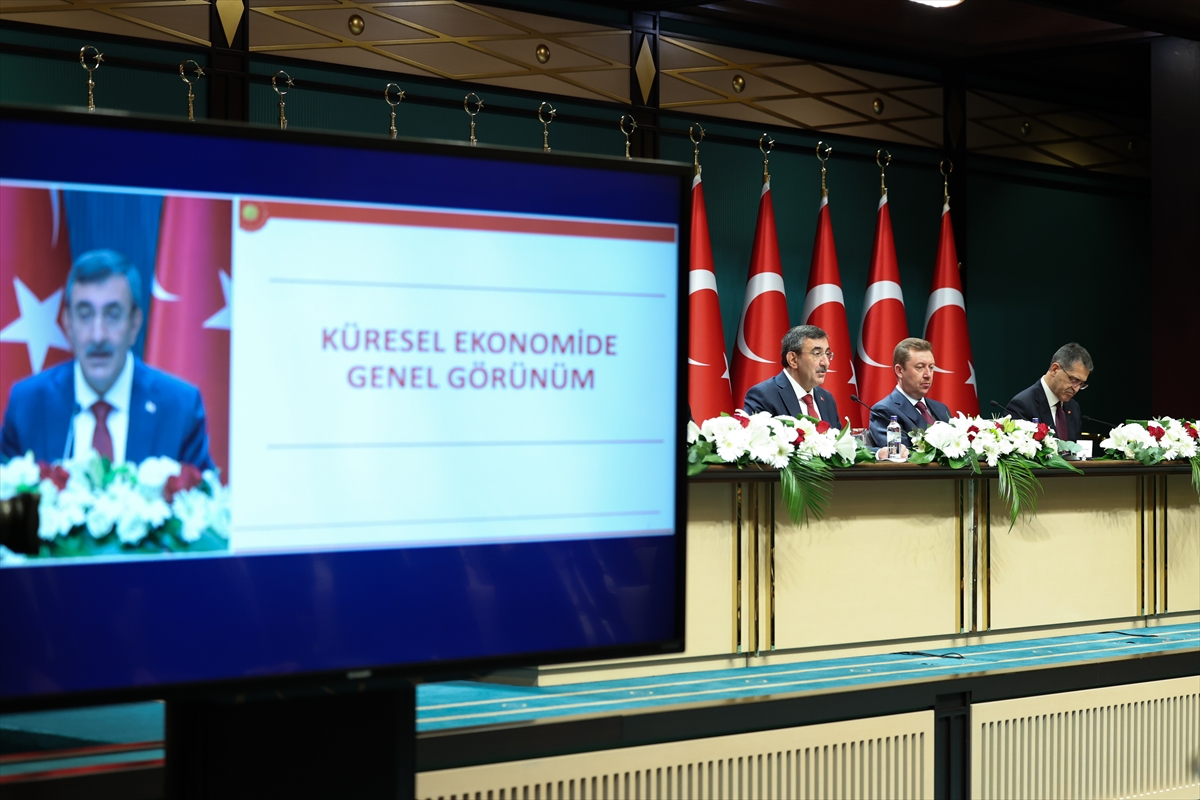
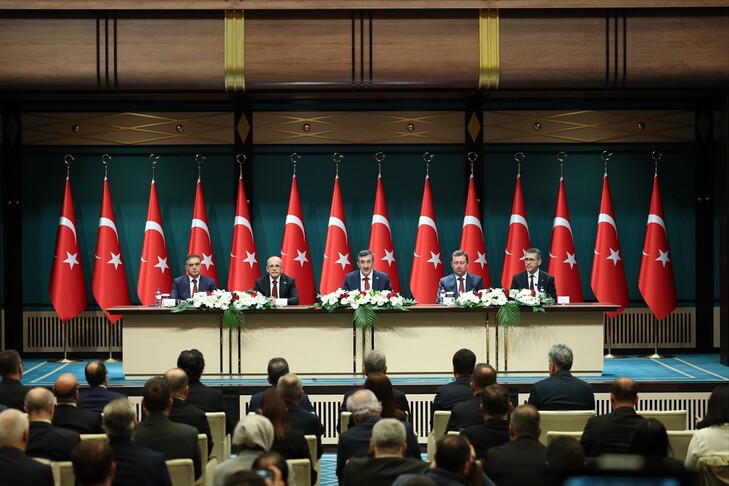
Vice President Cevdet Yılmaz detailed next year’s budget and economic targets at the 2027 Central Government Budget ceremony held at the Presidential Complex. “Our budget is a budget of ‘resilience, prosperity and transformation,’” Yılmaz said, noting it is the 25th budget of AK Party governments, the ninth under the presidential system and the fourth of the “Century of Türkiye.” The proposal will be submitted to parliament with President Recep Tayyip Erdoğan’s signature.
Growth: 3.3% in 2026, 4.2% in 2027
“We expect our economy to complete 2026 with 3.3% growth,” Yılmaz said. “In 2027, with the expected improvement in the global outlook and the recovery in external demand, we project our growth to rise to 4.2%.” The economy grew 3.7% in 2025, and growth is targeted to reach 5% by the end of the program period.
Yılmaz said employment is projected to rise by 657,000 people in 2027 and labor force participation to reach 53.4%. Unemployment is expected at 8.1% in 2026 and 8% in 2027. He noted that the IMF forecasts global growth of 3.1% in 2026 and 3.4% in 2027.
Inflation target: 28.4% at year-end, 21% in 2027
“We estimate that inflation, which fell below 30% in September, will be 28.4% at year-end,” Yılmaz said, stressing that “the main priority of our program is price stability.”
“We project consumer inflation to fall to 21% by the end of 2027. In the medium term, we aim to achieve lasting single-digit inflation,” he said, recalling that the special consumption tax on fuel had been cut to limit the impact of rising oil prices.
Size of the 2027 budget
“We expect our national income to be around 111 trillion liras next year,” Yılmaz said, announcing that budget expenditures in 2027 are projected at 27.276 trillion liras and revenues at 23.408 trillion liras. The budget deficit is expected at 3.5% of GDP in 2027, or 2.8% excluding earthquake spending.
The 2026 budget was revised under the Medium-Term Program: expenditures initially projected at 18.979 trillion liras rose to 19.660 trillion, and revenues projected at 16.266 trillion rose to 17.028 trillion. The 2026 deficit is expected at 3.1% of GDP, or 2.3% excluding earthquake spending.
For 2027, income tax is expected to bring in 5.533 trillion liras, corporate tax 2.223 trillion, the special consumption tax 3.284 trillion, VAT 5.681 trillion and other taxes 3.184 trillion, with non-tax revenues projected at 3.502 trillion liras.
On the spending side, personnel costs are projected at 7.117 trillion liras, purchases of goods and services at 2.184 trillion, current transfers at 10.240 trillion, capital expenditures at 1.855 trillion and interest payments at 3.975 trillion. Yılmaz said the share of interest in the budget will fall from 43.2% in 2002 to 14.4% in 2026, while general government debt fell to 22.3% of GDP in the second quarter of 2026.
Education again gets the largest share
“We are once again allocating the largest share of the central government budget, 13.7%, to education,” Yılmaz said. “Including higher education, the resources we allocate to education reach 3.747 trillion liras.”
Social housing and the earthquake zone
“We have increased the funds allocated to support social housing finance by 150% compared with last year to 250 billion liras,” Yılmaz said, adding that construction of social housing for low-income families, people with disabilities and young couples will be accelerated and rental social housing expanded. The urban transformation allocation is being raised by 176% to 276 billion liras.
Yılmaz said 5.4 trillion liras, about $104 billion, was spent on the earthquake zone in 2023-2026, with 455,357 independent units completed and handed over to beneficiaries.
Exports at a record high
Yılmaz said exports rose 5.2% to $211 billion in January-September, with annualized exports at a record $283.7 billion. Services exports reached $125 billion, and total goods and services exports are expected to reach about $410 billion in 2026. The current account deficit is projected at 2.6% of GDP in 2026 and below 2% in 2027.
“Our macroeconomic fundamentals are sound,” Yılmaz said, stressing that the government had not compromised on budget discipline despite global uncertainty. He added that the budget has posted a primary surplus since 2025 and that the trend is expected to continue in 2027.
Stay Updated with The Turkiye Times
Subscribe to be informed about special news, developments and announcements. We will keep you informed.
By signing up, you agree to our Privacy Policy














