- BIST10011,577-1.87%
- USD49.60+0.05%
- EUR55.68+0.11%
- GOLD4,128.40-0.52%
- INTEREST37.00%-1.00
- BITCOIN83,279-0.89%
- October 22, 202614°
- BIST10011,577-1.87%
- USD49.60+0.05%
- EUR55.68+0.11%
- GOLD4,128.40-0.52%
- INTEREST37.00%-1.00
- BITCOIN83,279-0.89%
- October 22, 202614°
Fatih Karahan Sends Strong Message on Tight Monetary Policy
Central Bank of the Republic of Turkey (CBRT) Governor Fatih Karahan stated in his address to the banking sector that the firm stance on tight monetary policy will be maintained with determination. Karahan emphasized that while geopolitical developments pose short-term risks, the disinflation process is preserved through reserves, balanced domestic demand, and the current account balance.


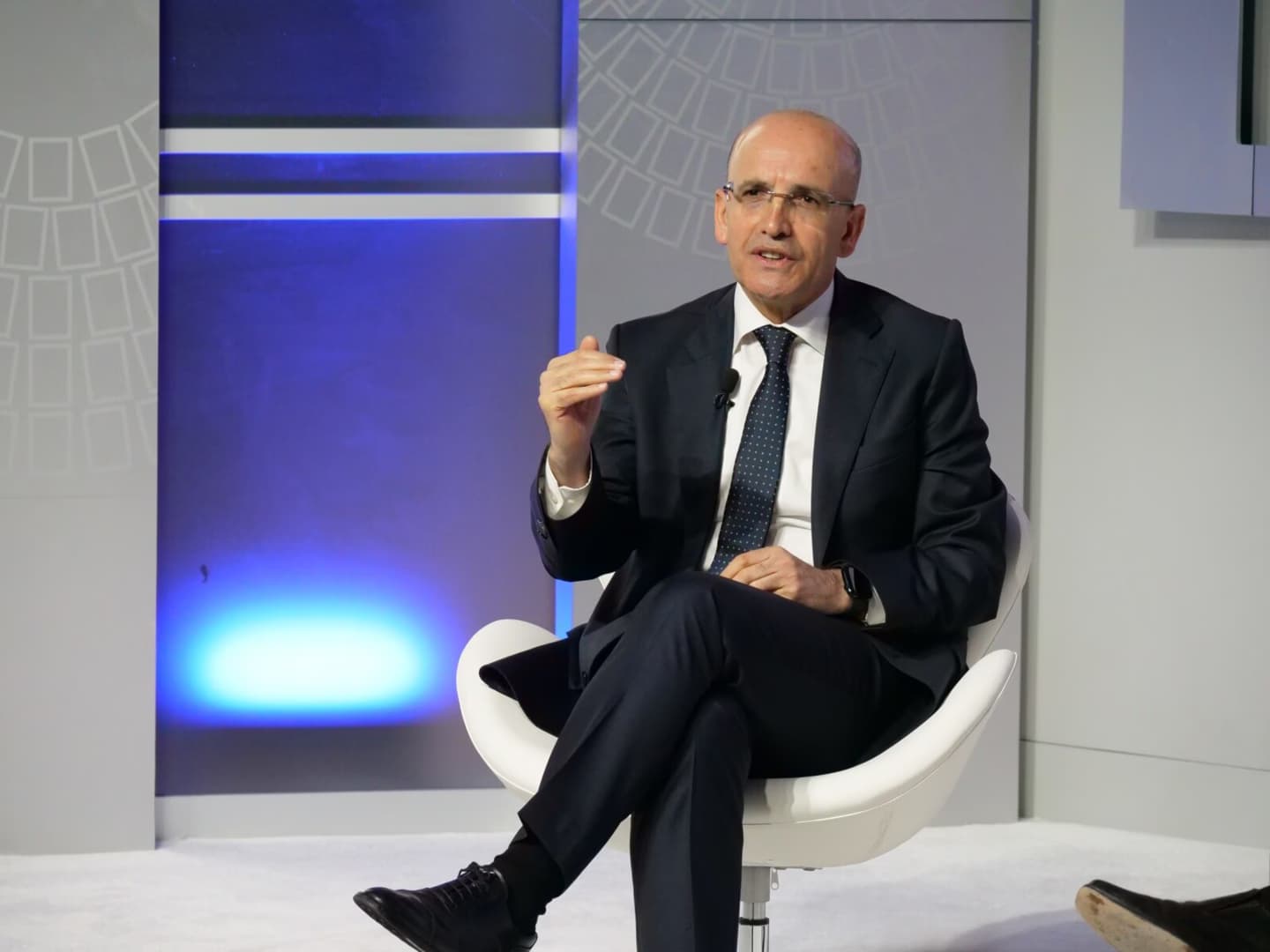
Fatih Karahan, Governor of the Central Bank of the Republic of Turkey (CBRT), addressed banking professionals and the financial sector at the 69th General Assembly of the Banks Association of Turkey (TBB). While discussing recent developments in financial markets, Karahan clearly reiterated the message "we maintain our tight stance" immediately following the interest rate move announced by the CBRT yesterday.
Key points from Karahan’s speech included: He identified the banking sector as one of the main actors in the ongoing disinflation program and stressed the importance of joint consultations in this area.
Karahan noted that the global economic system has recently been overshadowed by geopolitical tensions and rising uncertainties, particularly highlighting that fluctuations in energy markets have directly shaken global inflation trends and financial conditions worldwide.
PRESSURE FELT IN ENERGY PRICESKarahan stated that the upward pressure on energy costs is deeply reflected in domestic inflation and external balance figures, saying: "However, compared to the start of the disinflation process, we now have more effective policy tools, stronger reserve buffers, and a more balanced macroeconomic outlook.
Therefore, as long as we take the right policy steps, we view geopolitical developments not as factors that will halt the disinflation process but as elements that may affect its pace and short-term outlook.
"As the Central Bank of the Republic of Turkey, our primary goal is to ensure price stability permanently," Karahan emphasized, adding that they will firmly maintain a tight monetary policy stance to prevent disruption of the disinflation path.
He stated that in future monetary policy decisions, every parameter affecting the inflation outlook will be carefully examined, especially the impacts of geopolitical shocks on inflation through cost, economic functioning, and expectation channels. Karahan also discussed why a low inflation environment is vital for the financial sector and evaluated the effects of recent legal measures on the market.
EŞEL MOBİL ASSESSMENTKarahan said they have taken proactive measures in full coordination with other public institutions to curb the disruptive effects of international tensions on the inflation path. He claimed that the eşel mobil system implemented in fiscal policy has capped the impact of oil prices on inflation.
On the CBRT side, Karahan noted that they have tightened financial conditions through instruments such as upper band funding mechanisms, NDF (Non-Deliverable Forward) transactions, and liquidity bill issuances. He recalled that a series of decisive measures were introduced starting from the last quarter of 2025 to curb accelerating credit expansions.
Thanks to these steps and strong buffer mechanisms, macro-financial balances have been preserved, and the foundation required for the disinflation process has been maintained. He confirmed that due to sharp rises in energy inputs and their indirect effects, there was an upward movement in the main inflation trend in April.
BALANCING DOMESTIC DEMANDFollowing the rise in the early months of the year, Karahan noted that the main inflation trend, which increased in April, slightly eased by May. He attributed this decline partly to the eşel mobil initiative and the Central Bank’s measures.
He projected that the slowdown and balancing of domestic demand, which will become more pronounced in 2026, will continue to support disinflation targets in the coming period.
Karahan stated that thanks to the tight monetary policy stance, a visible recovery in the current account balance has been achieved since 2024, emphasizing that the current account position is critical for macro-financial stability amid rising global risks.
He explained that in energy-import-dependent countries like Turkey, increases in energy costs directly determine the trade balance and current account deficit. He pointed out that data for April and May indicate the trade outlook remains positive.
To maintain this balance, he stressed the importance of curbing deterioration in inflation expectations and avoiding additional domestic demand-driven burdens on the current account deficit.
SHORT-TERM RISKS CREATEDKarahan said that according to current macroeconomic projections, the current account deficit to GDP ratio is expected to remain below historical averages by year-end. He added: "In summary, although geopolitical developments have created short-term risks for the disinflation process, timely policy actions have limited their impact on disinflation.
Our tight monetary policy stance, balanced domestic demand, healthy current account outlook, and strong reserve position provide significant assurance for the continuation of the disinflation process.
"BANKING OUTLOOKIn the second part of his speech, Karahan focused on structural data in the banking sector, explaining that sustainable high growth performance requires a strong savings base, an effectively functioning financial architecture, and long-term funding channels, which can only take root in a single-digit and stable inflation environment.
Reviewing the last 25 years, he emphasized that during periods of low inflation, banking sector growth significantly outpaced national income growth.
Karahan recalled that the financial sector’s asset size to GDP ratio was 53% in 2003, rising to 86% in 2010 after inflation was reduced to single digits, and surpassing 100% from 2015 onward.
He noted that this growth led to increased savings in the system, diversification of instruments, accelerated long-term capital inflows from abroad, and that bank loans to the real sector approached 70% of GDP, with external financing exceeding 20%.
HIGH INFLATION IMPACTED BANKINGHowever, Karahan admitted that rising inflation in recent years caused a clear contraction of the banking sector relative to GDP, presenting the following data: "On the other hand, rising inflation in recent years has led to a shrinkage of the banking sector relative to GDP.
The ratio of bank assets to GDP fell to 73% in 2024 but began to rise again in 2025 after inflation started to decline. As seen, the path to healthy and sustainable growth in the banking sector passes through low and stable inflation.
Therefore, the continuation of the disinflation process is critically important not only for all economic actors but also for the banking sector.
"In this climate of increasing geopolitical shocks, Karahan stressed that banks must remain firmly committed to the price stability target and proceed resolutely in this direction. He reiterated that lasting stability means higher savings rates, financial deepening, and a foundation for sustainable growth.
>POLICY FRAMEWORKKarahan identified macroprudential regulations as one of the most significant instruments of the monetary policy framework on the banking system. He said these mechanisms are dynamically operated as complementary tools supporting the tight monetary stance.
>LIMITS ON GROWTH IN CREDIT FLUCTUATIONSKarahan stated that recent shocks have proven that not only the policy interest rate but also the macroprudential toolkit can play a complementary role in achieving price stability. He noted that steps have been taken to simplify this toolkit.
>He said that the Protected Deposit (KKM) and securities facility practices have been completely ended, and mandatory reserve requirements on the sector have been significantly reduced.
>However, Karahan said that macroprudential mechanisms focused on Turkish lira deposit shares, credit expansion rates, and liquidity management continue to be maintained in the field to support tight monetary policy. He explained that legal limits and liquidity policies are revised according to market conditions.
>He added that as price stability is achieved, the pressure of these regulations on bank balance sheets is expected to ease.
>FINANCIAL DEVELOPMENTSIn the final part of his speech, Karahan addressed the tangible effects of the measures on financial conditions, sharing numerical data on credit volume developments: He stated that the credit expansion, which accelerated from the second half of 2025, has settled into a more balanced path due to recent measures; total credit growth slowed from around 35% to 26%, while Turkish lira commercial and consumer loan growth rates dropped from the 50% range to below 40%.
Stay Updated with The Turkiye Times
Subscribe to be informed about special news, developments and announcements. We will keep you informed.
By signing up, you agree to our Privacy Policy