- BIST10011,117-0.92%
- USD49.65+0.05%
- EUR55.60-0.19%
- GOLD4,007.90-1.29%
- INTEREST36.00%-1.00
- BITCOIN80,166-1.13%
- October 24, 202615°
- BIST10011,117-0.92%
- USD49.65+0.05%
- EUR55.60-0.19%
- GOLD4,007.90-1.29%
- INTEREST36.00%-1.00
- BITCOIN80,166-1.13%
- October 24, 202615°
Ferhad Gündem restores more than 100 historic works in their original styles
Ferhad Gündem, who has worked with traditional Turkish arts for nearly 20 years, restores works in his collection of calligraphy, illumination, miniature art and painting according to the styles of their respective periods. Gündem plans to open a solo exhibition featuring works from his collection soon.


Ferhad Gündem, who became interested in traditional Turkish arts during his university years, restores works in his collection of more than 100 historic pieces in accordance with the artistic understanding of their respective periods.
Bringing together works of calligraphy, illumination, miniature art and painting, Gündem examines the scripts, period styles, motifs and colors in his work. His priority in restoration is preserving the originality of the works.
He turned to traditional arts during his university years
Gündem, who has been involved in traditional arts for nearly 20 years, said he did not know about calligraphy and illumination during his childhood and wanted to become a painter at the time. He said religious themes and floral motifs stood out in his paintings, adding that he turned to different fields as he became acquainted with these arts.
Gündem said the script in calligraphy, the imagery in miniature art and the floral motifs in illumination attracted his interest. He noted that calligraphy, illumination, miniature art and marbling are brought together under the category of the book arts, and that these arts were used together in religious, literary and scholarly works.
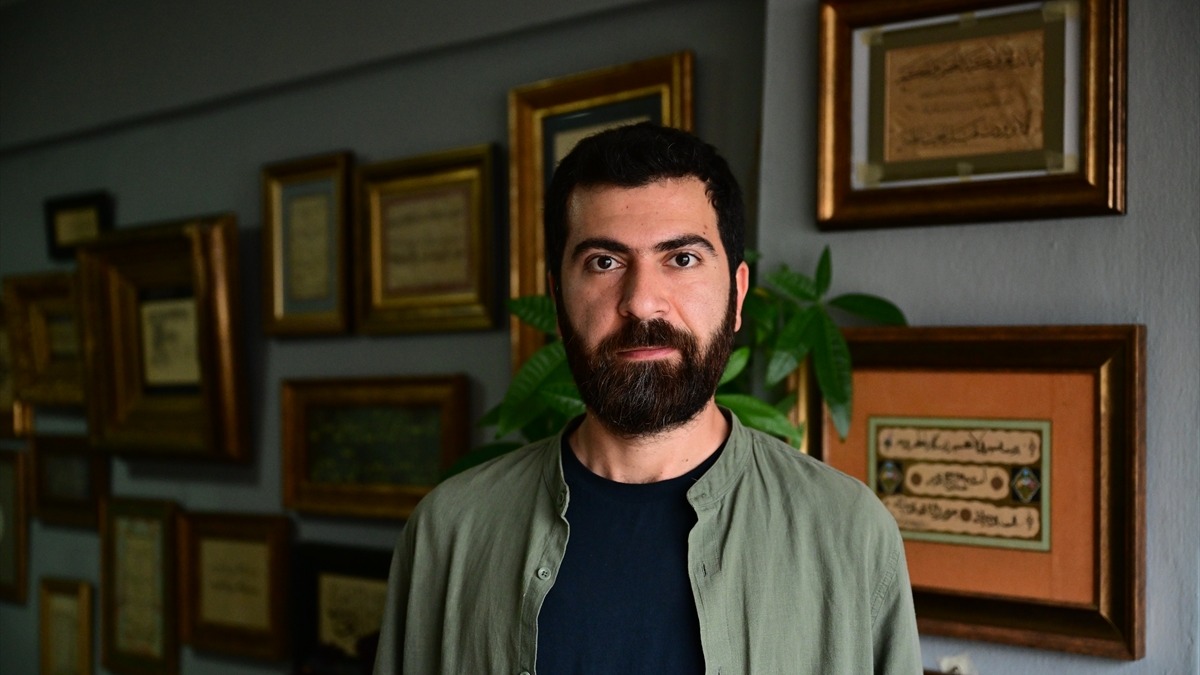
Calligraphy, illumination and miniature artist Ferhad Gündem
Gündem said these arts cannot be considered completely separate from one another, adding, "It is hardly possible to love one and remain distant from the others. Inevitably, you are exposed to them and come to love them. These are arts that are often seen together."
His collection includes more than 100 historic works
Gündem said that after becoming interested in traditional arts, he began collecting works more than 100 years old. He noted that as he practiced the arts, he became better able to recognize the beauty in the works and began to learn about masters from earlier periods.
Gündem said he was influenced in calligraphy by Sami Efendi, Sheikh Hamdullah, Hafiz Osman and Şevki Efendi, and noted that the 15th and 16th centuries stood out as the classical period in illumination. He said the period reached its peak in terms of color and design.
Gündem said his collection includes more than 100 historic works from different artistic fields, adding, "These include paintings, calligraphy and miniatures."
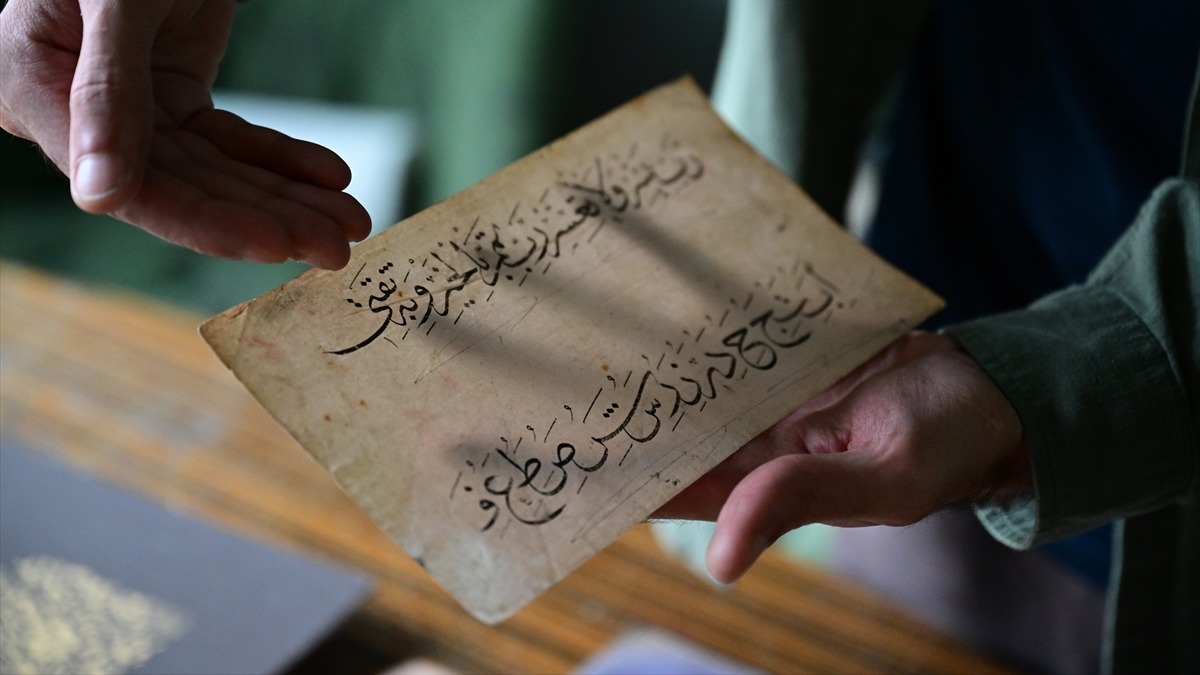
Period style and material compatibility guide the restoration
Gündem said they examine the character of the script and period styles when determining the period and artistic understanding of a work. He said that in calligraphy works, they first identify which type of script the writing belongs to. He noted that when a work has no date or signature, its possible period or similarity to the work of a particular master can be understood from the character of the script.
Gündem said they repair worn writing while preserving its historical and artistic value, adding that when necessary they decorate works with illumination and seek to make them more durable.
Gündem said paper works can become worn when folded between books, placed in frames without glass, or exposed to sunlight and humidity, adding that they encounter such problems.
Emphasizing that they take care to preserve a work’s originality during restoration, Gündem said he does not consider it appropriate to rewrite a completely lost letter in the style of the relevant master. He added that flaking in some parts of a letter can instead be treated in a way suited to the work’s texture.
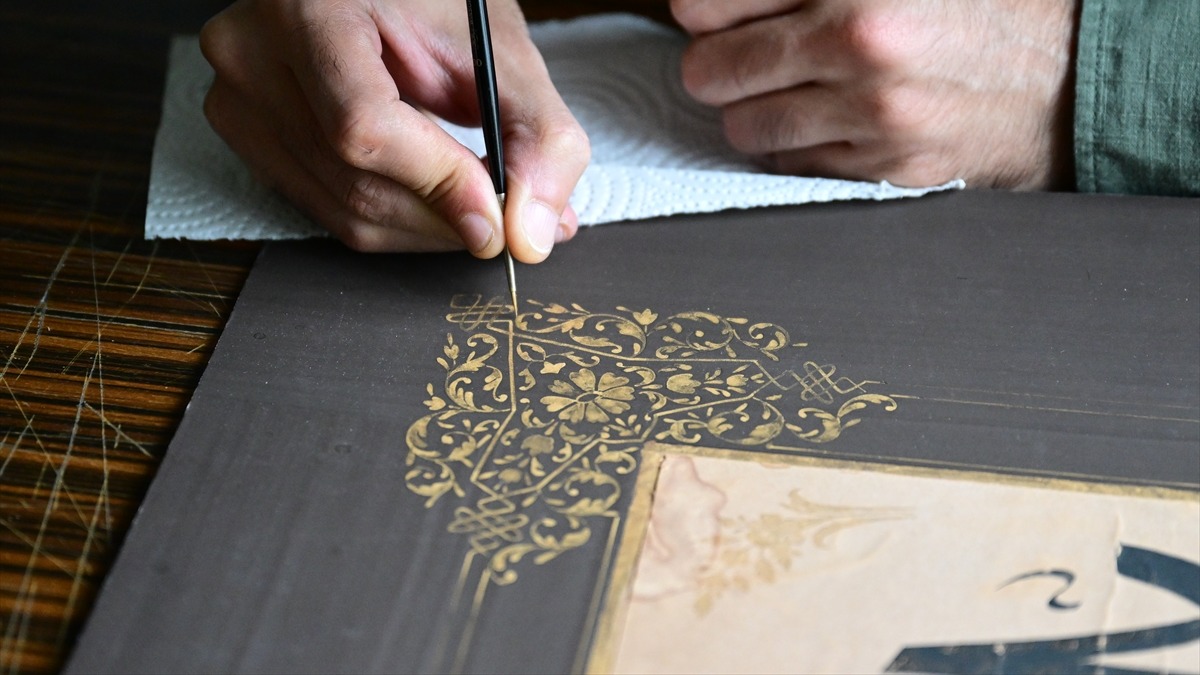
Gündem said they use gold for gold and ink for ink in restoration, and work in accordance with the texture of the paper, ink and paint. He added that illuminated works can also be treated with designs suited to the motifs and colors of the period.
He advised young people to follow exhibitions and masters
Gündem said restoration of old works does not always involve intervention, explaining that in some cases they limit their work to preserving the pieces, while approaching works that can be repaired with great care.
Gündem said he has works featuring writing from approximately 300 years ago that he illuminated in accordance with the understanding of the period, while in some works he reflects his own taste and design approach. He advised young people interested in traditional Turkish arts to visit exhibitions, examine the works and meet with masters.
Emphasizing that engaging with these arts requires patience and love, Gündem said he was considering opening a solo exhibition soon to bring together his work and his collection of calligraphy, illumination, miniature art and painting.
Source: Anadolu Ajansı
Have a story, event or announcement of your own?Send us your news on WhatsApp
Spotted an error in this story?Report it on WhatsApp
Share on all social platforms
Sponsored Ads
Featured Listings
Loading featured properties...
Stay Updated with The Turkiye Times
Subscribe to be informed about special news, developments and announcements. We will keep you informed.
By signing up, you agree to our Privacy Policy