Mine-clearance vehicles developed using domestic capabilities and added to the inventory of the Gendarmerie General Command were presented to visitors at TEKNOFEST Southeast, held in Şanlıurfa.
New vehicles and equipment in the gendarmerie inventory are being exhibited at the festival, held across 191,000 square meters at GAP Airport. These systems include a remote reconnaissance and mine-detection vehicle and a quadruped robotic system.
Autonomously scans mined areas
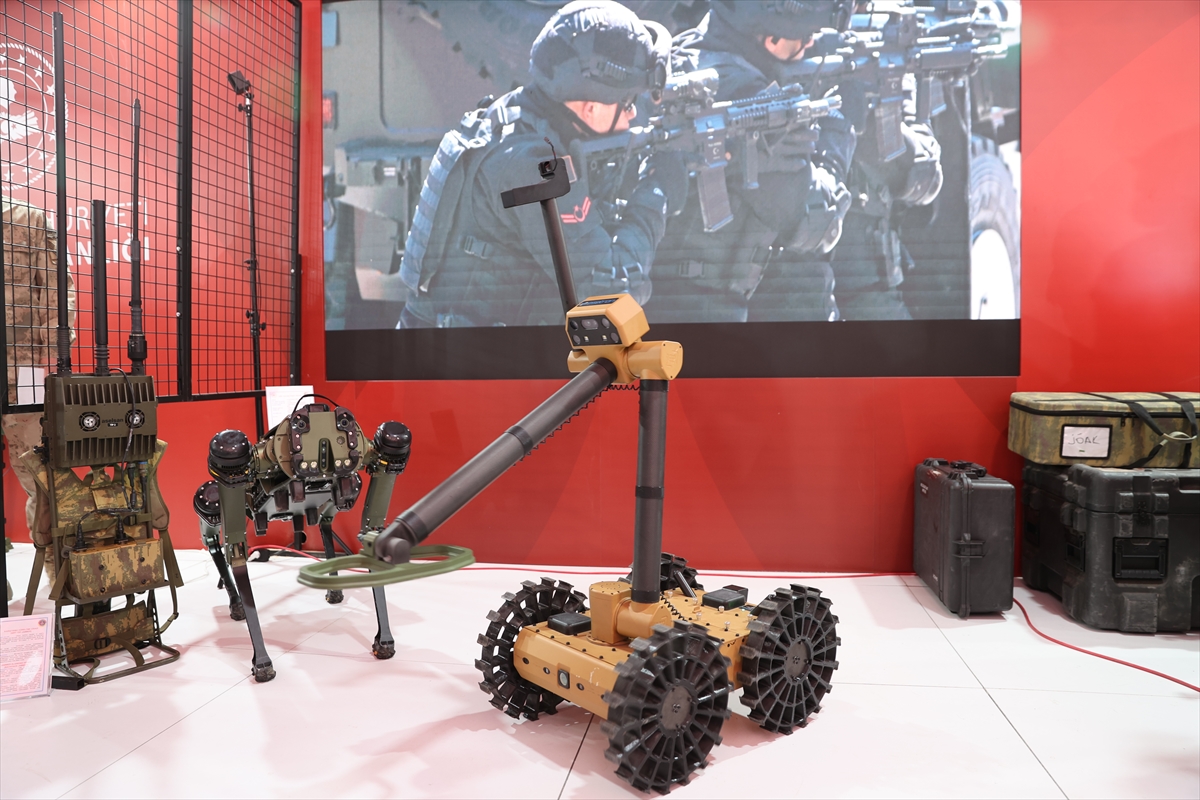
The remote reconnaissance and mine-detection vehicle operates autonomously to identify and mark mined fields and the mines within them. Its detection system enables the identification of metal objects beneath the soil.
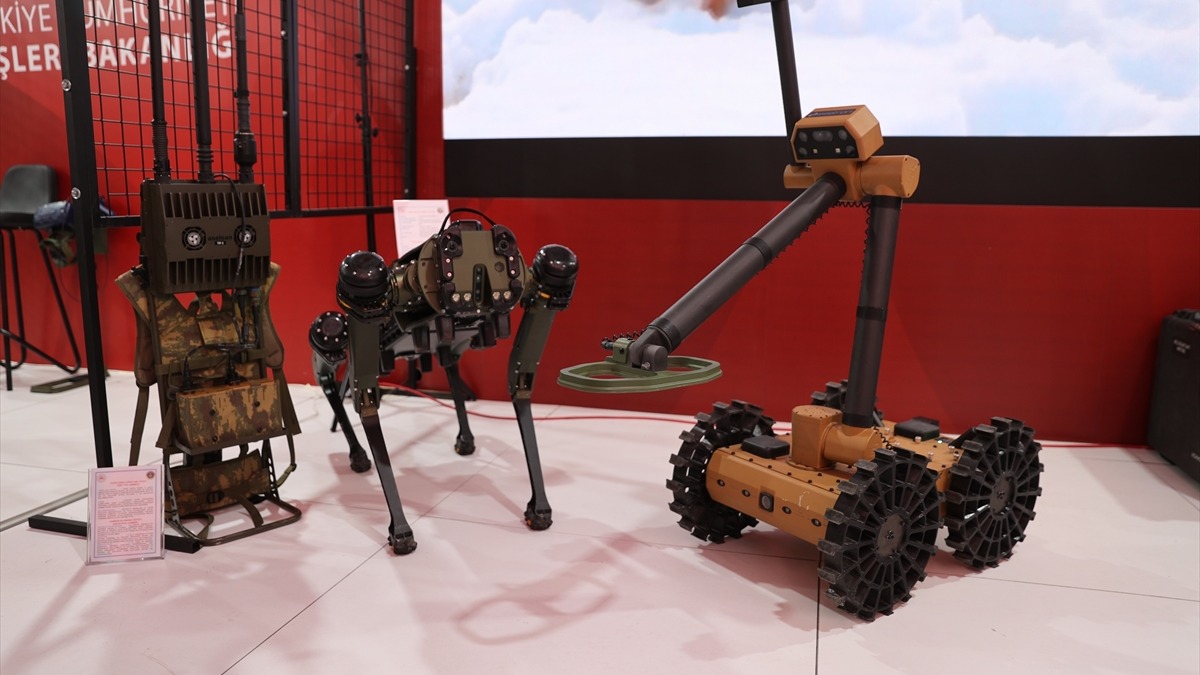
The unmanned ground vehicle can scan large areas mapped out in advance, checking the entire area during the operation and marking detected points. Quadruped robots or personnel can then intervene at the identified locations.
Quadruped robot to be used in hazardous areas
The quadruped robotic system added to the gendarmerie inventory weighs approximately 51 kilograms and has a payload capacity of 10 kilograms.
The robot is used for reconnaissance and disposal missions, with the aim of protecting personnel, particularly in hazardous areas, and supporting operational activities.
JÖMAT teams served in 11 provinces
Gendarmerie Engineering Senior Master Sergeant Tayfun Özer said the Gendarmerie Special Mine Search and Clearance Battalion was established within the Gendarmerie Engineering Command in 2017.
Özer said the unit carries out missions to clear land mines and areas booby-trapped with explosives in order to ensure the security of the unit and the border, and to secure military zones and gendarmerie stations against the terrorist threat.
Özer said JÖMAT teams aim to eliminate risks to human life by clearing areas contaminated with mines and explosives and returning them to socioeconomic life. He added that they also conduct humanitarian mine-clearance operations.
Özer said humanitarian mine clearance includes clearing land mines, unexploded ordnance and other explosive remnants of war after wars and conflicts, providing risk education and assisting victims. He noted that these efforts aim to ensure civilian safety, support socioeconomic development and remove obstacles to humanitarian aid operations.
Since the battalion command was established, JÖMAT teams have conducted mine-clearance operations in Ağrı, Ardahan, Hakkari, Hatay, Kilis, Iğdır, Siirt, Şanlıurfa, Şırnak, Tunceli and Van.
As a result of these operations, 6,934,000 square meters of land were cleared of explosive contamination and returned to socioeconomic use.
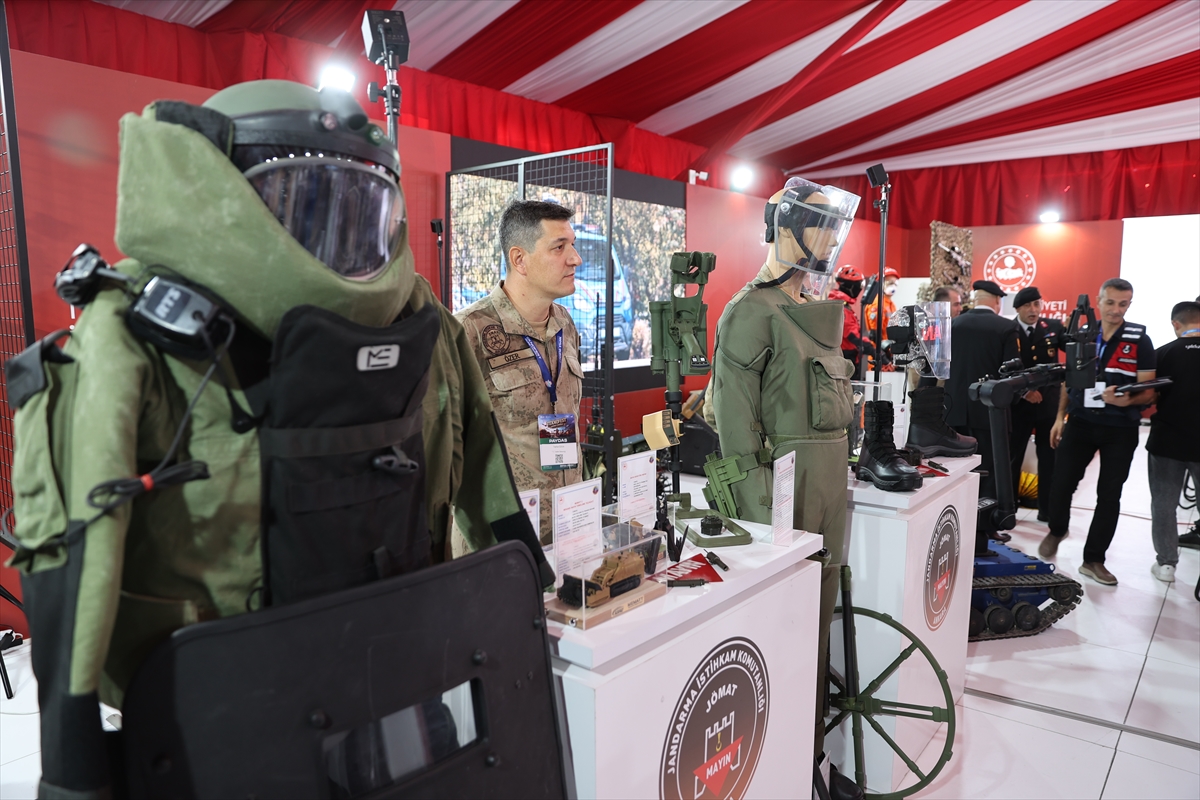
Mine-clearance operations use metal-detection devices, ground-penetrating radars, intervention tools, animal-based detection systems, mechanical crushers and breakers, screening systems and ballistic protective equipment. Protective suits, boots and visors are also among the equipment used during missions.
Visitors to the TEKNOFEST site received information from officials about the vehicles displayed at the JÖMAT stand.